


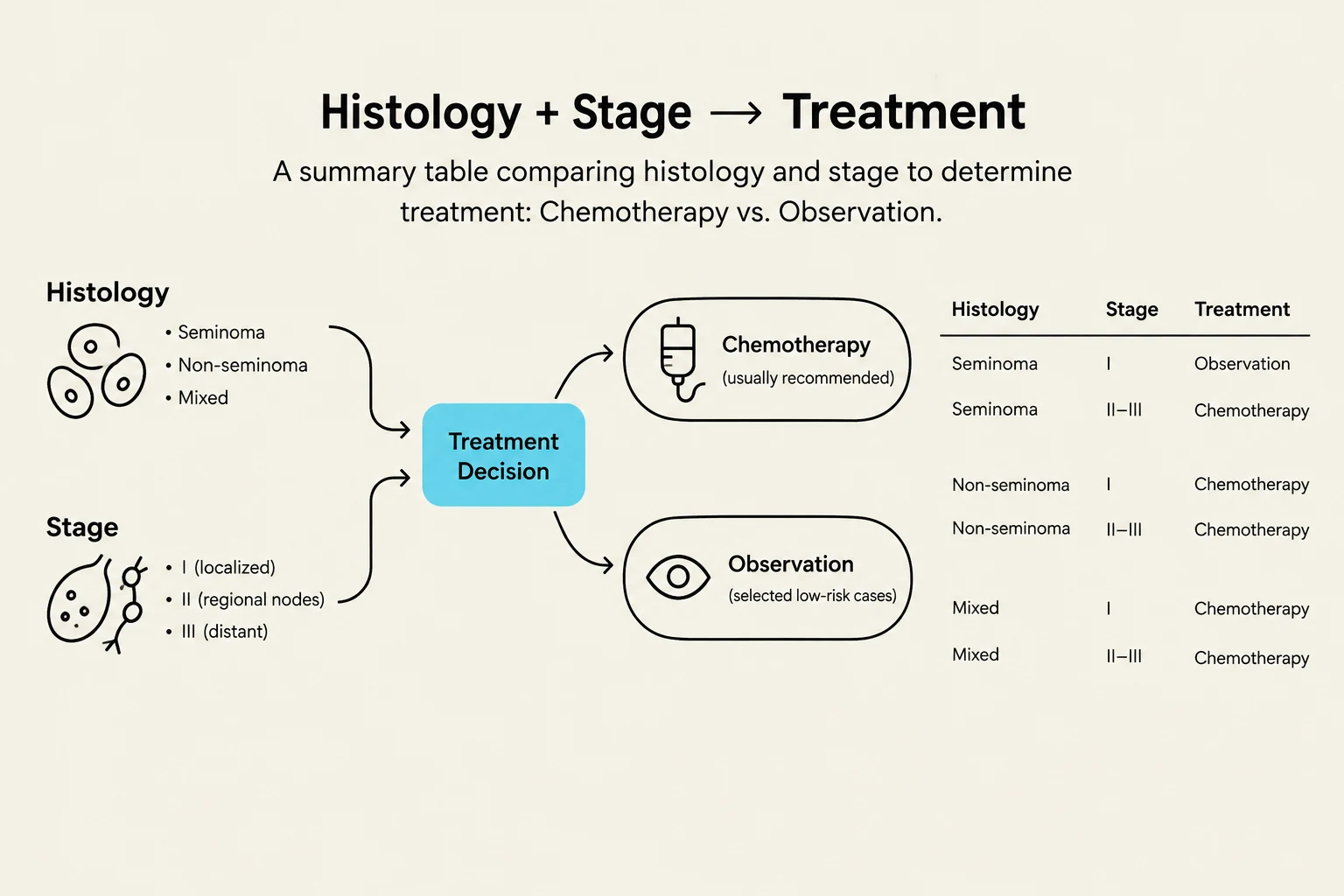
Malignant germ cell tumors (MGCTs) represent a distinct group of ovarian neoplasms that arise from primordial germ cells. Unlike the more common epithelial ovarian cancers, MGCTs often occur in younger populations, including adolescents and young adults. Because these patients are frequently of reproductive age, the management of MGCTs requires a highly personalized approach that balances oncologic control with the preservation of fertility. Treatment strategies are dictated by the specific histologic subtype, the clinical stage of the disease, and the patient's individual goals regarding future pregnancy.
Initial Surgical Management
The cornerstone of MGCT management is surgical intervention. The choice of surgical technique is primarily driven by the patient's desire for future fertility.
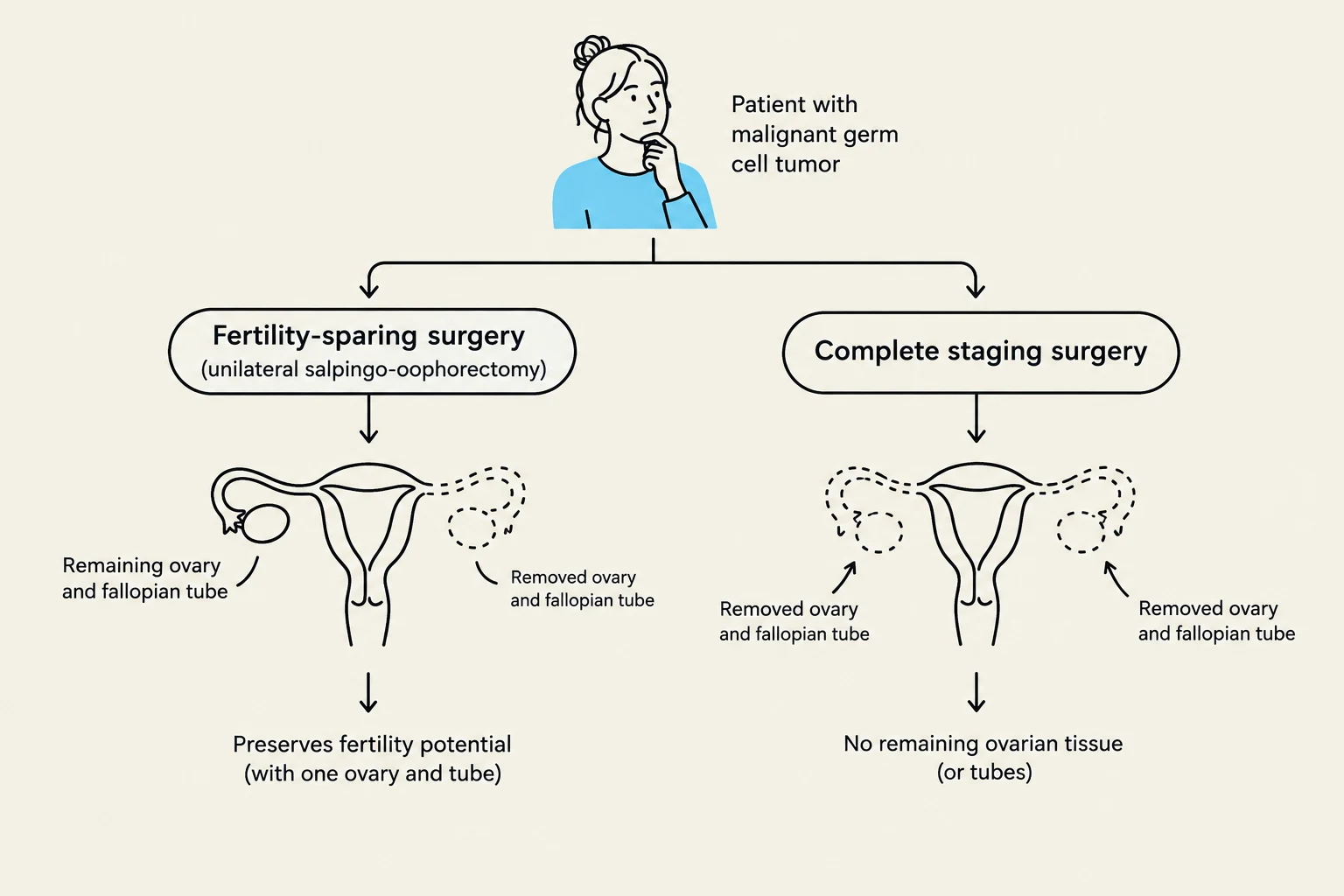
Fertility-Sparing vs. Complete Staging
For patients who wish to preserve their reproductive potential, fertility-sparing surgery is the recommended approach. This typically involves a unilateral salpingo-oophorectomy (USO) combined with comprehensive surgical staging. In contrast, for patients where fertility is not a priority or is not desired, complete staging surgery—which may include a hysterectomy and bilateral salpingo-oophorectomy (BSO)—is the standard of care to ensure maximal cytoreduction and accurate staging.
Clinical Pearl: In cases where the diagnosis is suspected but not yet confirmed, a gynecologic oncologist should perform the evaluation. Data shows that primary assessment and debulking by a specialist result in a survival advantage.
Keep reading for free.
Create an account to finish this reading and make it part of your study routine.
Continue reading freeAlready have an account? Log in
Updated