


The male reproductive and urinary systems are intricately linked, sharing anatomical structures like the urethra while functioning through complex hormonal, muscular, and neurological pathways. While the reproductive system focuses on the production and delivery of sperm and the regulation of sex hormones, the urinary system manages the storage and expulsion of waste. Understanding the interplay between these systems is essential for managing common clinical conditions such as hypogonadism, benign prostatic hyperplasia (BPH), and overactive bladder (OAB).
The Male Reproductive System and Spermatogenesis
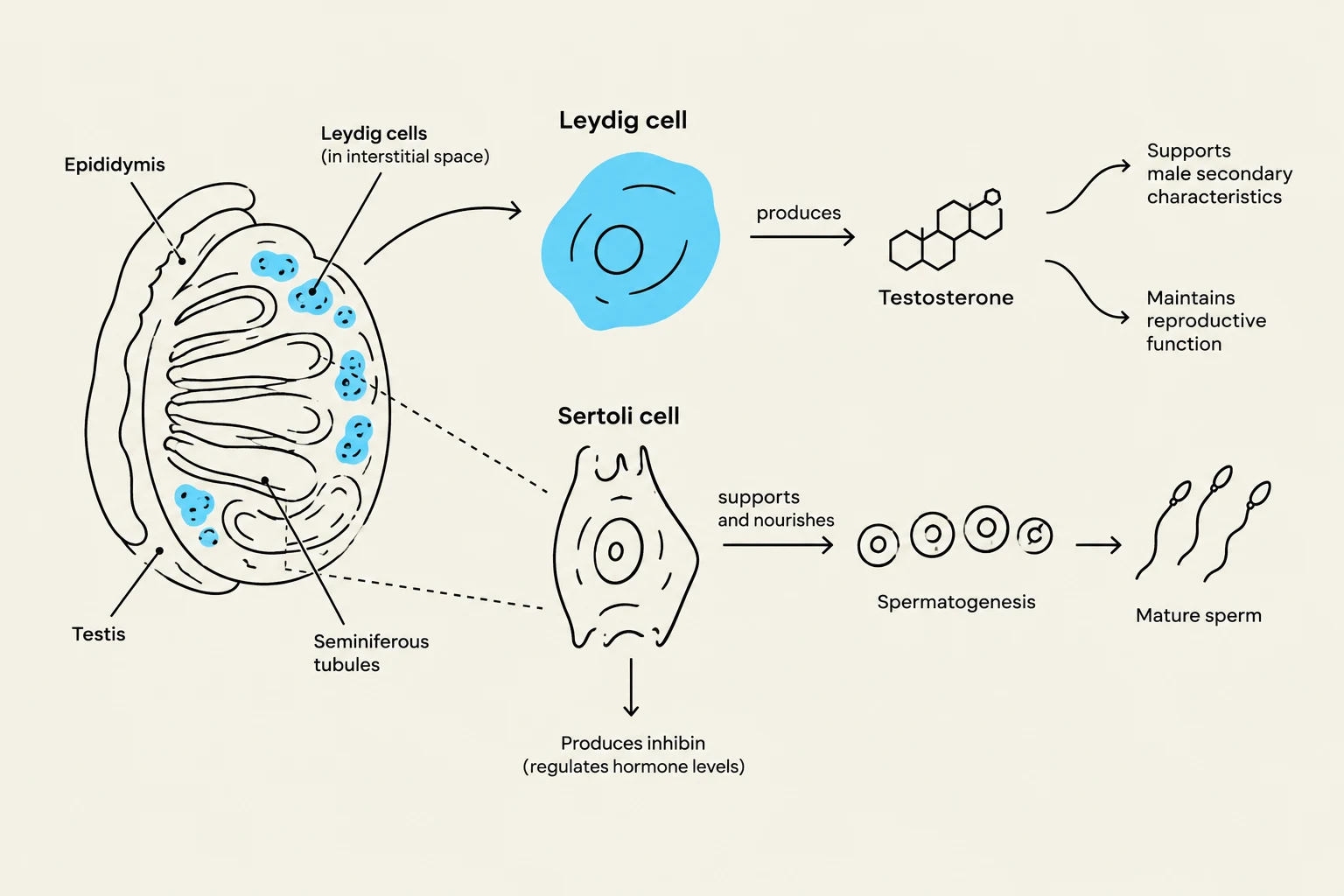
The primary site of sperm production is the testes, located within the scrotum. Within the testes, the seminiferous tubules serve as the functional units where spermatogenesis—the process of creating sperm cells—takes place. This is a highly regulated process that takes approximately 64 to 72 days to complete.
Spermatogenesis involves three main phases:
- Spermatogonial phase: Stem cells (spermatogonia) undergo mitosis to form primary spermatocytes.
- Spermatocyte phase: Primary spermatocytes undergo meiosis I to become secondary spermatocytes, which then undergo meiosis II to produce four spermatids.
- Spermatid phase: Spermatids undergo spermiogenesis, maturing into spermatozoa (sperm cells) by developing a tail for motility.
The efficiency of this process relies on two specialized cell types within the testes:
- Leydig cells: Located between the tubules, these cells produce testosterone.
- Sertoli cells: Located within the tubules, these cells provide essential nourishment and support to developing sperm.
Hormonal Regulation and Hypogonadism
Testosterone production is governed by the hypothalamic-pituitary-gonadal axis. The hypothalamus releases Gonadotropin-releasing hormone (GnRH), which signals the anterior pituitary gland to release Luteinizing Hormone (LH) and Follicle-Stimulating Hormone (FSH). LH specifically stimulates Leydig cells to synthesize testosterone, while FSH acts on Sertoli cells to promote sperm maturation.

Keep reading for free.
Create an account to finish this reading and make it part of your study routine.
Continue reading freeAlready have an account? Log in
Updated