


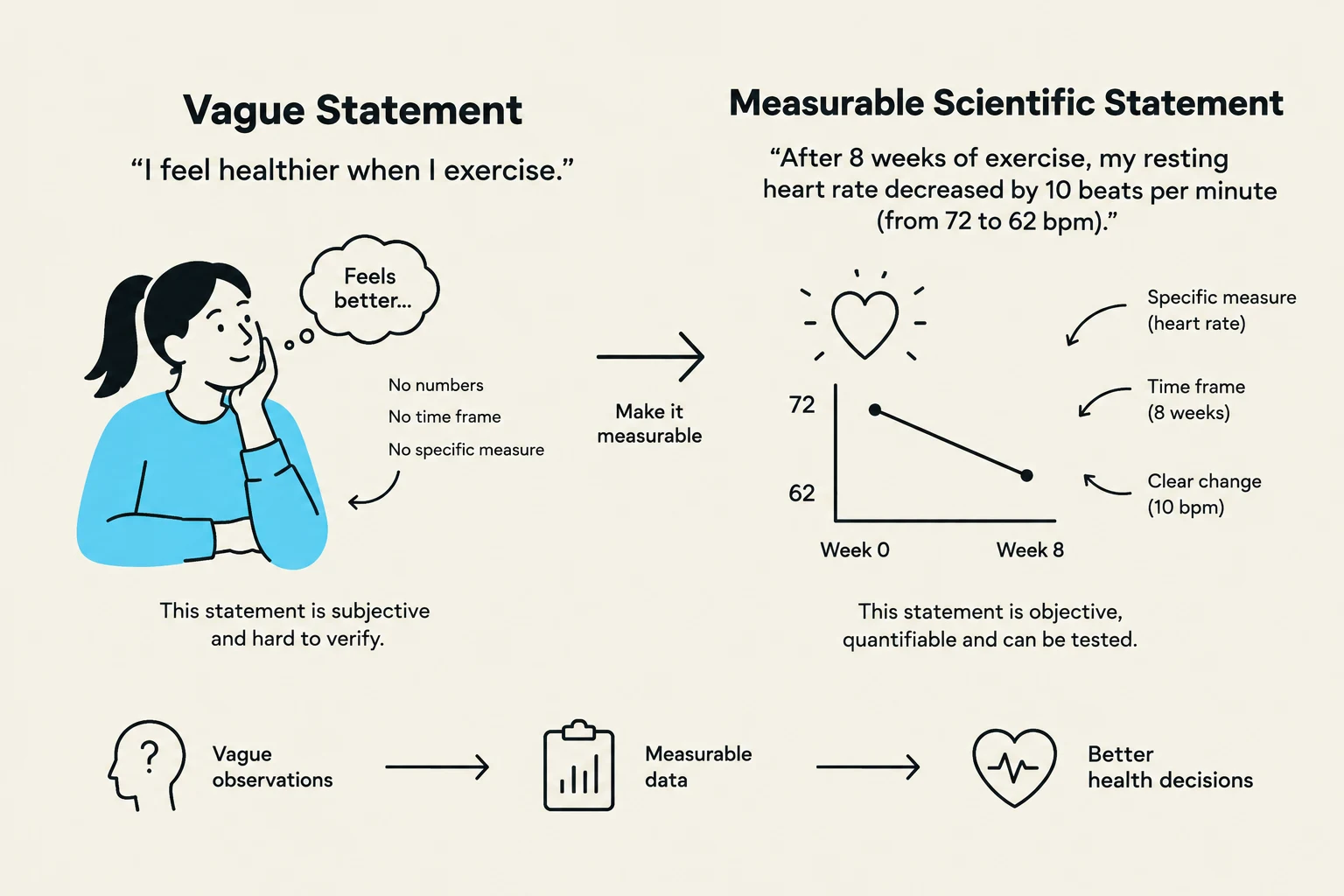
In the study of biology, we often start with broad observations about how living organisms function and how we can influence those functions to better our lives. However, a common pitfall for students and researchers alike is the use of "vague" language. During a recent lecture discussion, the class explored the transition from making general statements about wellness to creating scientific statements that can actually be tested and proven.
The Problem with Vague Statements
When we discuss wellness, we often use terms that sound meaningful but lack scientific precision. For example, consider the statement: "Eating healthy foods helps patients improve their health".
While this statement is likely true in a general sense, it is problematic in a biological or clinical research context. Why? Because terms like "healthy foods" and "improve health" are subjective and undefined. What one person considers "healthy" (perhaps a high-protein diet) another might consider "unhealthy" (if it is too high in saturated fats). Similarly, "improving health" could mean anything from increased energy levels to the curing of a specific disease.
Exam Tip: If you are asked to critique a hypothesis in a biology exam, look for subjective adjectives like "better," "healthy," "stronger," or "improved." These are red flags that the statement is not yet scientifically measurable.

Keep reading for free.
Create an account to finish this reading and make it part of your study routine.
Continue reading freeAlready have an account? Log in
Updated