


In the modern marketplace, companies rarely attempt to appeal to every single buyer. Instead, they engage in a process called market segmentation—dividing a market into distinct groups of buyers who have different needs, characteristics, or behaviors. By understanding these segments, businesses can tailor their products, services, and messages to reach customers more efficiently and provide greater value.
This article explores the various ways marketers divide markets, ranging from individual consumer preferences to complex international and business-to-business (B2B) environments.
Consumer Market Segmentation
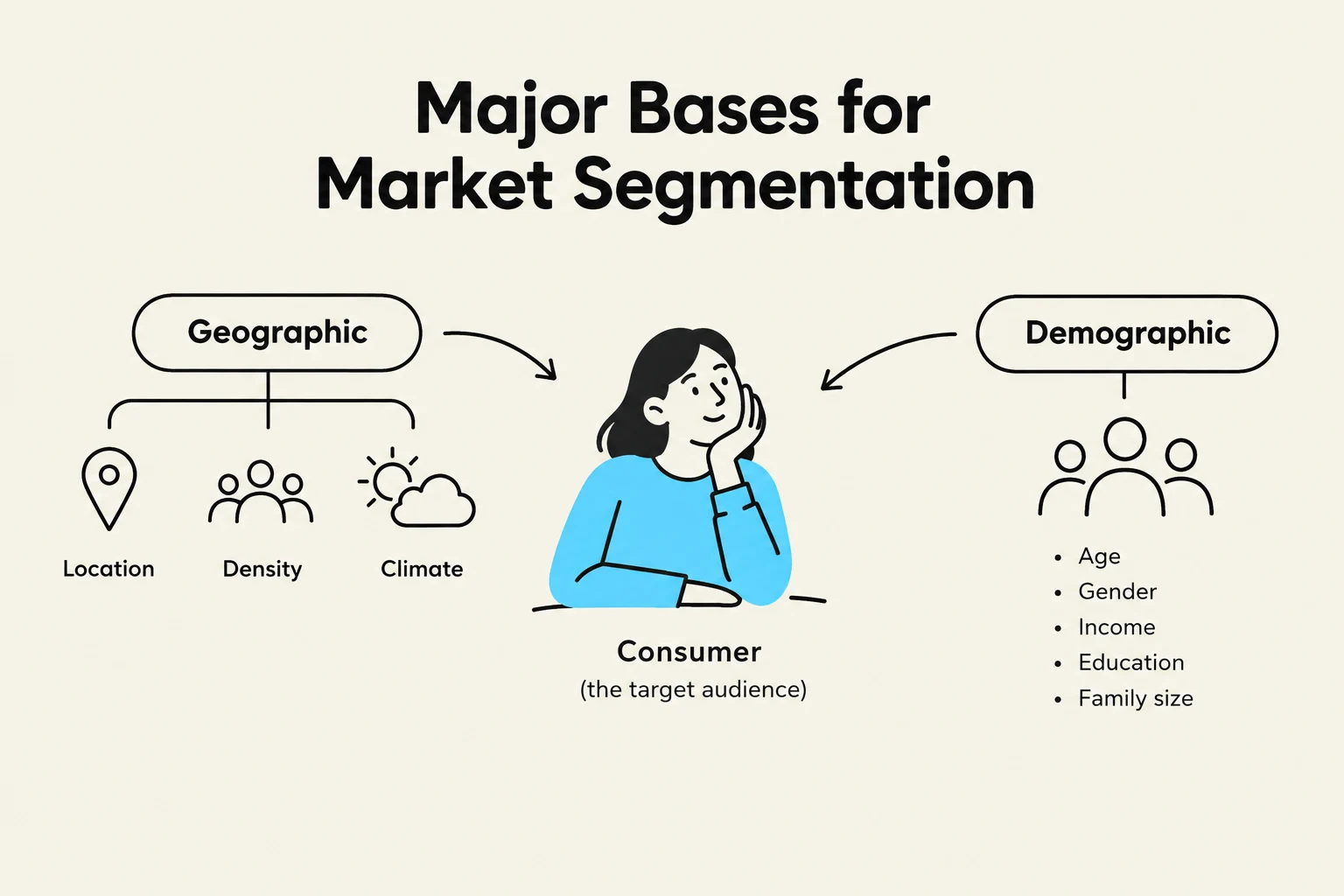
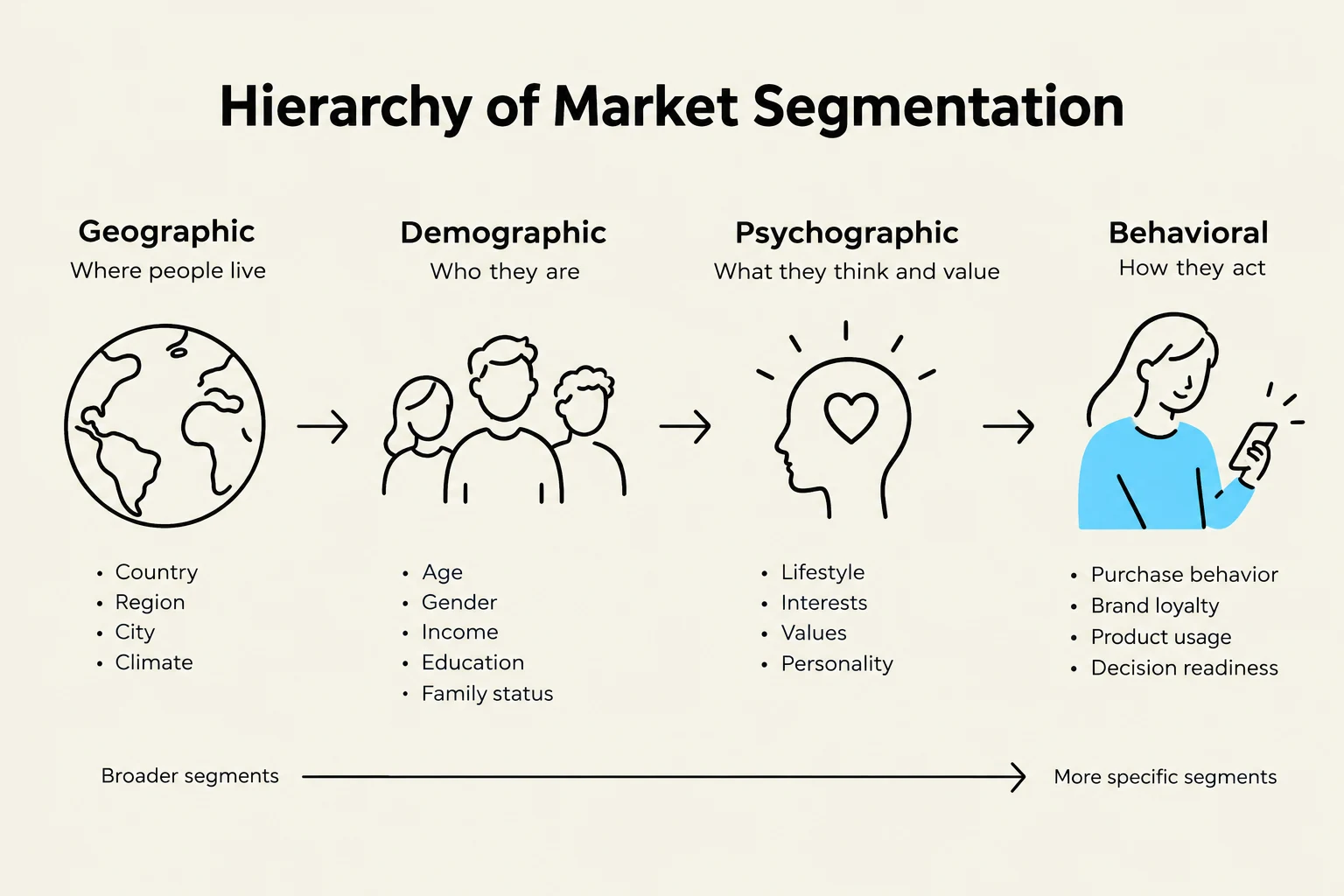
Consumer segmentation involves dividing the mass market into smaller, more manageable groups based on specific variables. There are four primary bases used to segment consumer markets: geographic, demographic, psychographic, and behavioral.
1. Geographic Segmentation
Geographic segmentation divides a market into different geographical units. Marketers may look at nations, states, regions, counties, cities, or even specific neighborhoods. Additionally, population density—whether an area is urban, suburban, or rural—and climate are critical factors in determining what products will be successful in a specific location.
2. Demographic Segmentation
Demographic segmentation is one of the most common bases because consumer needs often vary closely with demographic variables. Key variables include:
- Age and Life-cycle Stage: Dividing markets into different age groups or stages of life.
- Gender: Segmenting based on gender differences.
- Income: Targeting specific income levels.
- Occupation, Education, Religion, Ethnicity, and Generation: Other social factors that influence purchasing power and preference.
3. Psychographic Segmentation
While demographics tell us who buys, psychographics help us understand why they buy. Psychographic segmentation divides buyers into different groups based on social class, lifestyle, or personality characteristics. For example, Panera Bread caters to a "healthy-eating lifestyle" segment, targeting people who want food that is both tasty and nutritious.
Keep reading for free.
Create an account to finish this reading and make it part of your study routine.
Continue reading freeAlready have an account? Log in
Updated