An overview of the lymphatic system's role in fluid balance and surveillance, and the mechanisms of innate immunity, including physical barriers and the inflammatory response.
When we think about our body's defense mechanisms, we often imagine specialized cells hunting down specific viruses. However, before those specialized "assassins" ever arrive, the body relies on a massive, immediate, and non-specific defense system. This system is composed of two interconnected pillars: the lymphatic circulation, which acts as a drainage and surveillance network, and innate immunity, which provides the first line of defense against any invading pathogen.
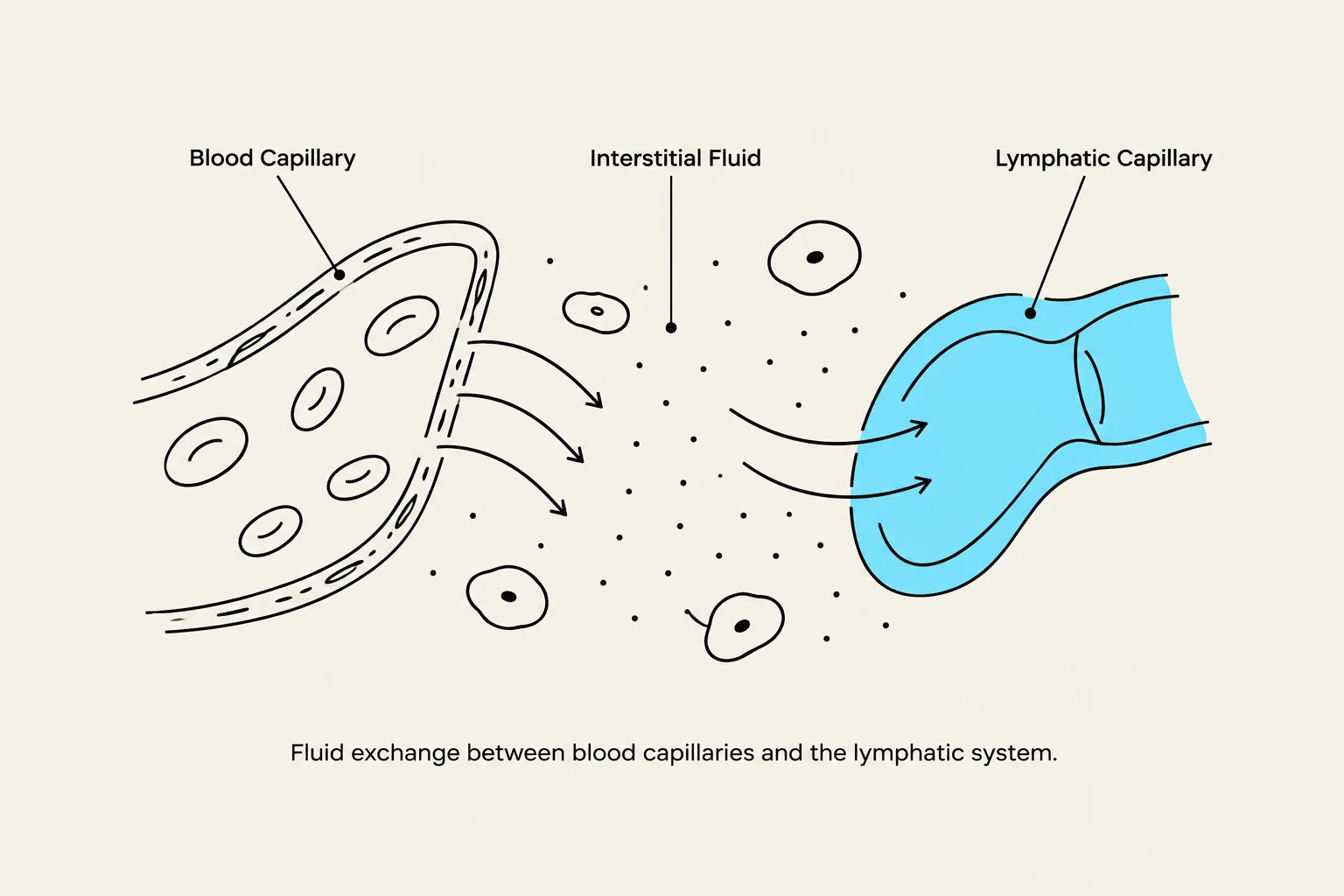
Fluid exchange between blood capillaries and the lymphatic system.
Understanding how these two systems work together is essential for grasping how the human body maintains homeostasis and prevents infection from spreading unchecked.
The Lymphatic System: The Body's Drainage and Surveillance Network
The circulatory system is a closed loop, but it isn't perfectly efficient at keeping all fluids within the blood vessels. As blood moves through capillaries, some fluid escapes into the surrounding tissues. If this fluid were allowed to accumulate, our tissues would swell uncontrollably. This is where the lymphatic system steps in.
Lymph Flow and Composition
The lymphatic system is a one-way drainage system that collects this excess interstitial fluid (now called lymph) and returns it to the bloodstream. Unlike the cardiovascular system, which is pumped by the heart, the lymphatic system lacks a central pump. Instead, lymph moves through the body via:
Skeletal muscle contractions: Movement helps squeeze the vessels.
Pressure changes during breathing: This creates a vacuum effect.
Smooth muscle in vessel walls: Small contractions within the lymphatic vessels themselves.
The Role of Lymph Nodes
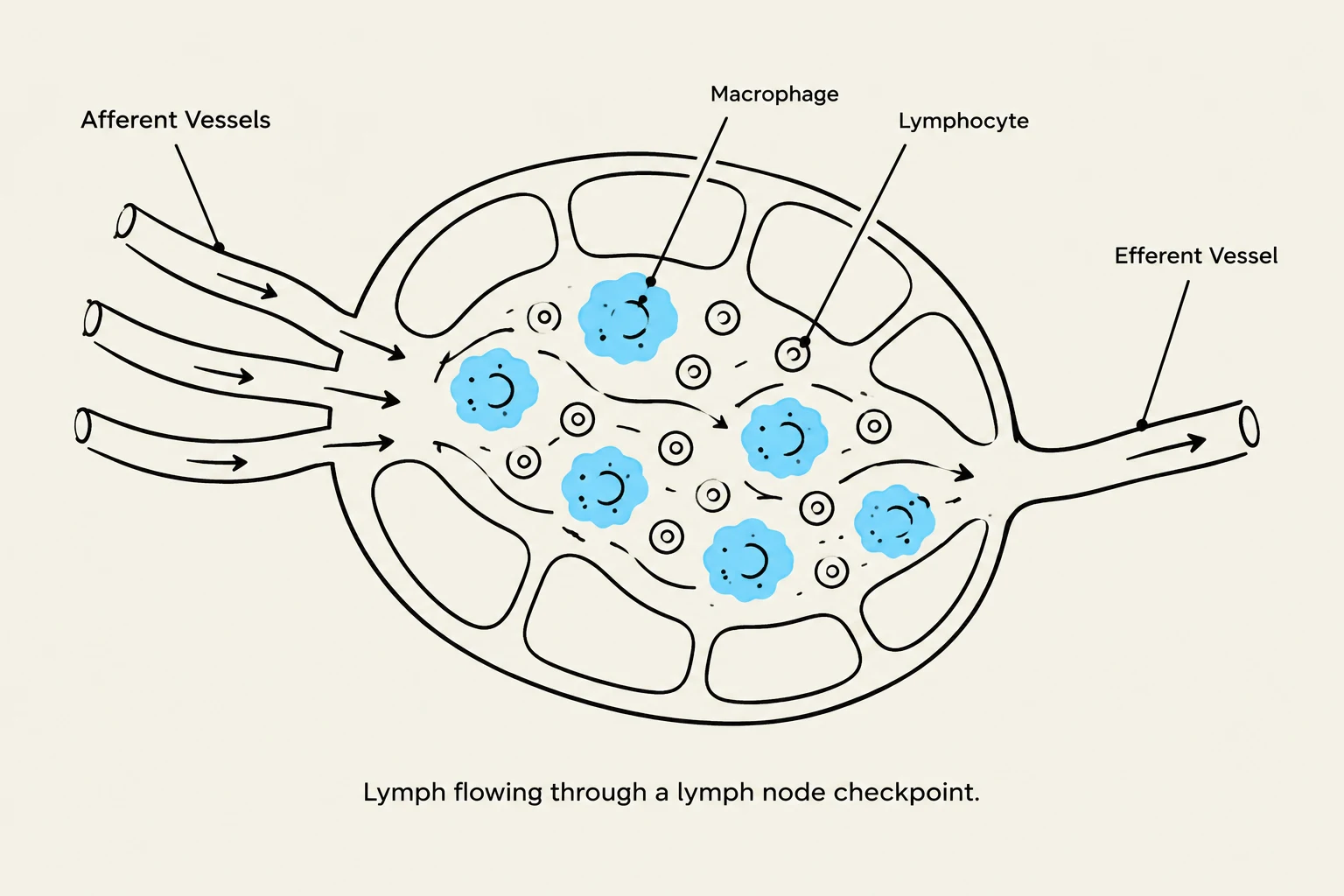
Diagram illustrating lymph flow through a lymph node, showing afferent and efferent vessels, macrophages, and lymphocytes.
As lymph travels toward the bloodstream, it must pass through several "checkpoints" known as lymph nodes. These small, bean-shaped structures are densely packed with immune cells.
Think of lymph nodes as security checkpoints at an airport. As the lymph fluid flows through the node, specialized cells scan the fluid for signs of "intruders" such as bacteria, viruses, or even cancer cells. If a pathogen is detected, the lymph node becomes a site of intense immune activity, often causing it to swell—a phenomenon commonly felt in the neck during a common cold.
Exam Tip: Remember that the lymphatic system is a one-way system. While blood circulates in a continuous loop, lymph flows only from the tissues toward the heart.
Innate Immunity: The First Line of Defense
While the lymphatic system provides the infrastructure for surveillance, innate immunity provides the actual combat force. The term "innate" refers to the fact that these defenses are present from birth and are non-specific. This means they do not care whether the invader is a flu virus, a splinter, or a bacterium; they respond to all of them in a similar, standardized way.
Physical and Chemical Barriers
The most effective way to fight an infection is to prevent it from entering the body in the first place. Our innate immunity utilizes several barriers:
The Skin: A tough, physical barrier that is difficult for most microbes to penetrate.
Mucous Membranes: Found in the respiratory, digestive, and reproductive tracts, these secrete mucus to trap pathogens.
Chemical Defenses: Substances like stomach acid (which destroys most swallowed pathogens) and enzymes in tears or saliva (such as lysozyme) act as chemical deterrents.
The Inflammatory Response
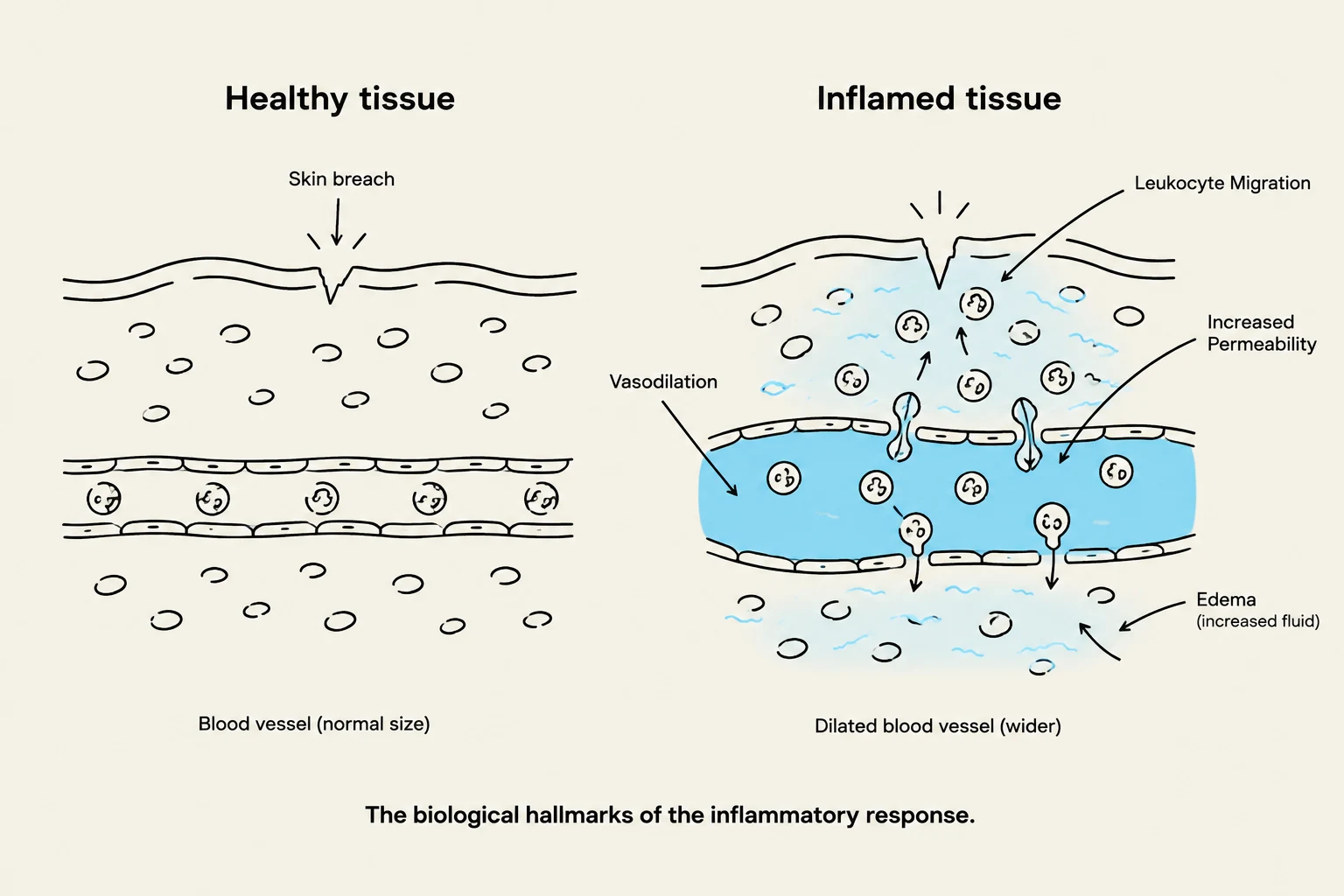
This diagram illustrates the biological hallmarks of the inflammatory response, comparing healthy tissue with inflamed tissue. It shows a skin breach leading to vasodilation, increased permeability of blood vessels, leukocyte migration, and edema.
If a pathogen manages to breach the physical barriers—for example, through a cut in the skin—the body immediately triggers inflammation. Inflammation is a complex biological response aimed at isolating the site of injury and bringing "reinforcements" to the area.
The hallmark signs of inflammation include:
Redness and Heat: Caused by increased blood flow to the area (vasodilation).
Swelling (Edema): Caused by increased capillary permeability, allowing fluid and immune cells to leak into the tissue.
Pain: Caused by chemical signals and the physical pressure of swelling on nerve endings.
The primary goal of inflammation is to contain the infection and prepare the area for tissue repair.
Integrating the Two Systems: A Worked Example
To see how these concepts work in tandem, let's walk through a common scenario: A splinter in your finger.
Breach of Barrier: The splinter pierces the skin, breaking the primary physical barrier of the innate immune system.
Inflammation: Local cells detect the damage and release chemical signals. Blood vessels dilate, causing the finger to become red, warm, and swollen. This brings white blood cells directly to the site of the splinter.
Lymphatic Transport: As the immune cells fight the bacteria introduced by the splinter, some of the cellular debris and even pieces of the invading bacteria enter the lymphatic capillaries.
Surveillance: This "contaminated" lymph travels to the nearest lymph node (perhaps in your armpit).
Activation: Inside the lymph node, the innate immune cells present the "evidence" of the infection to the adaptive immune system, preparing the body for a more specific, long-term defense if the innate response isn't enough.
Summary Table: Innate vs. Adaptive Immunity
While this article focuses on innate immunity, it is helpful to contrast it with the adaptive system to understand its unique role.
Feature
Innate Immunity
Adaptive Immunity
Response Time
Immediate (minutes to hours)
Delayed (days to weeks)
Specificity
Non-specific (targets general patterns)
Highly specific (targets unique antigens)
Memory
No memory of previous encounters
Develops "memory" for faster future response
Components
Skin, inflammation, phagocytes
B-cells, T-cells, antibodies
Key Takeaway: The lymphatic system is the "highway" and the "security station," while innate immunity is the "immediate response team." Together, they ensure that the body is never truly defenseless.
Keep reading for free.
Create an account to finish this reading and make it part of your study routine.