Lithium remains a cornerstone in the pharmacological management of bipolar disorder, serving as a primary mood stabilizer for both manic and depressive episodes. However, lithium is characterized by a remarkably narrow therapeutic index. This means the difference between a dose that effectively stabilizes mood and a dose that causes life-threatening toxicity is very small. For clinicians and students, mastering lithium management requires a dual focus: maintaining precise serum concentrations and developing a high index of suspicion for the progressive stages of toxicity.
The Therapeutic Window
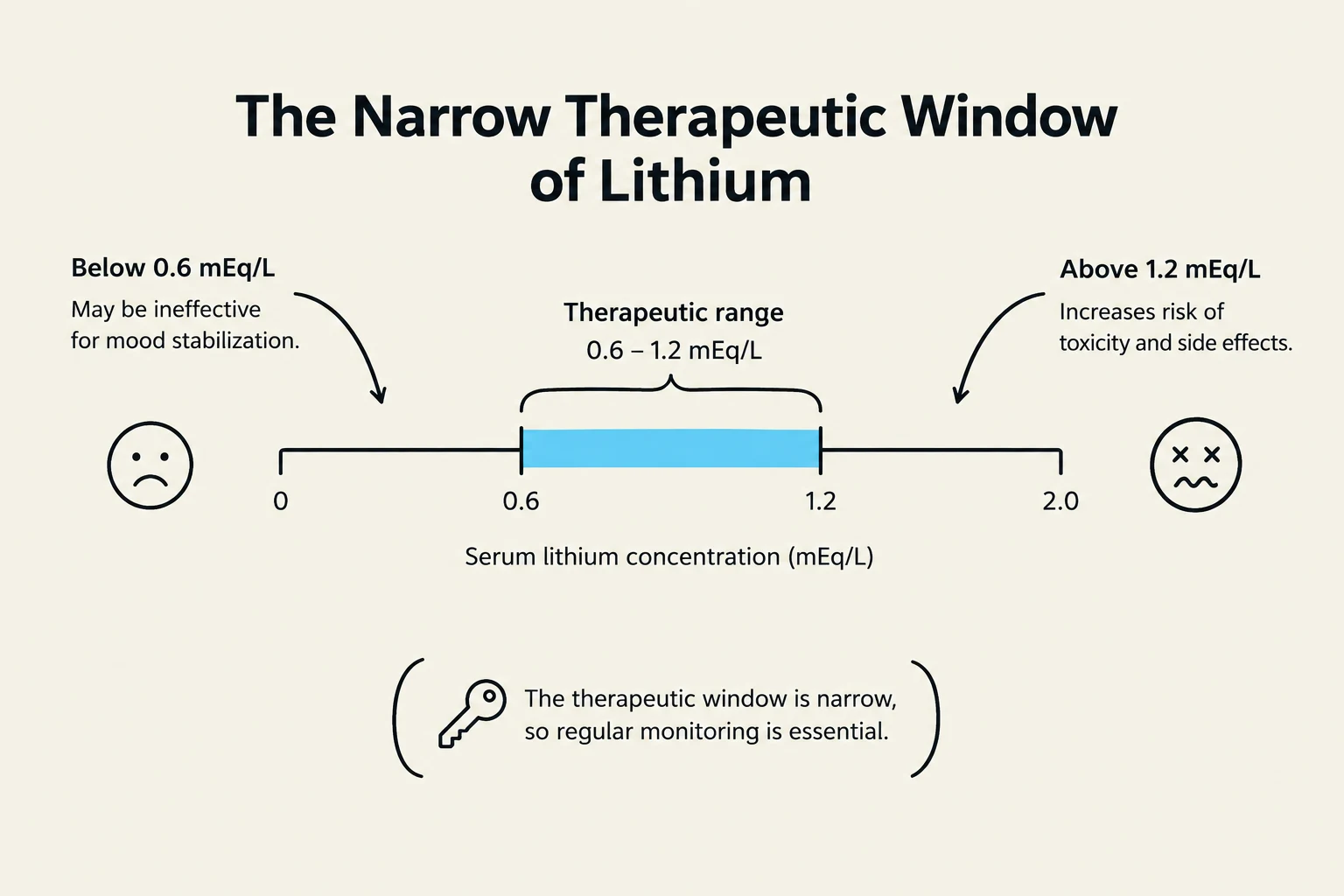
The goal of lithium therapy is to maintain serum levels within a specific range that provides clinical efficacy while minimizing the risk of adverse effects. The standard therapeutic range for most patients is between 0.6 and 1.2 mEq/L.
Maintaining this window is not a "set it and forget it" process. Because lithium is primarily excreted by the kidneys, any change in renal function, hydration status, or sodium intake can cause serum levels to fluctuate wildly.
Clinical Pearl: Always check lithium levels at "trough" concentrations—typically 12 hours after the last dose—to ensure you are measuring the lowest point of the drug's concentration in the blood.
This diagram illustrates the narrow therapeutic window of lithium, indicating that concentrations below 0.6 mEq/L may be ineffective for mood stabilization, while levels above 1.2 mEq/L increase the risk of toxicity and side effects. Regular monitoring is essential due to this narrow range.
Factors Affecting Lithium Levels
Several physiological factors can shift a patient from the therapeutic range into the toxic range:
Sodium Intake: Low sodium levels (hyponatremia) cause the kidneys to reabsorb more sodium, which inadvertently leads to increased lithium reabsorption, raising serum levels.
Hydration Status: Dehydration reduces the glomerular filtration rate (GFR), leading to decreased lithium clearance.
NSAIDs and Diuretics: Many common medications can interfere with renal function or sodium handling, indirectly increasing lithium concentration.
Recognizing Lithium Toxicity
Lithium toxicity is a progressive condition. It is rarely an "all or nothing" event; rather, it often evolves from mild neurological disturbances to profound systemic failure. Recognizing the stage of toxicity is critical for determining whether the patient needs simple dose adjustment or emergency intervention.
1. Early Toxicity (Mild to Moderate)
Early signs of toxicity are often non-specific and can be easily mistaken for the side effects of the medication itself or even the underlying mood disorder.
Gastrointestinal Symptoms: Nausea, vomiting, and diarrhea are often the first signs.
Neurological Tremors: While a fine tremor is a common side effect of therapeutic lithium, an increase in the intensity or coarseness of the tremor can signal rising levels.
Lethargy: A general sense of drowsiness or "fogginess."
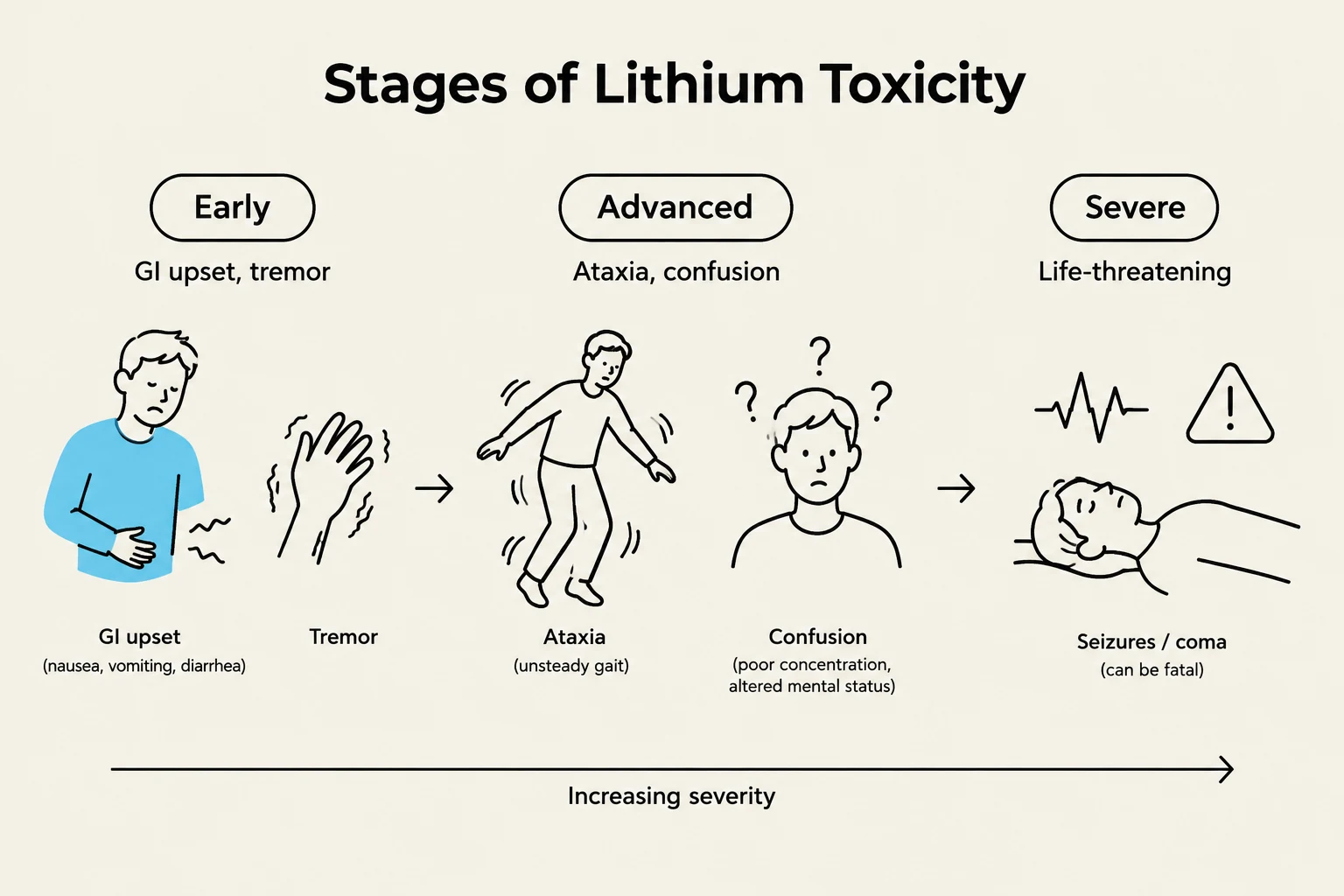
This diagram illustrates the symptoms of lithium toxicity, categorized into early and advanced stages, with increasing lithium levels correlating to symptom severity.
2. Advanced Toxicity (Moderate to Severe)
As levels climb above 1.5 mEq/L, the symptoms become more distinctly neurological and harder to ignore.
Ataxia: A lack of muscle coordination, leading to a staggering gait or difficulty walking.
Confusion and Disorientation: The patient may become increasingly agitated or mentally clouded.
Slurred Speech: Dysarthria is a common hallmark of advanced lithium neurotoxicity.
3. Severe Toxicity (Life-Threatening)
Severe toxicity is a medical emergency. At this stage, the central nervous system and renal systems are failing.
Seizures: Generalized tonic-clonic seizures may occur.
Coma: Loss of consciousness is a sign of profound neurotoxicity.
Renal Failure: High levels of lithium can cause acute kidney injury, creating a dangerous feedback loop where the body cannot clear the lithium, further increasing the concentration.
This diagram illustrates the progression of lithium toxicity through early, advanced, and severe stages, detailing symptoms such as gastrointestinal upset, tremors, ataxia, confusion, and seizures or coma.
Clinical Management and Calculations
When managing a patient, clinicians must be able to interpret the relationship between dose, renal clearance, and serum concentration. If a patient presents with toxicity, the immediate priority is to stop the lithium and stabilize the patient's hydration and electrolyte status.
In some cases of severe toxicity, particularly when levels are extremely high or the patient shows significant neurological impairment, hemodialysis may be required to rapidly remove the lithium from the bloodstream.
Exam Tip: If a question presents a patient on lithium who is also taking an NSAID (like Ibuprofen) and presents with new-onset confusion and tremors, the answer is almost always lithium toxicity exacerbated by decreased renal clearance.
Summary Table for Rapid Review
Feature
Therapeutic Range
Early Toxicity
Advanced/Severe Toxicity
Serum Level
0.6 – 1.2 mEq/L
~1.5 mEq/L
> 2.0 mEq/L
Key Symptoms
Mood stability
Nausea, fine tremor
Ataxia, seizures, coma
Primary Organ
CNS (Stabilization)
GI Tract
CNS & Kidneys
Keep reading for free.
Create an account to finish this reading and make it part of your study routine.