


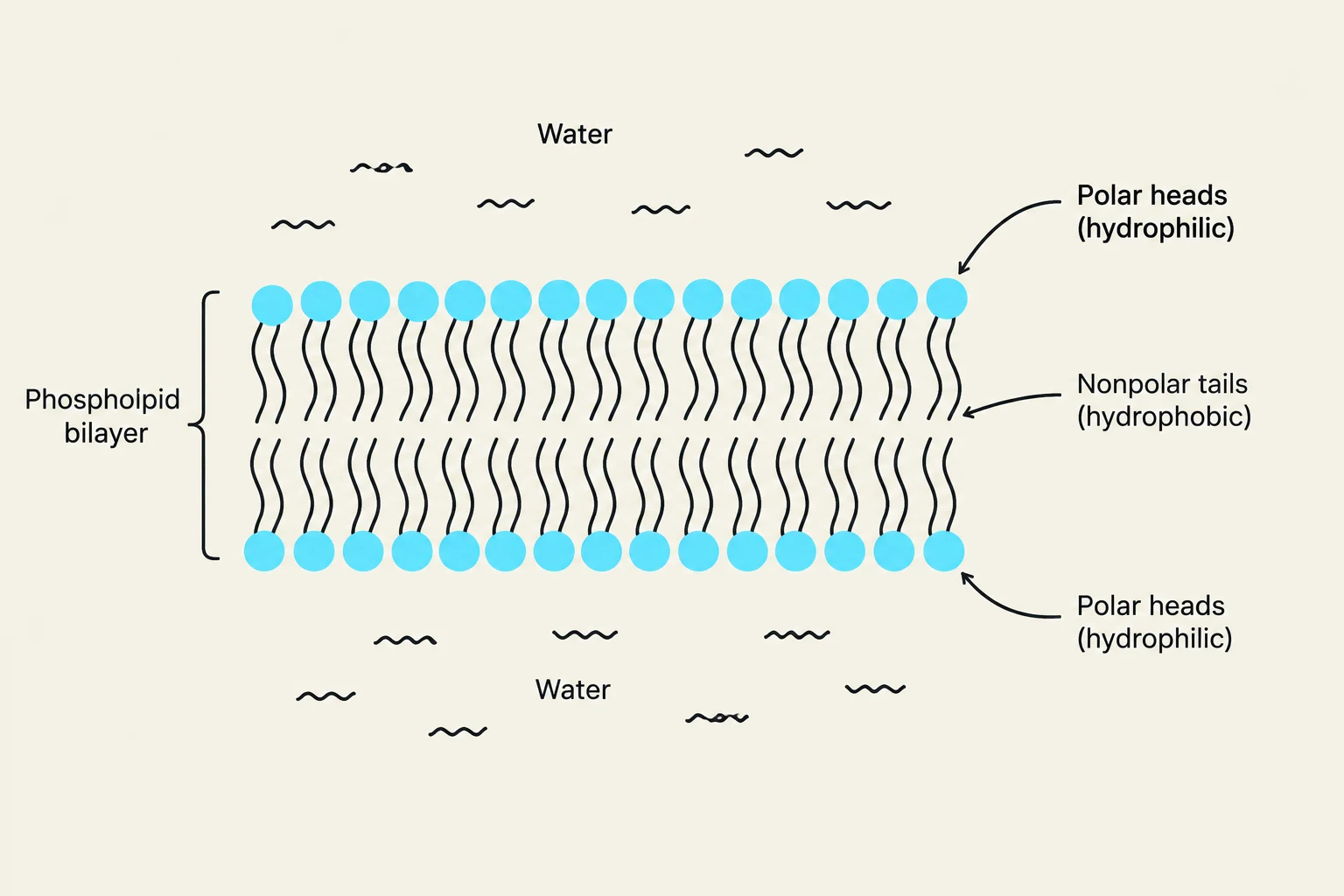
Lipids are a diverse and essential group of molecules characterized by their hydrophobic or amphiphilic nature. Unlike proteins or nucleic acids, which are built from repetitive monomeric units, lipids are defined by their solubility properties. They serve two primary roles in biological systems: acting as concentrated energy reservoirs and providing the structural framework for all cellular membranes.
Fatty Acids: The Building Blocks
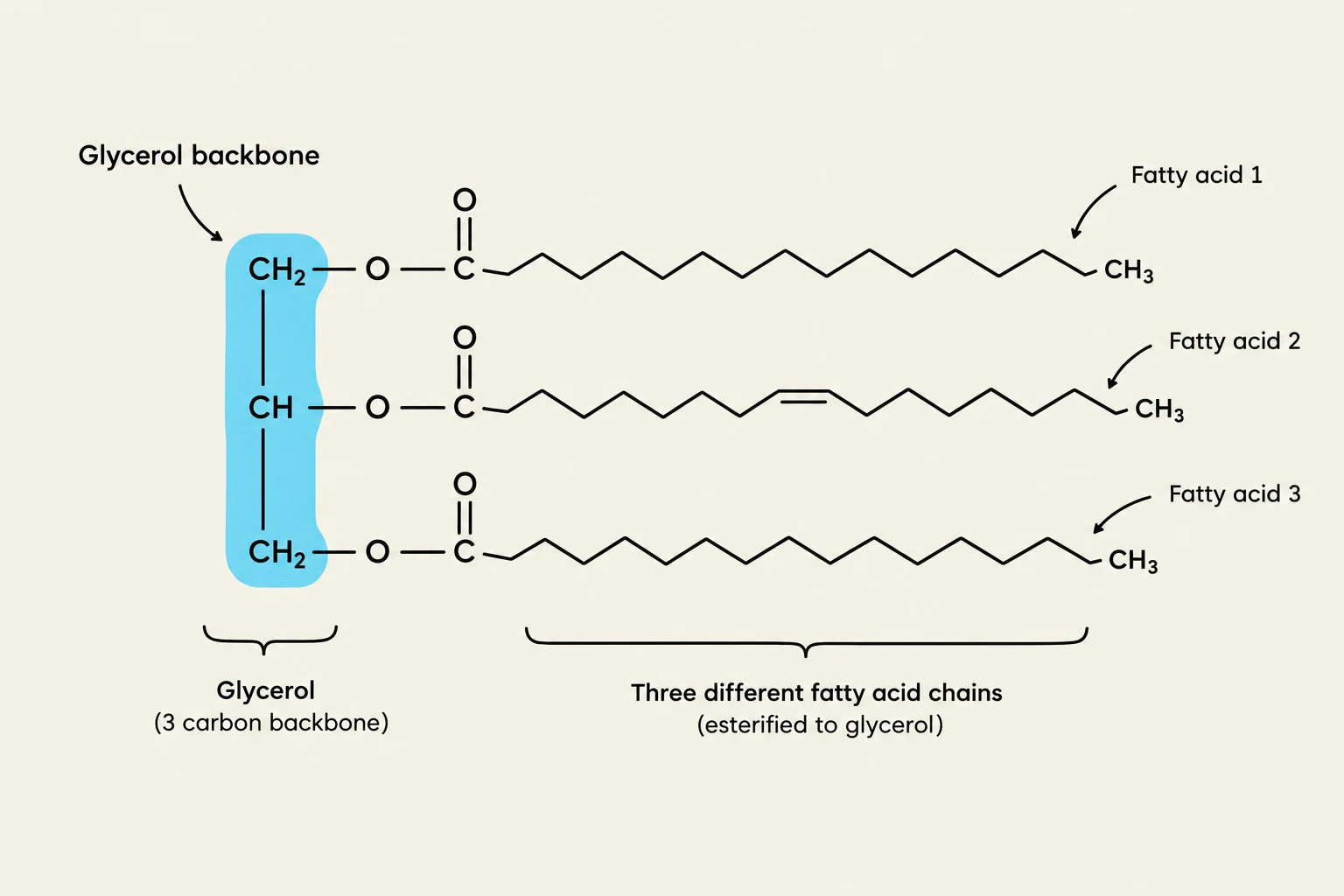
The most fundamental components of many lipids are fatty acids. These are carboxylic acids consisting of a polar carboxyl group ($-COOH$) attached to a long, nonpolar hydrocarbon chain. In higher plants and animals, the most common fatty acids are typically 16 or 18 carbons in length.
Saturated Fatty Acids
Saturated fatty acids contain no double bonds within their hydrocarbon chains. Because the chains are straight and "saturated" with hydrogen atoms, they can pack closely together, which typically results in higher melting points. Examples include:
- Palmitic acid (16:0)
- Stearic acid (18:0)
Unsaturated Fatty Acids
Unsaturated fatty acids contain one or more double bonds in the hydrocarbon chain. These double bonds, often in a cis configuration, introduce "kinks" or bends in the chain. These kinks prevent the molecules from packing tightly, which lowers the melting point and increases the fluidity of the biological structures they inhabit. Examples include:
- Oleic acid (18:1n-9)
- Arachidonic acid (20:4n-6)
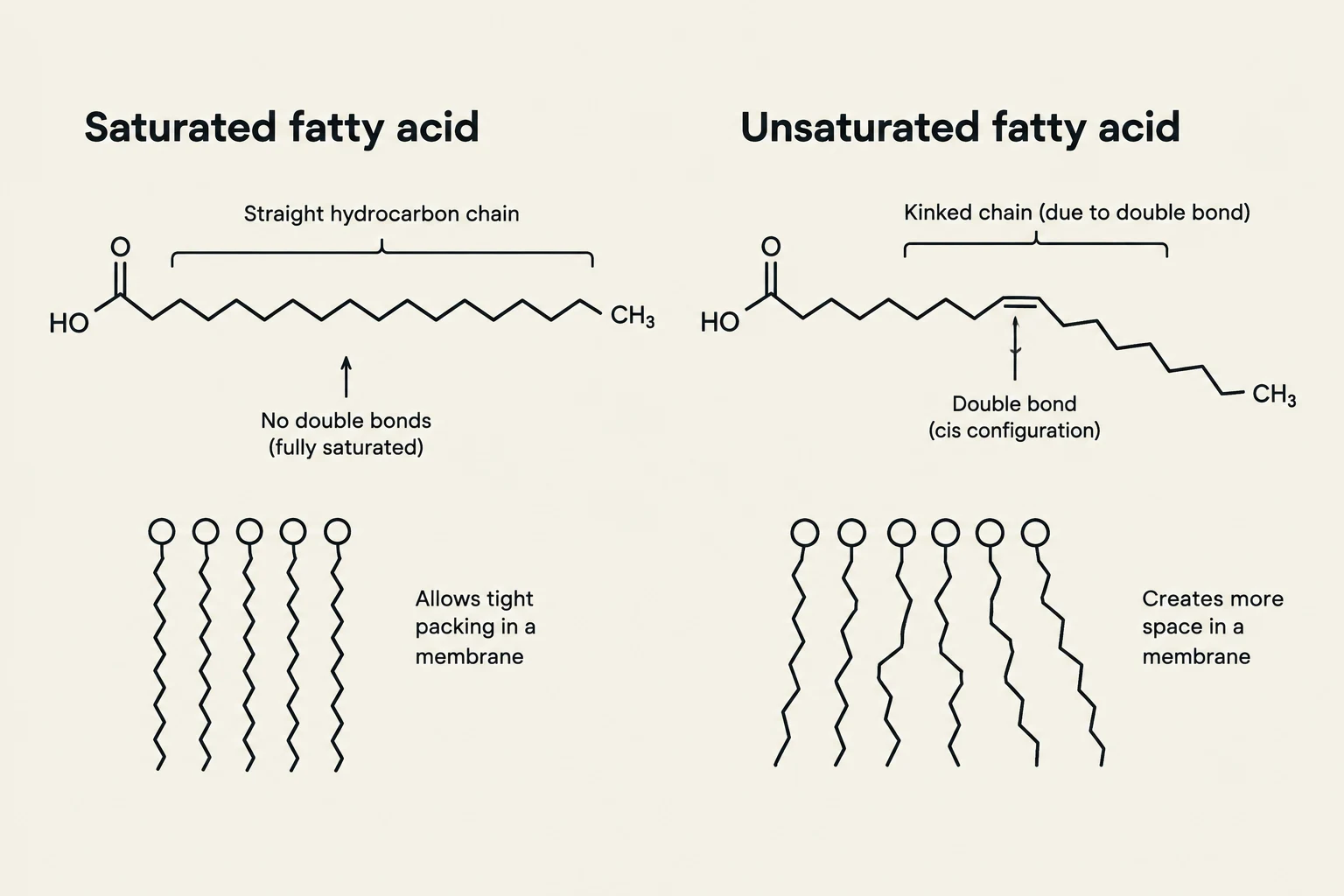
Exam Tip: When asked about the effect of diet or temperature on membrane fluidity, remember that increasing the proportion of unsaturated fatty acids (those with double bonds) will increase membrane fluidity due to the disruptive "kinks" in the tails.
Keep reading for free.
Create an account to finish this reading and make it part of your study routine.
Continue reading freeAlready have an account? Log in
Updated