


When we think of biological molecules, our minds often jump to the complex blueprints of DNA or the high-energy machinery of proteins. However, the very stage upon which these molecules perform—the cell membrane—is defined by a diverse and sophisticated collection of lipids. Lipids are not merely "fats" used for energy storage; they are structural architects, signaling molecules, and gatekeepers that dictate how a cell interacts with its environment. Understanding lipid diversity requires looking beyond simple triglycerides to explore the nuanced roles of phospholipids, sphingolipids, and sterols like cholesterol.
The Foundation: Phospholipids and the Bilayer
The most fundamental component of most biological membranes is the phospholipid. These molecules are amphipathic, meaning they possess both a hydrophilic (water-loving) head and a hydrophobic (water-fearing) tail. Typically, a phospholipid consists of a glycerol backbone attached to two fatty acid chains and a phosphate group that carries a charge.
When placed in an aqueous environment, these molecules spontaneously organize into a bilayer. The hydrophobic tails sequester themselves away from water, facing inward, while the hydrophilic heads face the exterior and interior of the cell. This arrangement creates a semi-permeable barrier that allows the cell to maintain a distinct internal chemistry.
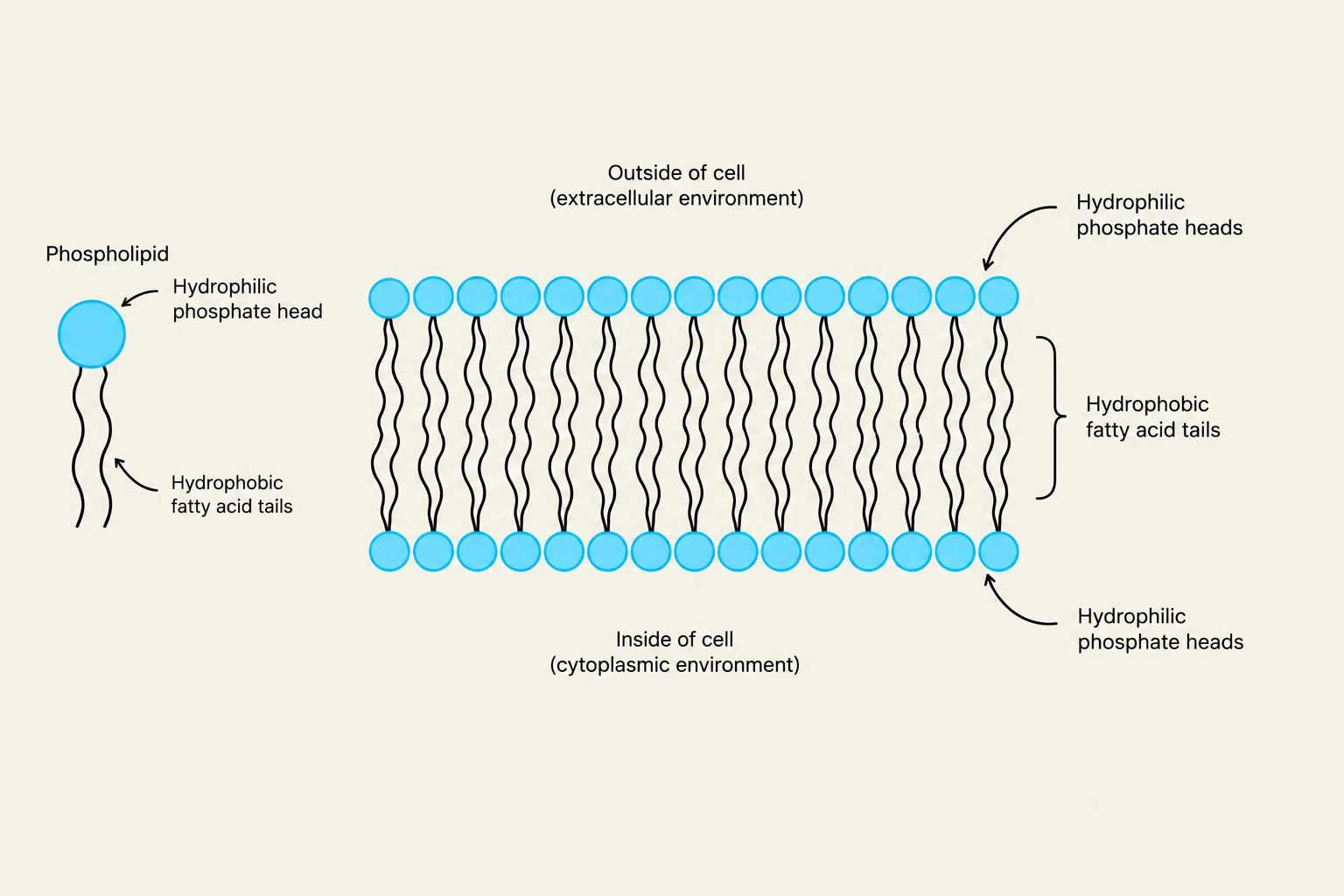
Exam Tip: If a question asks why membranes form spontaneously in water, the answer lies in the amphipathic nature of phospholipids. The "hydrophobic effect" drives the tails together to minimize contact with water, maximizing entropy for the surrounding water molecules.
Keep reading for free.
Create an account to finish this reading and make it part of your study routine.
Continue reading freeAlready have an account? Log in
Updated