Levels of Health Promotion and Disease Prevention in Nursing
This guide explains the three levels of disease prevention (primary, secondary, tertiary) and health promotion strategies used in nursing to enhance client well-being and reduce illness. It covers core concepts, nursing roles in client education across cognitive, affective, and psychomotor domains, and barriers to effe
In the field of nursing, the goal of care extends far beyond treating acute illness in a hospital setting. Nurses are instrumental in shaping long-term health outcomes through two distinct but complementary strategies: health promotion and disease prevention. While health promotion focuses on enhancing a client's overall well-being and quality of life, disease prevention targets the reduction of specific risks and the early detection of illnesses. To implement these strategies effectively, nurses categorize their interventions into three distinct levels: primary, secondary, and tertiary prevention.
Understanding the Core Concepts
Before diving into the levels of prevention, it is essential to distinguish between the two driving forces of nursing intervention.
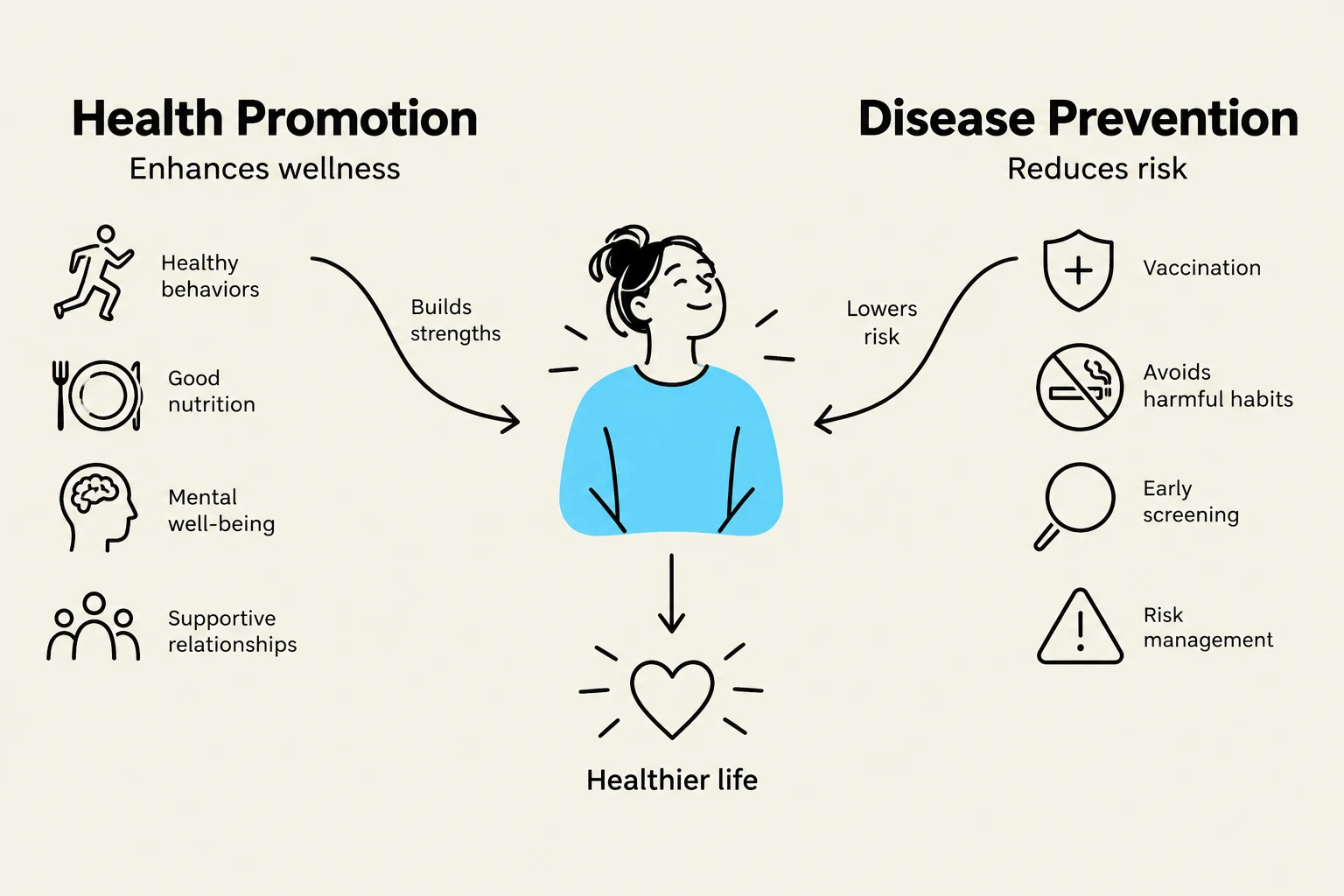
Health Promotion: This involves any activity that works to improve a client's general health and well-being. It is proactive and aims to empower individuals to reach their highest level of wellness.
Disease Prevention: This focuses on specific actions taken to reduce the incidence of disease or to minimize the impact of an existing condition.
Exam Tip: Remember that health promotion is about "moving toward wellness," whereas disease prevention is about "moving away from illness".
This diagram illustrates the concepts of health promotion and disease prevention, outlining factors that contribute to wellness and risk reduction for a healthier life.
Primary Prevention: Preventing the Onset
Primary prevention is the first line of defense. Its primary goal is to prevent disease or illness before it ever occurs by reducing risk factors and increasing a person's resistance to disease. Because the disease is not yet present, the focus is on education and protection.
Key activities in primary prevention include:
Immunizations: Administering vaccines, such as childhood immunizations or shingles vaccines, to prevent infection.
Health Education: Providing foundational information regarding nutrition, regular exercise, and the avoidance of harmful substances.
Wellness Programs: Implementing lifestyle counseling and exercise regimens designed to maintain strength and prevent injuries, such as fall-prevention programs for older adults.
Secondary Prevention: Early Detection
Secondary prevention is utilized when a disease or condition is already present in the body, but the individual is often asymptomatic (showing no symptoms). The primary objective here is early detection and prompt treatment to prevent the condition from progressing, causing further disability, or leading to death.
The most common tool for secondary prevention is screening. Examples include:
Biomarker and Vital Sign Checks: Testing blood pressure to identify hypertension, checking cholesterol levels, or monitoring glucose levels to detect early-stage diabetes.
Early Diagnosis: Rapidly identifying new infections or cancers through diagnostic tests to facilitate immediate treatment and prevent the spread of the condition.
Secondary prevention involves screening for risk factors, early detection of disease, and prompt treatment to improve outcomes.
Tertiary Prevention: Managing Established Disease
Tertiary prevention is directed toward patients who have established chronic illnesses or permanent disabilities. At this stage, the disease cannot be "prevented" in the traditional sense, so the focus shifts to minimizing the effects of the disease, preventing complications, and restoring as much function as possible.
Nursing interventions in tertiary prevention include:
Rehabilitation: Utilizing physical therapy to help a patient regain mobility and independence following a major event like a stroke.
Psychosocial Support: Assisting patients and their families in coping with the emotional and mental challenges of cognitive disorders or terminal illnesses.
Family Education: Training caregivers in specialized tasks, such as how to administer medication via a gastric tube for a patient with dysphagia (difficulty swallowing).
The Nurse's Role in Client Education
Effective prevention requires more than just medical intervention; it requires successful client education. Nurses have a legal, moral, and ethical obligation to provide accurate, evidence-based information that empowers patients to make informed decisions.
To ensure education is effective, nurses must navigate three "domains of learning":
Cognitive Domain (Thinking): Gaining information and developing intellectual abilities (e.g., a patient understanding why they need a medication).
Affective Domain (Feeling): Addressing feelings, values, beliefs, and attitudes (e.g., a patient overcoming the fear of needles).
Psychomotor Domain (Doing): Learning physical skills through demonstration and practice (e.g., a patient successfully performing an insulin injection).
Clinical Note: The most effective education addresses all three domains simultaneously. For example, when teaching ostomy care, a nurse should explain the diet (cognitive), address body image concerns (affective), and demonstrate pouch changes (psychomotor).
Barriers to Effective Prevention and Learning
Even the best prevention plan can fail if the nurse does not account for barriers to learning. One of the most significant barriers is low health literacy, which is the degree to which an individual can obtain, process, and understand basic health information to make decisions.
Other factors that can hinder a patient's ability to engage in prevention or education include:
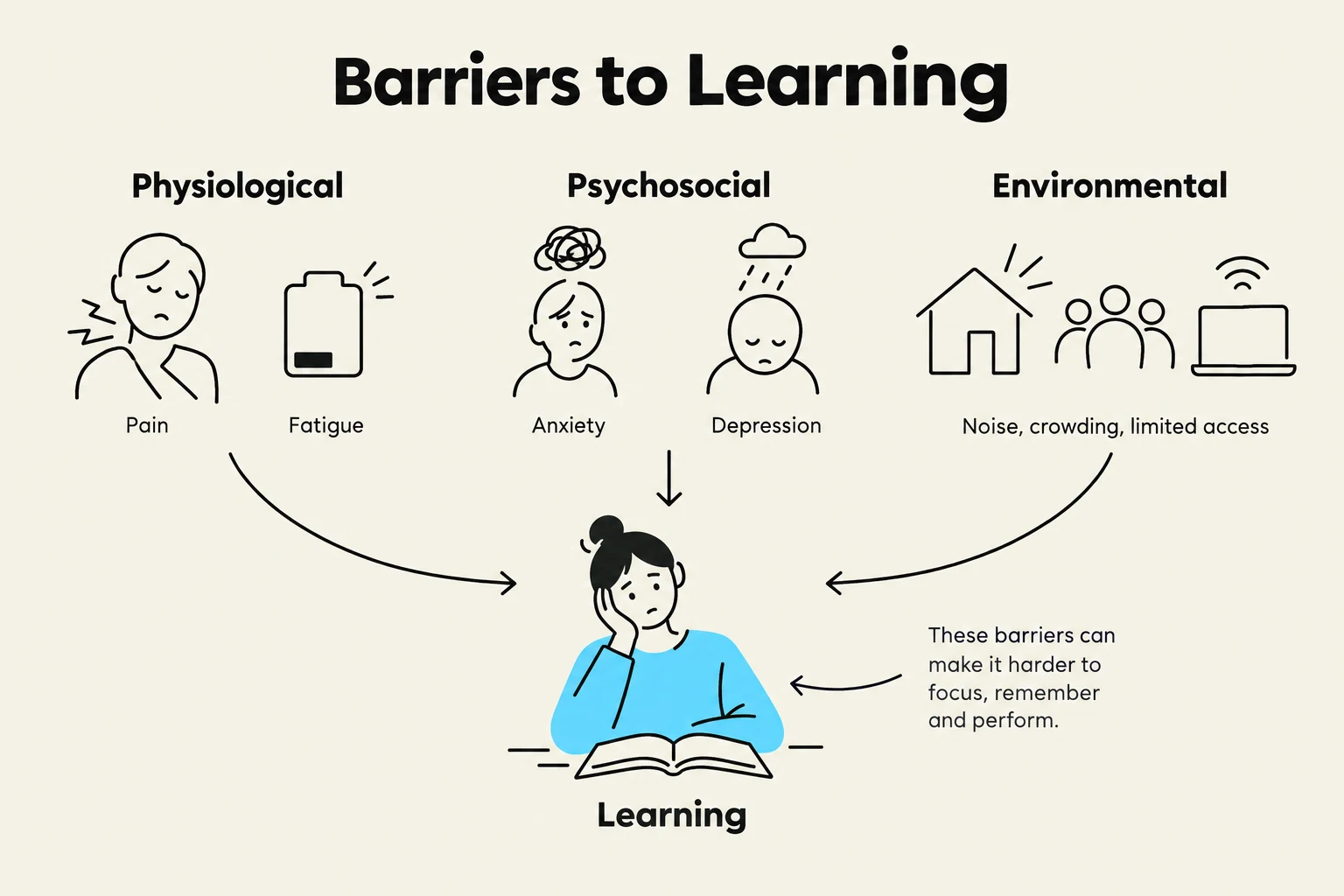
Psychosocial Barriers: High anxiety, depression, or fear regarding a diagnosis.
Physiological Barriers: Pain, fatigue, nausea, or respiratory distress.
Environmental Distractions: Excessive noise, poor lighting, or uncomfortable temperatures.
This diagram illustrates various barriers to learning, categorized as physiological, psychosocial, and environmental, which can impede focus, memory, and performance.
To overcome these, nurses should use the teach-back method, asking the patient to explain the information in their own words or demonstrate a skill to confirm that the message was received accurately.
Keep reading for free.
Create an account to finish this reading and make it part of your study routine.