


In criminal law, specifically under the framework of the Sexual Offences Act 2003, rape is one of the most serious offences. To secure a conviction, the prosecution must prove several distinct elements beyond a reasonable doubt. This article explores the specific legal requirements that constitute the offence, focusing on the physical act, the nature of the penetration, and the critical issue of consent.
The Physical Act: Penetration and Intent
The first component of the offence involves the physical act itself. For a charge of rape to be sustained, there must be intentional penetration of a specific part of the victim's body. Under the law, this is not limited to a single type of contact; rather, it encompasses several anatomical possibilities.
The act must involve the intentional penetration of the vagina, the anus, or the mouth. It is important to note that the law specifies "penile penetration," meaning the instrument used must be the penis. The element of "intent" is crucial here; the prosecution must demonstrate that the defendant intended to perform the act, rather than the penetration being accidental or a result of a different, non-sexual movement.
Exam Tip: When analyzing a problem question, always check if the penetration was "intentional." If the defendant argues the contact was accidental during a struggle, the prosecution must prove the intent to penetrate was present.
The Requirement of Consent
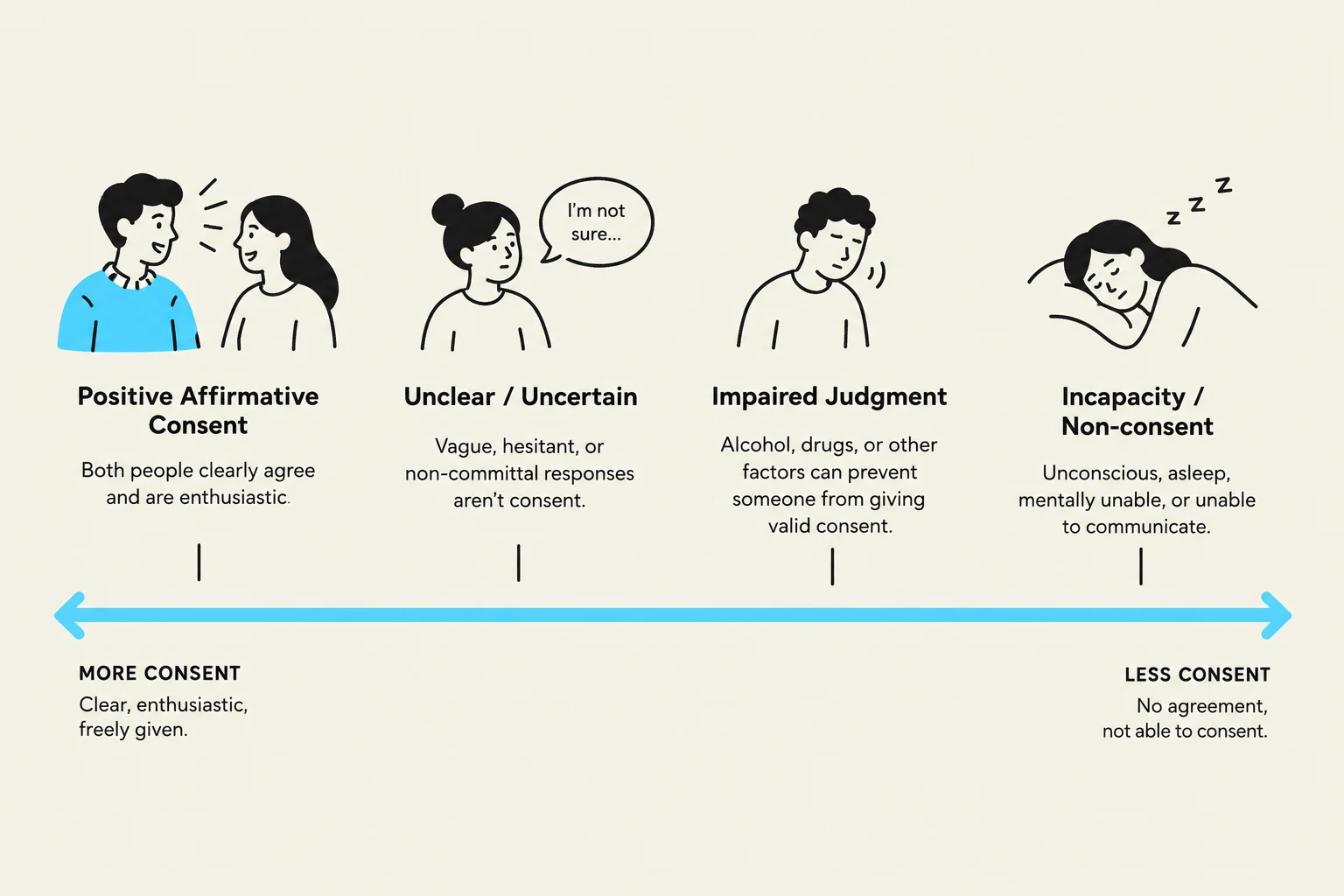
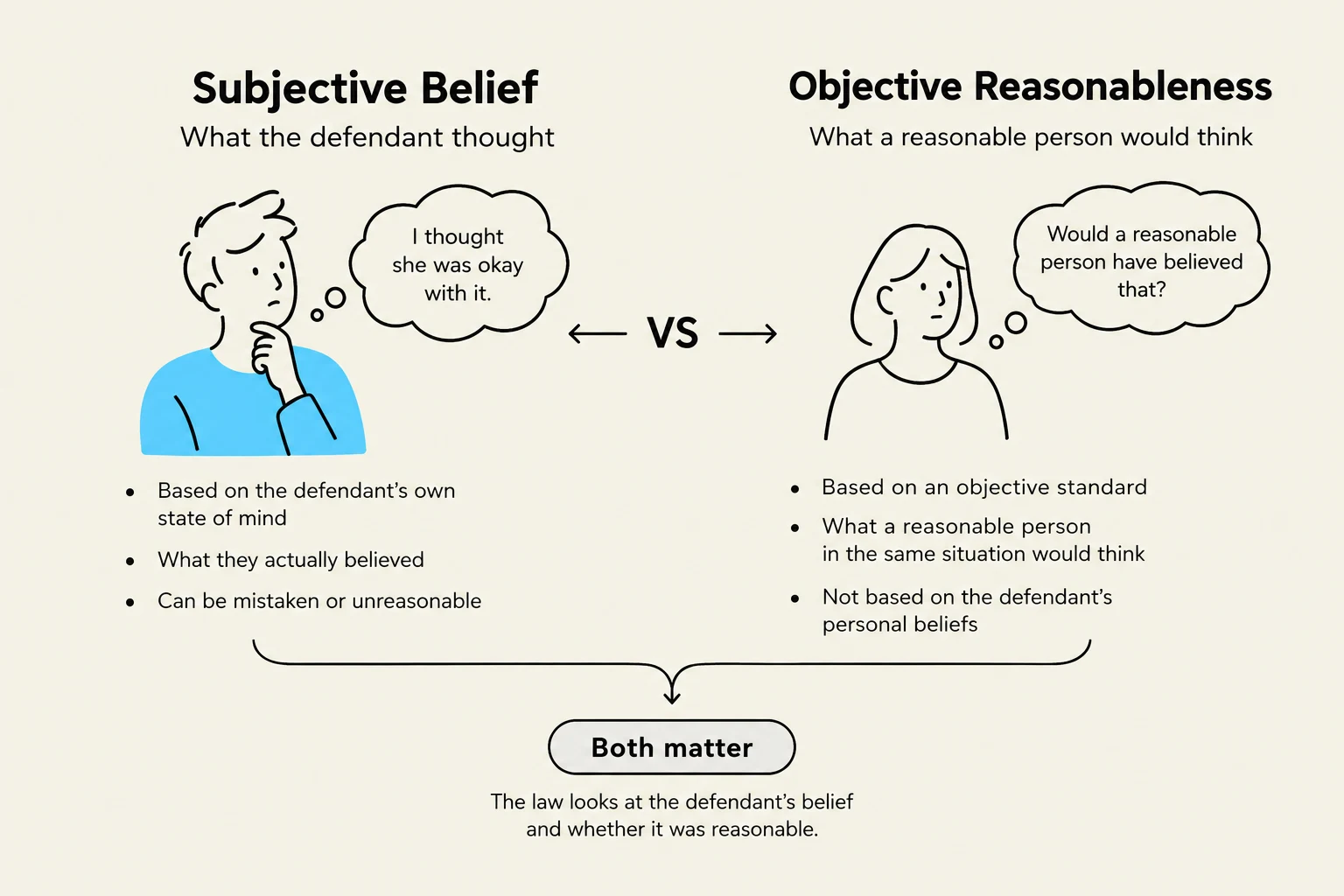
The most complex and frequently litigated element of rape is the absence of consent. For an act to be considered rape, it must occur without the consent of the complainant.
Keep reading for free.
Create an account to finish this reading and make it part of your study routine.
Continue reading freeAlready have an account? Log in
Updated