


A career is not something that simply happens to you; it is a journey that you must actively direct. For many professionals, especially those entering demanding fields like nursing, the transition from student to practitioner can feel overwhelming. To navigate this complexity, you must adopt a dual mindset: you must be both the architect of your future and the manager of your daily progress.
Leading vs. Managing Your Career
Effective career development requires a distinction between two fundamental activities: leading and managing.
Leading is the visionary component. It involves looking upward and outward to create a long-term vision of who you wish to become and what you want to achieve. It is about your "why" and your highest aspirations.
Managing is the operational component. It entails making specific, tactical decisions and engaging in targeted activities that enable you to realize that vision. If leading is choosing the destination, managing is the act of driving the vehicle.
Pro-Tip: If you only "manage," you may find yourself working hard but moving in a direction that doesn't actually satisfy your long-term goals. If you only "lead," you may have beautiful dreams but never achieve them because you lack a concrete plan of action.
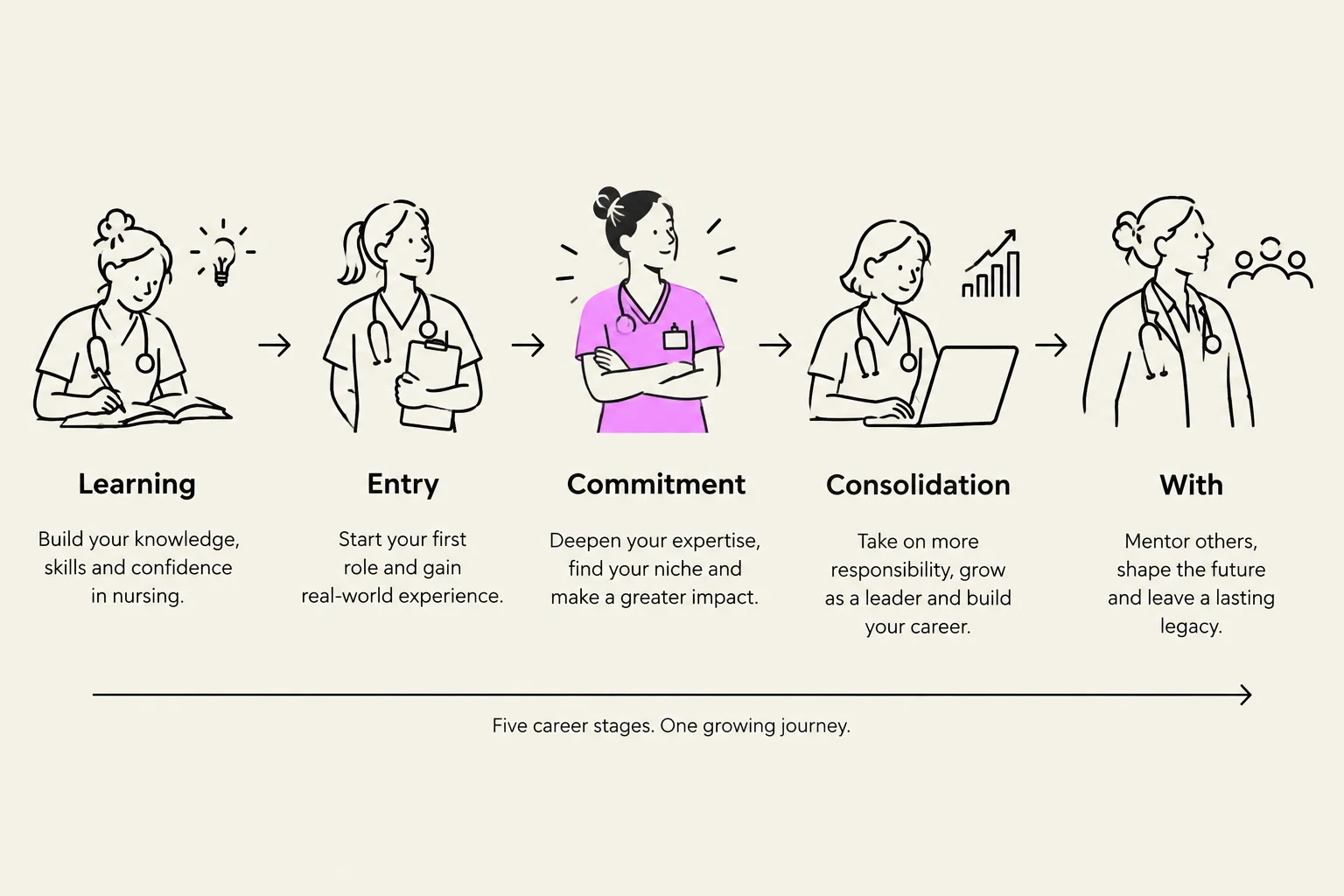
The Five Stages of Career Progression
A career is a continuous, multifaceted process of transition. While every individual's path is unique, most professional lives move through five distinct stages:
- Learning: The foundational period where you acquire core knowledge and skills.
- Entry: The transition into the professional workforce.
- Commitment: Establishing your place within the profession and deepening your involvement.
- Consolidation: Refining expertise and building professional stability.
- Withdrawal: The final stage of the professional lifespan.


Keep reading for free.
Create an account to finish this reading and make it part of your study routine.
Continue reading freeAlready have an account? Log in
Updated