


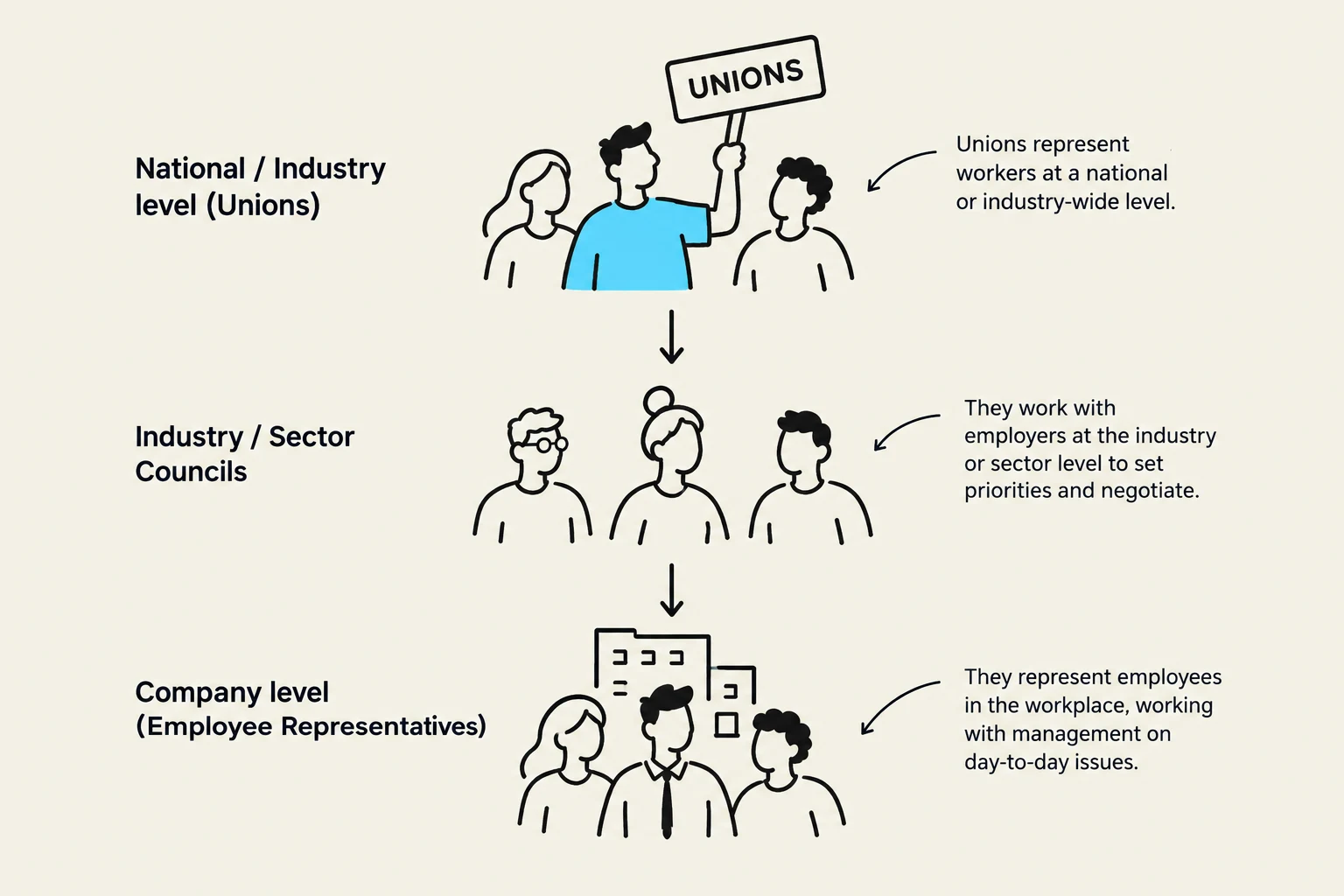
In the modern legal framework of employment, the relationship between employers and employees is not merely a private contract between two parties. Instead, it is governed by a complex system of "social dialogue" designed to ensure that workers have a voice in the decisions that affect their lives. This dialogue occurs through various levels of representation, ranging from high-level national policy discussions to day-to-day interactions within a single company. Understanding how these representatives are chosen and how much power they hold is fundamental to mastering labour law.
The Framework of Social Dialogue
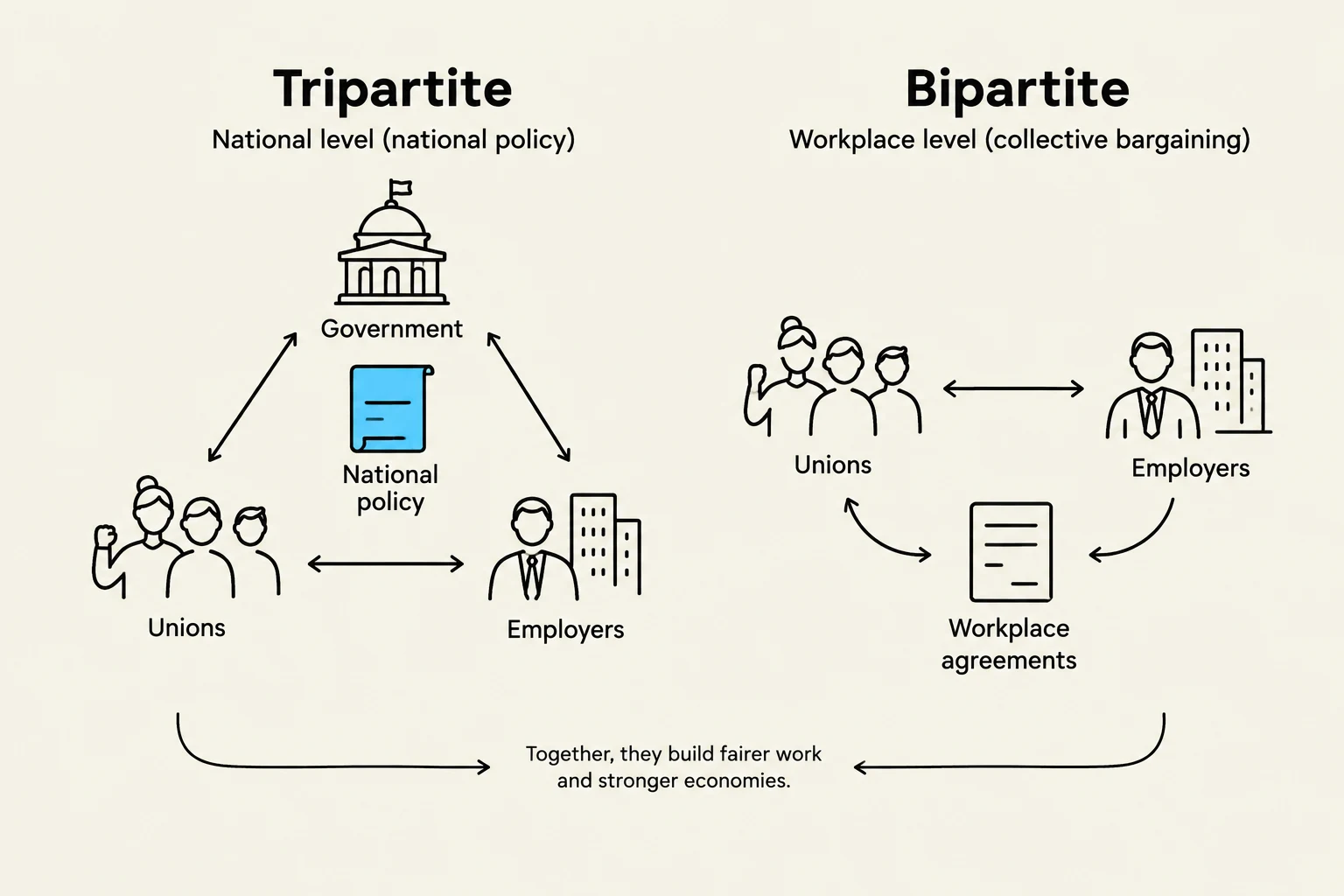
Social dialogue is categorized into two primary structures: tripartite and bipartite.
- Tripartite Dialogue: This involves three parties: the Government, the most representative unions, and employers' associations. This level is primarily concerned with national laws and broad social policies. A key institution here is the Economic and Social Council (CES), where major economic decisions are consulted. It is important to note that while the CES provides a platform for consultation, it generally lacks "blocking power," meaning the Government can proceed with initiatives even without a formal agreement from the Council.
- Bipartite Dialogue: This is the "centre of the employment relations system" and focuses on specific working conditions. It occurs between the employer (or company management) and the workers' representatives (unions or elected delegates).
Bipartite dialogue manifests in two main ways: Joint Consultation, which is an exchange of views and dialogue, and Collective Bargaining, which is the formal process of reaching agreements regarding workplace rules and working conditions.
Keep reading for free.
Create an account to finish this reading and make it part of your study routine.
Continue reading freeAlready have an account? Log in
Updated