


Transitioning from theoretical classroom learning to hands-on clinical application requires a disciplined approach to both safety and preparation. In a laboratory setting, success is defined by two main pillars: the strict adherence to infection control protocols through the correct use of Personal Protective Equipment (PPE) and the readiness of essential clinical tools. This article outlines the standardized procedures for managing PPE and the requirements for upcoming clinical skills training.
Infection Control: The Importance of PPE
Personal Protective Equipment (PPE) refers to any specialized clothing or equipment worn by healthcare workers to protect themselves and their patients from infectious agents. The selection of PPE is not arbitrary; it must be based on the potential infectious agent the patient may have and the appropriate size of the equipment to ensure a proper fit.
The process of putting on PPE is known as donning, while the process of taking it off is known as doffing. Because healthcare environments can contain airborne illnesses (such as tuberculosis) or droplet-based pathogens, following the correct sequence is vital to prevent self-contamination.
The Donning Sequence
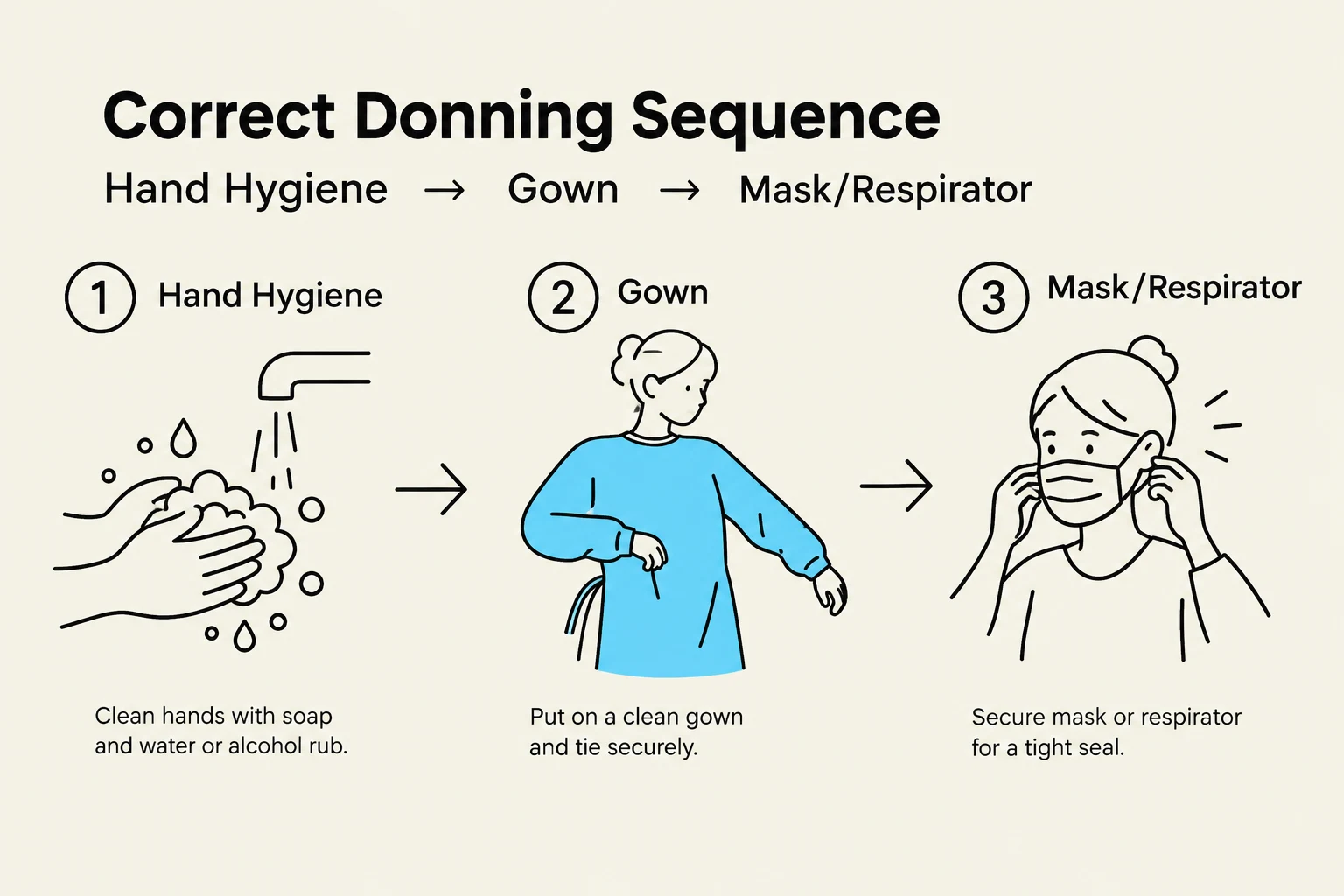
Before entering a patient care area, a practitioner must perform hand hygiene and then follow a specific order to ensure no part of the body is left exposed:
- Gown: Slide the gown up the arms and secure the ties in the back.
- Mask or Respirator: Place the mask over the nose and mouth, molding the nose piece with your fingertips to ensure a seal.
- Goggles or Face Shield: Ensure they fit snugly to protect the eyes from splashes.
- Gloves: Apply gloves last, extending the cuffs of the gloves over the sleeves of the gown.
Keep reading for free.
Create an account to finish this reading and make it part of your study routine.
Continue reading freeAlready have an account? Log in
Updated