


Poetry is often described as "painting with words". Unlike prose, which is written in the way most people speak and write in everyday life, poetry uses language in a special, artistic, and imaginative way to create emotions, tell stories, or describe the world. While prose focuses on the direct communication of ideas or narratives, poetry relies on a condensed and lyrical use of language to evoke strong feelings in the reader.
Imagery and Figurative Language
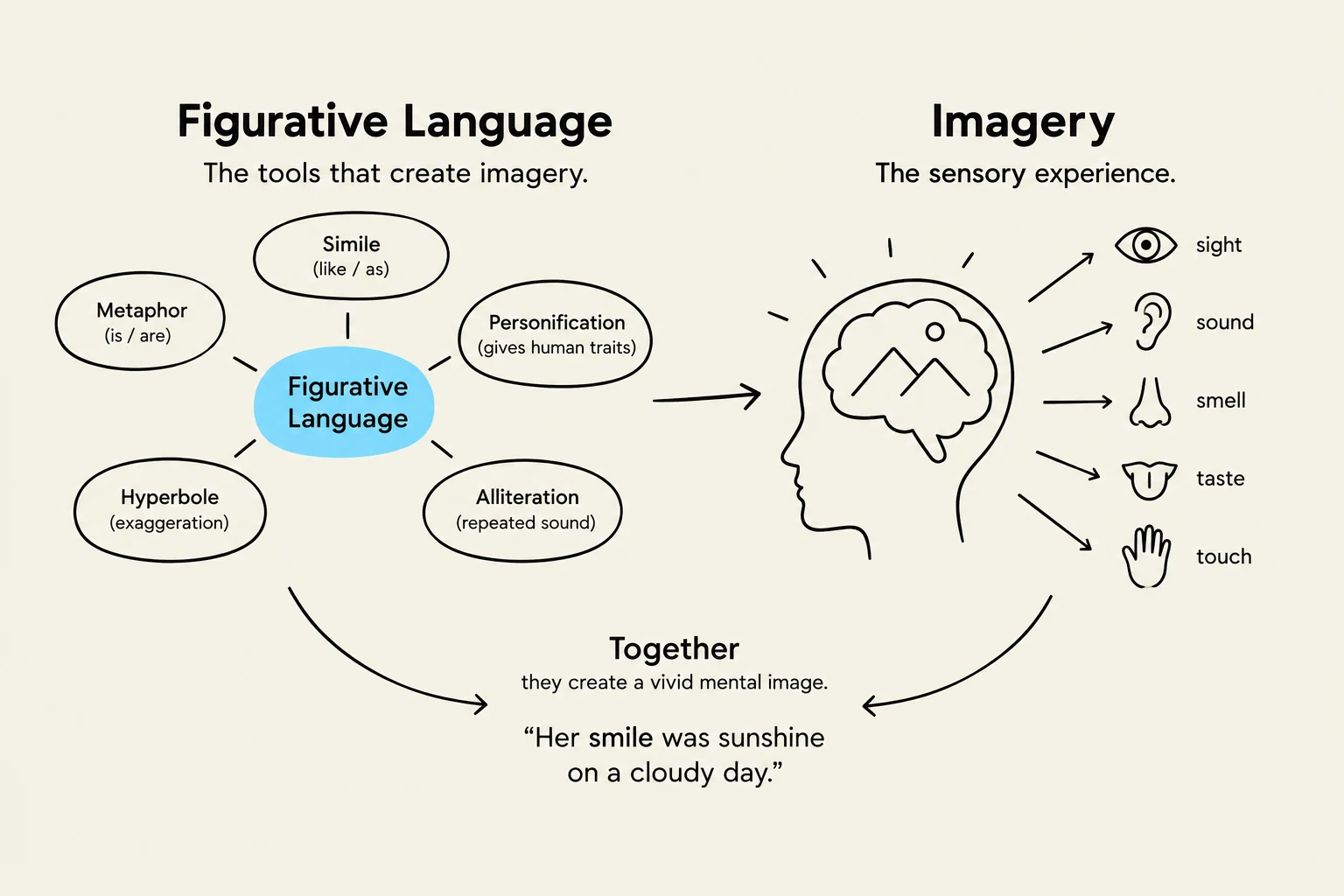
At the heart of most poems is imagery. Poets use vivid language to create mental images, appealing to the five senses: sight, sound, taste, touch, and smell. This sensory detail allows the reader to "see" or "feel" the poem rather than just reading it.
To deepen this imagery, poets employ figurative language. This includes several specific devices that add layers of meaning beyond the literal definitions of words:
- Simile: A direct comparison between two unlike things using the words "like" or "as". For example, "Her smile was as bright as the sun".
- Metaphor: A comparison that states one thing is another, without using "like" or "as". An example is "Time is a thief".
- Personification: Attributing human characteristics to non-human things, such as animals, objects, or abstract ideas. For example, "The wind whispered through the trees".
- Symbolism: The use of symbols to represent larger ideas or qualities.
Keep reading for free.
Create an account to finish this reading and make it part of your study routine.
Continue reading freeAlready have an account? Log in
Updated