


When we move our bodies, we are witnessing the coordinated effort of the musculoskeletal system. At the heart of this movement are the points where our bones meet. A joint, also known as an articulation, is any point where two bones meet, regardless of whether movement occurs at that interface. To understand how these connections work, we look to two distinct scientific disciplines: arthrology, the study of joint structure, function, and dysfunction, and kinesiology, the study of musculoskeletal movement.
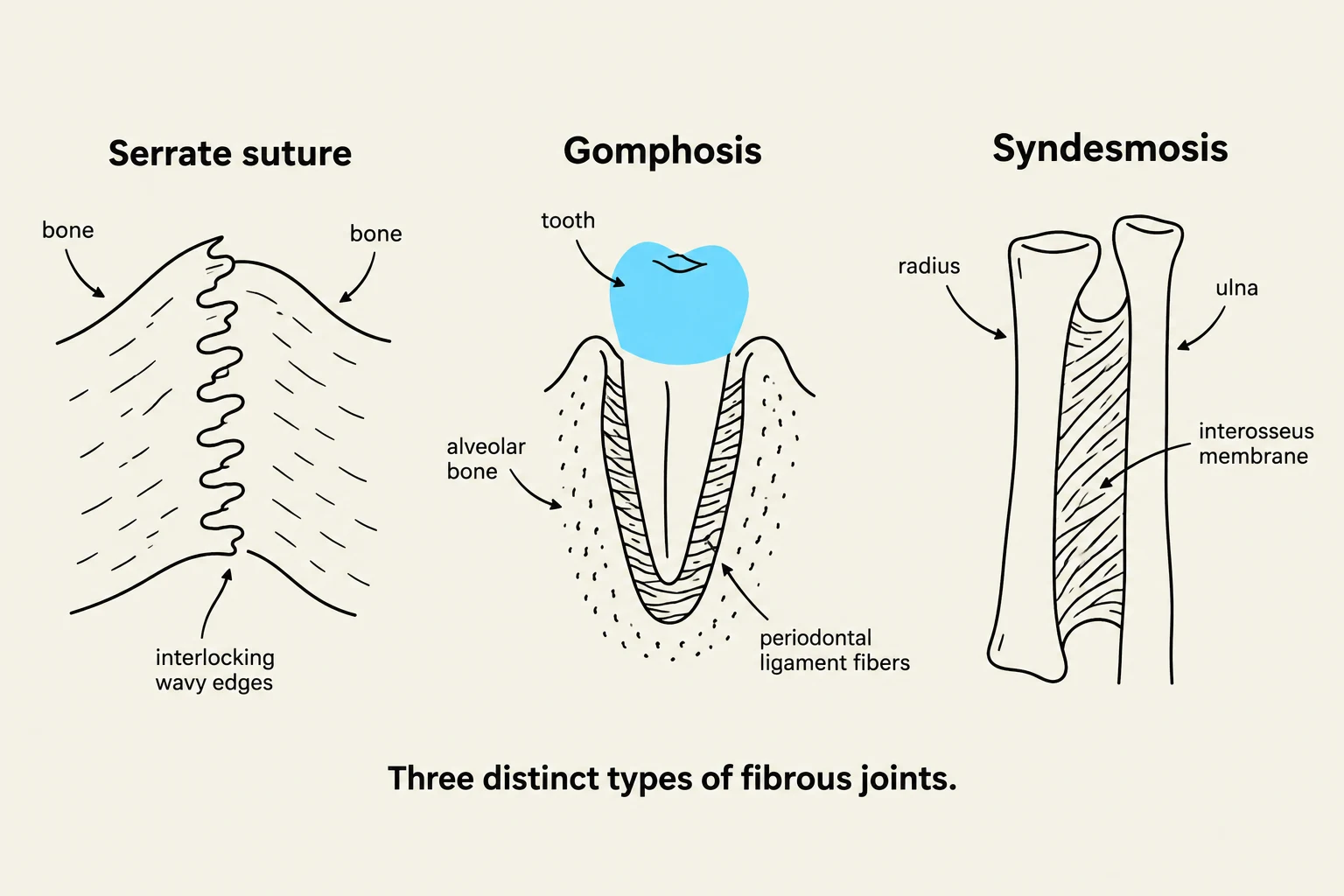
Joints are typically named based on the bones they connect; for example, the articulation between the radius and the ulna is known as the radioulnar joint. While they all serve to connect the skeletal framework, they vary wildly in their structure and the degree of movement they allow.
Classification of Joints
Joints are primarily classified according to the manner in which the bones are bound together. This structural classification divides joints into four major categories: bony, fibrous, cartilaginous, and synovial joints.
Bony Joints (Synostosis)
A bony joint, or synostosis, is an immobile joint formed when the gap between two bones ossifies, effectively merging them into a single bone. This process can occur in either fibrous or cartilaginous joints.
Synostosis is often a feature of aging. For instance, the parietal bones along the sagittal suture may fuse as a person ages, and the first rib may eventually attach to the sternum. A significant example is the development of the hip bone, where the ilium, ischium, and pubis fuse together to form a single structure in adults.

Keep reading for free.
Create an account to finish this reading and make it part of your study routine.
Continue reading freeAlready have an account? Log in
Updated