


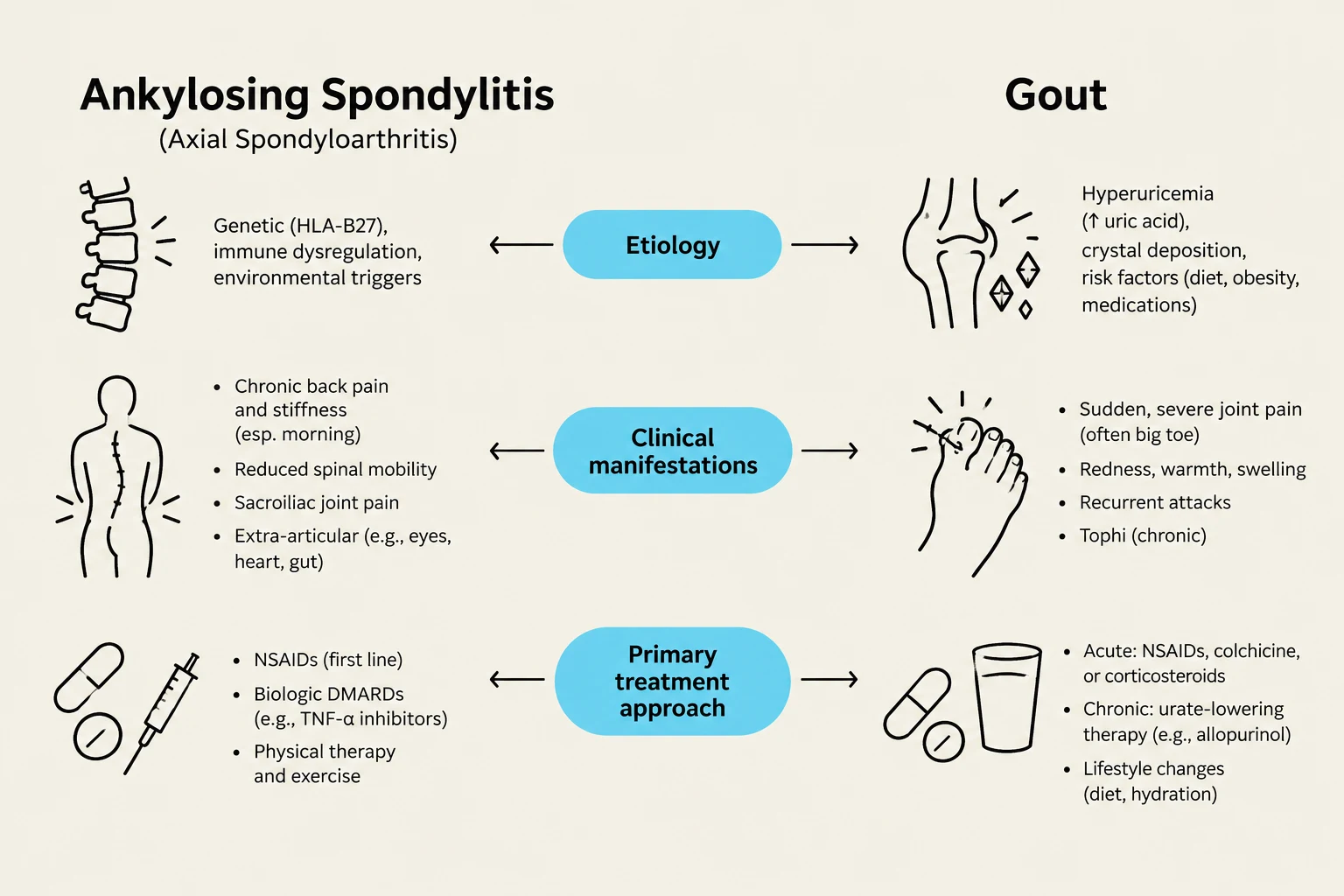
The musculoskeletal system is a complex network of bones, joints, muscles, and connective tissues that provide structure, facilitate movement, and protect vital organs. While many joint conditions are degenerative, such as osteoarthritis, others are driven by intense inflammatory processes or metabolic imbalances. Understanding the distinction between non-inflammatory "wear and tear" and inflammatory diseases is crucial for clinical diagnosis and effective management. This article focuses on two significant inflammatory conditions: Ankylosing Spondylitis and Gout.
Ankylosing Spondylitis: The "Bamboo Spine"
Ankylosing spondylitis (AS) is a chronic inflammatory disease that primarily targets the joints of the axial skeleton. Unlike rheumatoid arthritis, which often presents as symmetrical polyarthritis in the peripheral joints, AS typically begins in the sacroiliac joints and progresses up the spinal column. It is most common in males and often has an early onset between the ages of 20 and 30.
Pathogenesis and the HLA-B27 Connection
The etiology of AS is closely linked to genetics. There is a strong association with the HLA-B27 antigen, which may increase a patient's susceptibility to infections or trigger an immune response through molecular mimicry.
The disease process follows a specific pathological pattern:
- Inflammation: The process begins with inflammation of the fibrocartilage within the joints.
- Immune Infiltration: This inflammation leads to the infiltration of immune cells and subsequent cartilage erosion.
- Calcification: As the body attempts to repair the damage, scar tissue forms and eventually calcifies.
- Fusion: Over time, this calcification leads to the fusion of the spinal column, a condition often referred to as "bamboo spine".
Clinical Note: Complications of AS can be severe. Fusion of the costovertebral joints can reduce lung volume, and spinal fractures or Cauda equina syndrome (resulting in loss of bowel/bladder control) are significant risks.

Keep reading for free.
Create an account to finish this reading and make it part of your study routine.
Continue reading freeAlready have an account? Log in
Updated