


Agriculture is one of the largest consumers of freshwater globally. As populations grow and climate change alters precipitation patterns, the way we deliver water to crops becomes a critical factor in food security and environmental sustainability. Irrigation—the artificial application of water to land—can be performed using various methods, each offering a different balance of cost, labor, and water conservation efficiency.
Surface Irrigation: Flood and Furrow Methods
Surface irrigation is one of the oldest and most common methods used in agriculture. It relies on gravity to move water across the soil surface.
Flood Irrigation
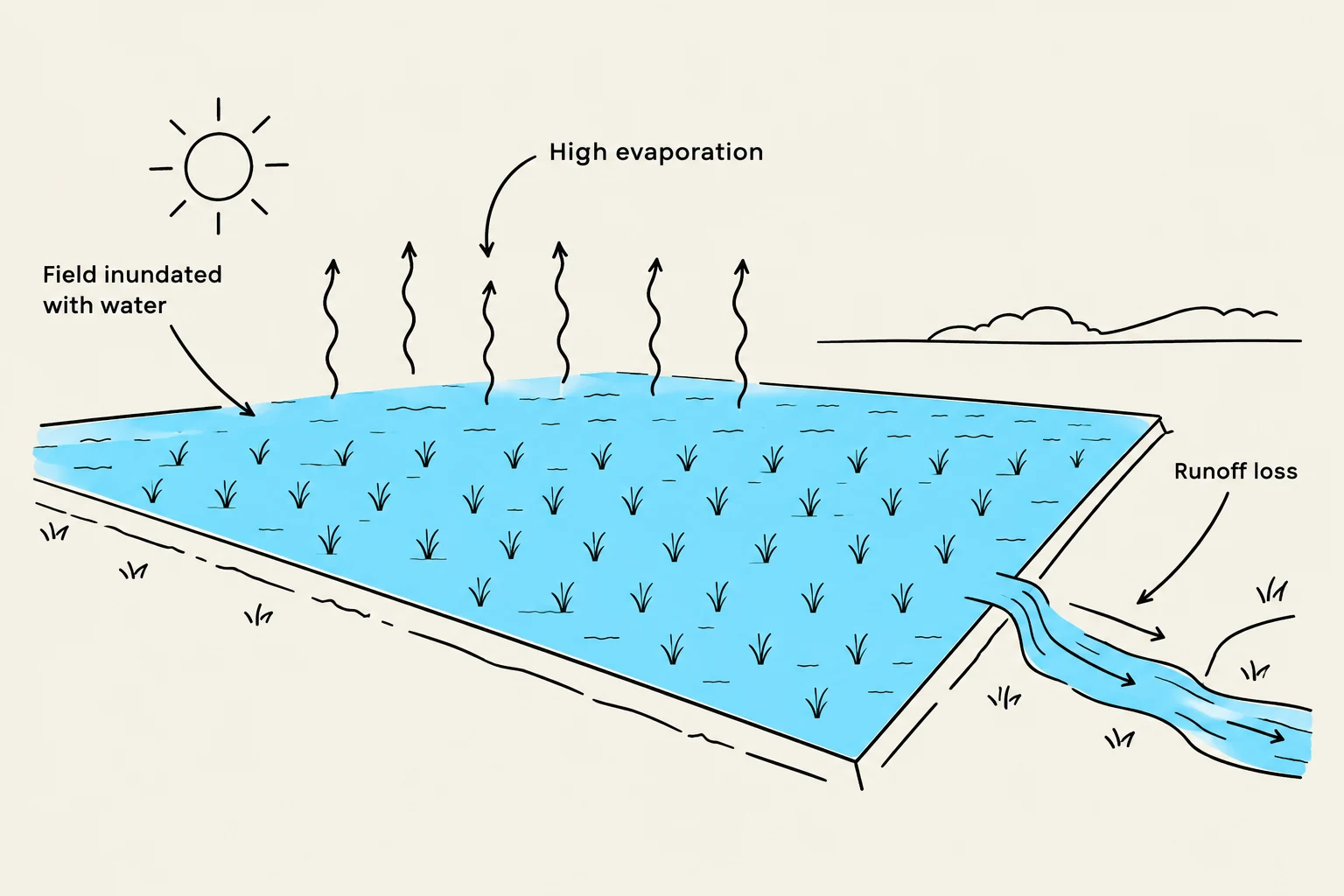
In flood irrigation, large volumes of water are released onto a field, covering the entire surface in a shallow layer of water. This method is often used for crops that can tolerate "wet feet" or in areas where water is abundant and inexpensive. However, it is notoriously inefficient due to high rates of evaporation and runoff.
Furrow Irrigation
A more controlled variation of surface irrigation is furrow irrigation. Instead of flooding the entire field, water is channeled through small, parallel trenches (furrows) dug between crop rows. This allows the water to seep into the root zone of the plants while minimizing the amount of water sitting on the surface compared to total flooding.
Exam Tip: When comparing surface methods, remember that while furrow irrigation is more efficient than flood irrigation, both are significantly less efficient than pressurized systems because they are highly susceptible to evaporation and deep percolation (water sinking too deep for roots to reach).

Keep reading for free.
Create an account to finish this reading and make it part of your study routine.
Continue reading freeAlready have an account? Log in
Updated