


Thermodynamics is a fundamental branch of science that explores how energy moves and transforms within a system. At its core, it seeks to explain why certain processes happen spontaneously while others require constant energy input, and how temperature changes affect the state of matter. Whether you are looking at a steaming cup of coffee cooling down or a chemical reaction powering an engine, you are witnessing the laws of thermodynamics in action.
The Basics: Systems and Surroundings
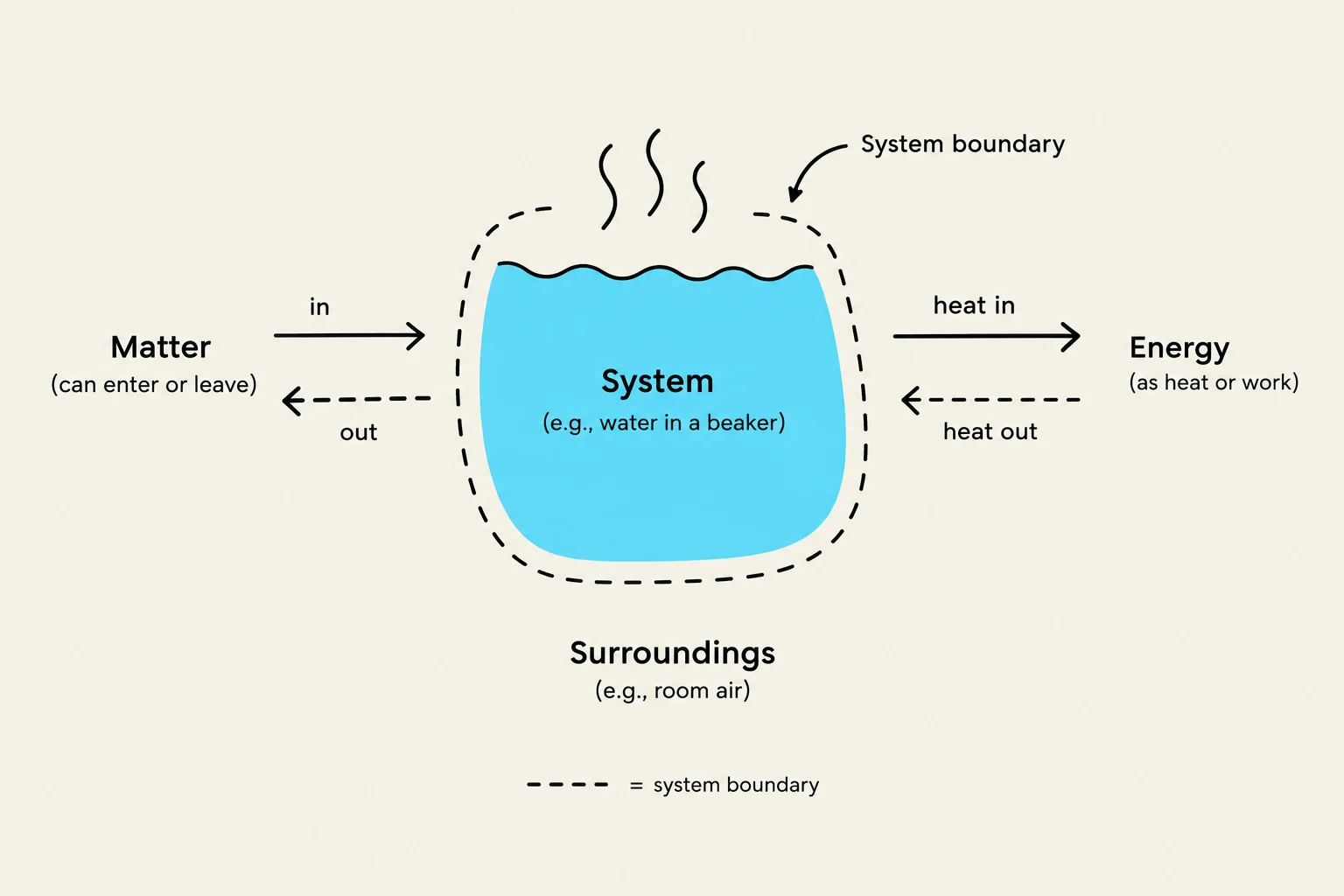
To study thermodynamics, we must first define our boundaries. Scientists divide the universe into two distinct parts: the system and the surroundings.
- The System: The specific part of the universe we are focusing on (e.g., the chemicals inside a beaker).
- The Surroundings: Everything else in the universe outside the system.
The interaction between these two is where the "magic" happens. Energy can be exchanged between the system and its surroundings in the form of heat or work. Depending on how much exchange occurs, we categorize systems into three types:
- Open Systems: Can exchange both energy and matter with surroundings.
- Closed Systems: Can exchange energy (heat/work) but not matter.
- Isolated Systems: Can exchange neither energy nor matter.
Exam Tip: When solving problems, always identify your "system" first. If the problem mentions a "sealed container," you are likely dealing with a closed system where mass cannot escape.

Keep reading for free.
Create an account to finish this reading and make it part of your study routine.
Continue reading freeAlready have an account? Log in
Updated