


The human body relies on a sophisticated, high-speed communication network to survive and interact with its environment. This network, known as the nervous system, acts as a rapid control center that constantly monitors internal and external conditions. Unlike the endocrine system, which relies on the relatively slow travel of hormones through the bloodstream to elicit responses, the nervous system uses electrical and chemical impulses to provide near-instantaneous feedback and action.
Core Functions: Sensation, Integration, and Reaction
To maintain homeostasis—the stable internal environment required for survival—the nervous system performs three fundamental tasks in a continuous loop:
- Sensation: The system monitors stimuli (changes in the environment) through specialized receptors. This can include external stimuli like touch or temperature, or internal stimuli from the viscera.
- Integration: Once information is sensed, it is sent to the processing centers of the body. Here, the input is analyzed, interpreted, and a decision is made regarding the appropriate response.
- Reaction: After integration, the system produces a motor output. This is the physical response, such as a muscle contraction or a gland secretion, that addresses the original stimulus.
Anatomical Organization: CNS and PNS
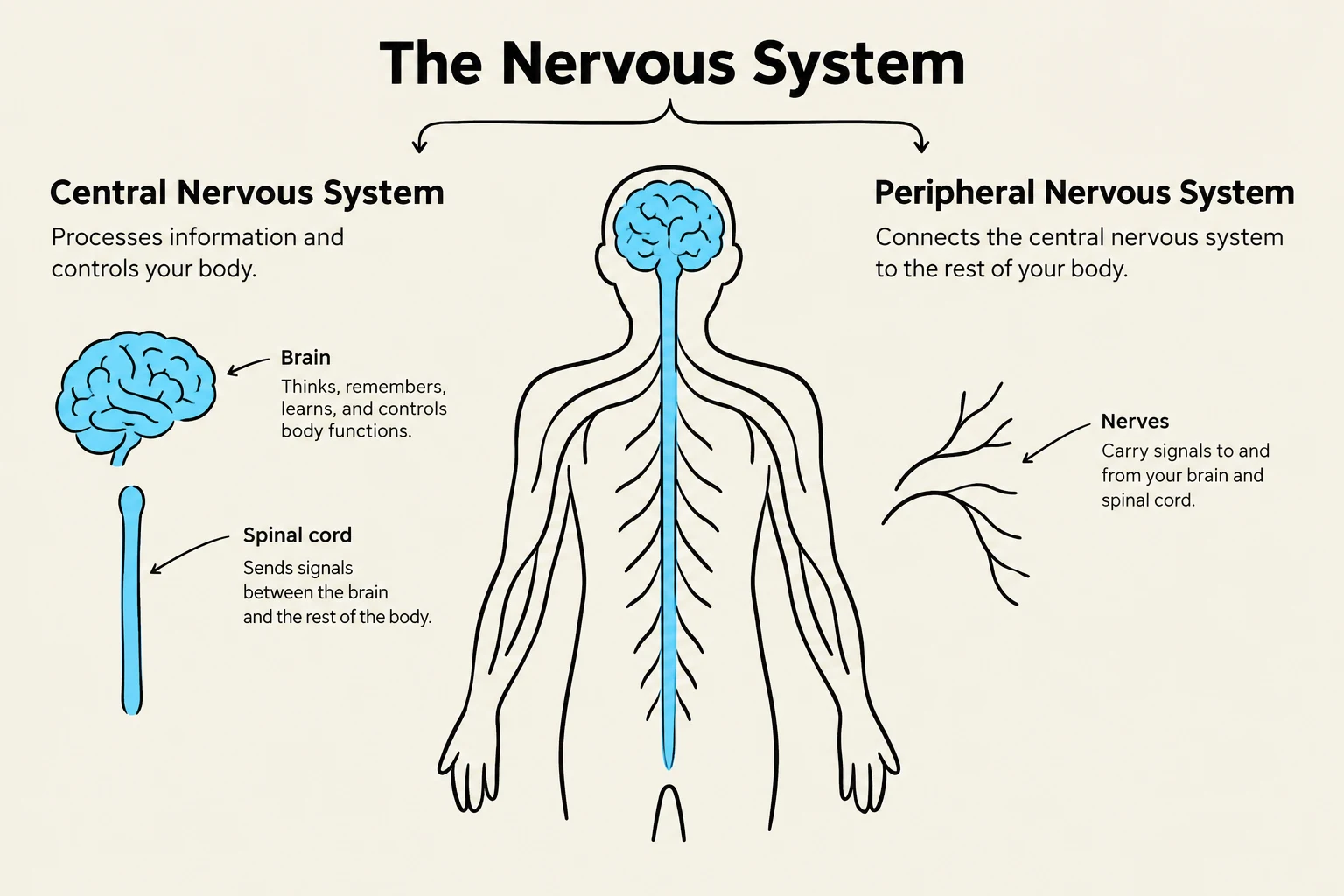
The nervous system is structurally divided into two main components: the Central Nervous System and the Peripheral Nervous System.
The Central Nervous System (CNS)
The CNS serves as the primary command center. It consists of the brain, which handles higher-level processing and complex integration, and the spinal cord, which acts as the information "highway" connecting the brain to the rest of the body. Because of its critical importance, the CNS is encased in bone (the skull and vertebral column) for physical protection.
Keep reading for free.
Create an account to finish this reading and make it part of your study routine.
Continue reading freeAlready have an account? Log in
Updated