


In the food service industry, safety is not a single event but a continuous process. To ensure that every meal served is safe for consumption, professionals must manage a series of interconnected stages known as the flow of food. This process begins the moment ingredients are ordered and ends only when the food is consumed by the customer.
By understanding each step in this sequence and identifying the specific risks associated with them, food service operators can implement rigorous protocols to prevent foodborne illnesses.
The Stages of the Flow of Food
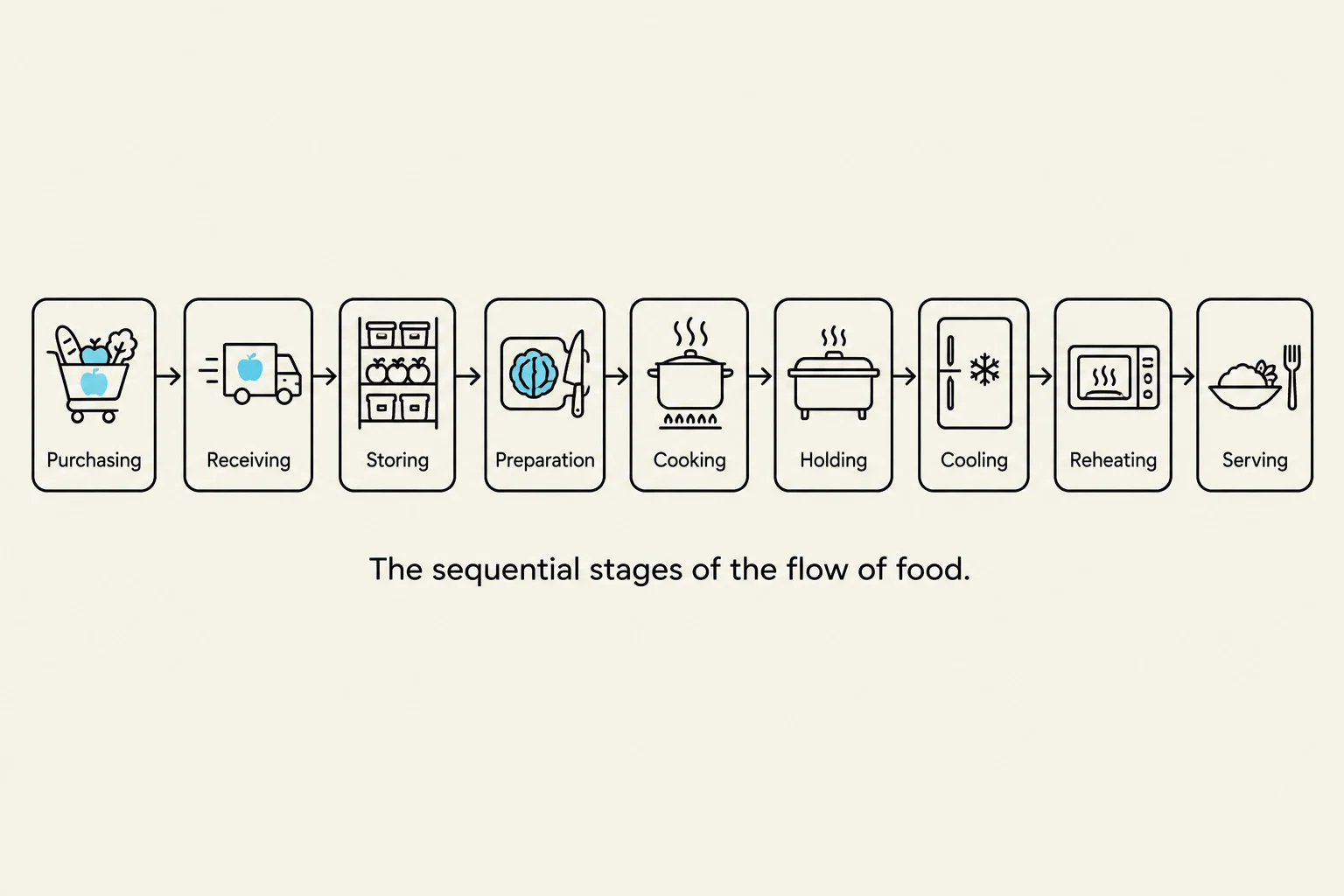
- Purchasing: Selecting reliable suppliers who follow safety standards.
- Receiving: Inspecting incoming goods for correct temperatures and intact packaging.
- Storing: Placing food in appropriate environments (dry storage, refrigeration, or freezing) to prevent spoilage.
- Preparation: The process of washing, cutting, and assembling ingredients.
- Cooking: Applying heat to kill harmful pathogens.
- Holding: Keeping food at safe temperatures while it waits to be served.
- Cooling: Rapidly lowering the temperature of hot foods to move them out of danger zones.
- Reheating: Bringing previously cooked food back to high temperatures safely.
- Serving: The final delivery of food to the consumer.
Managing Primary Risks
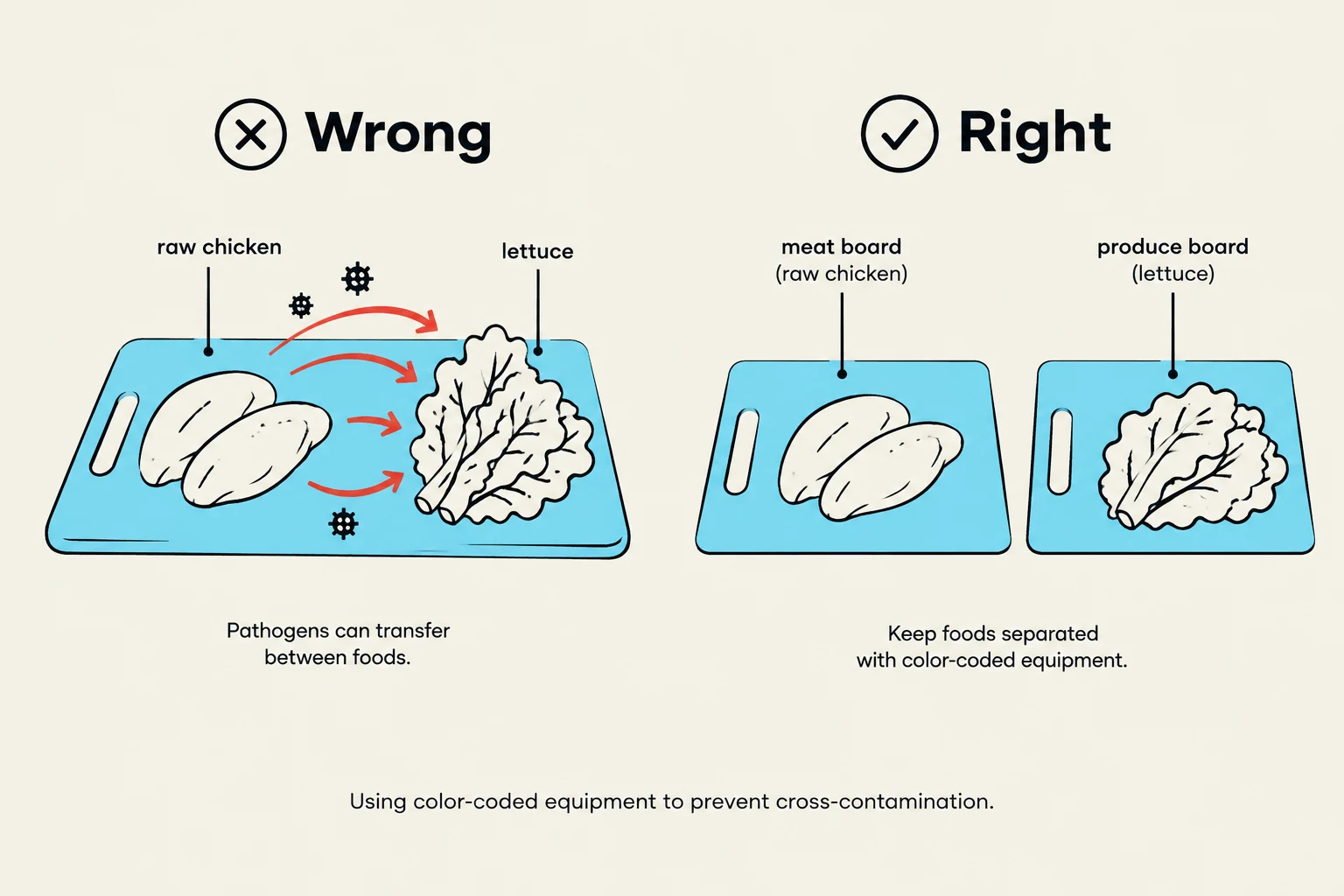
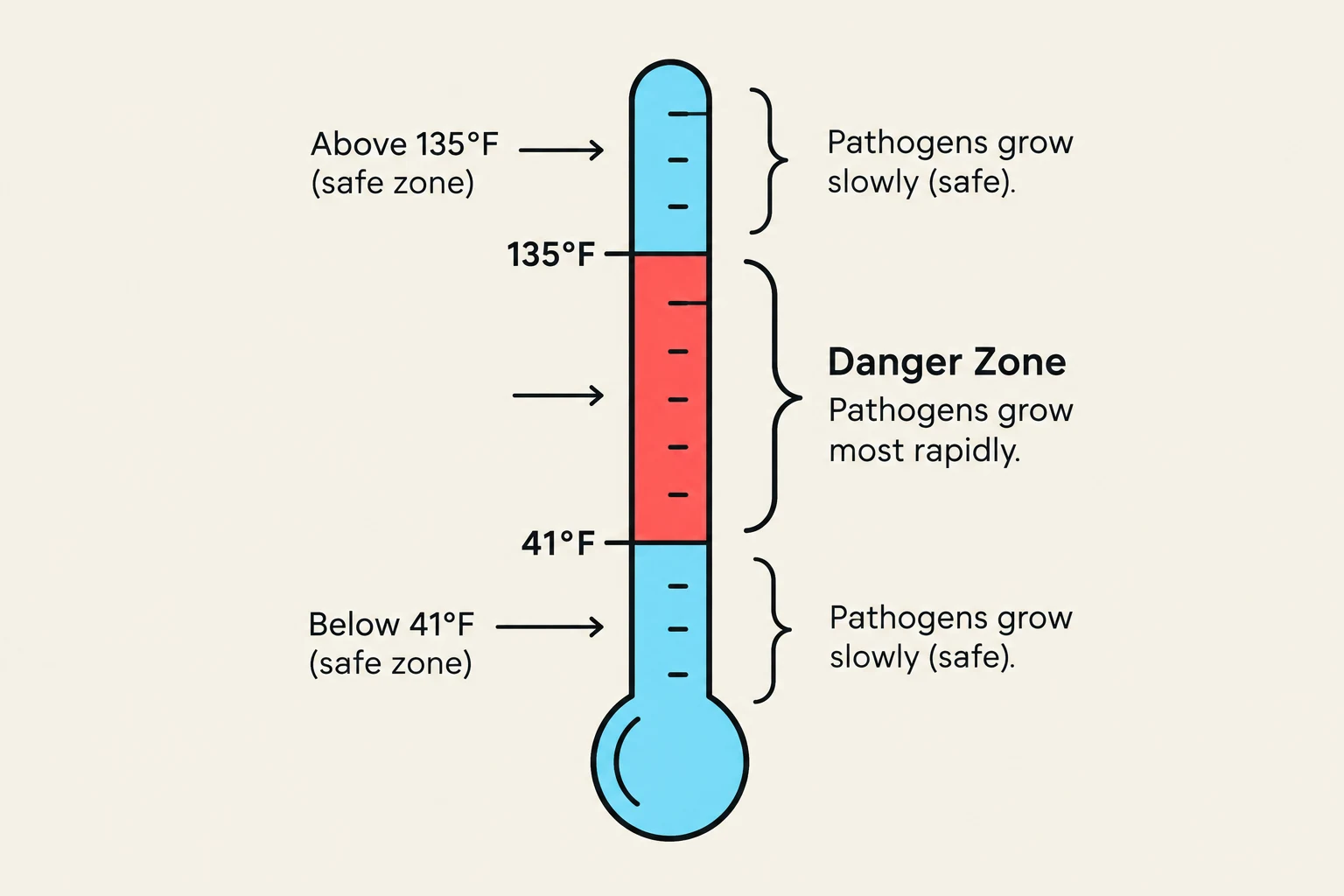
To maintain a safe flow of food, staff must focus on mitigating two primary hazards: cross-contamination and time-temperature abuse.
Preventing Cross-Contamination
Keep reading for free.
Create an account to finish this reading and make it part of your study routine.
Continue reading freeAlready have an account? Log in
Updated