


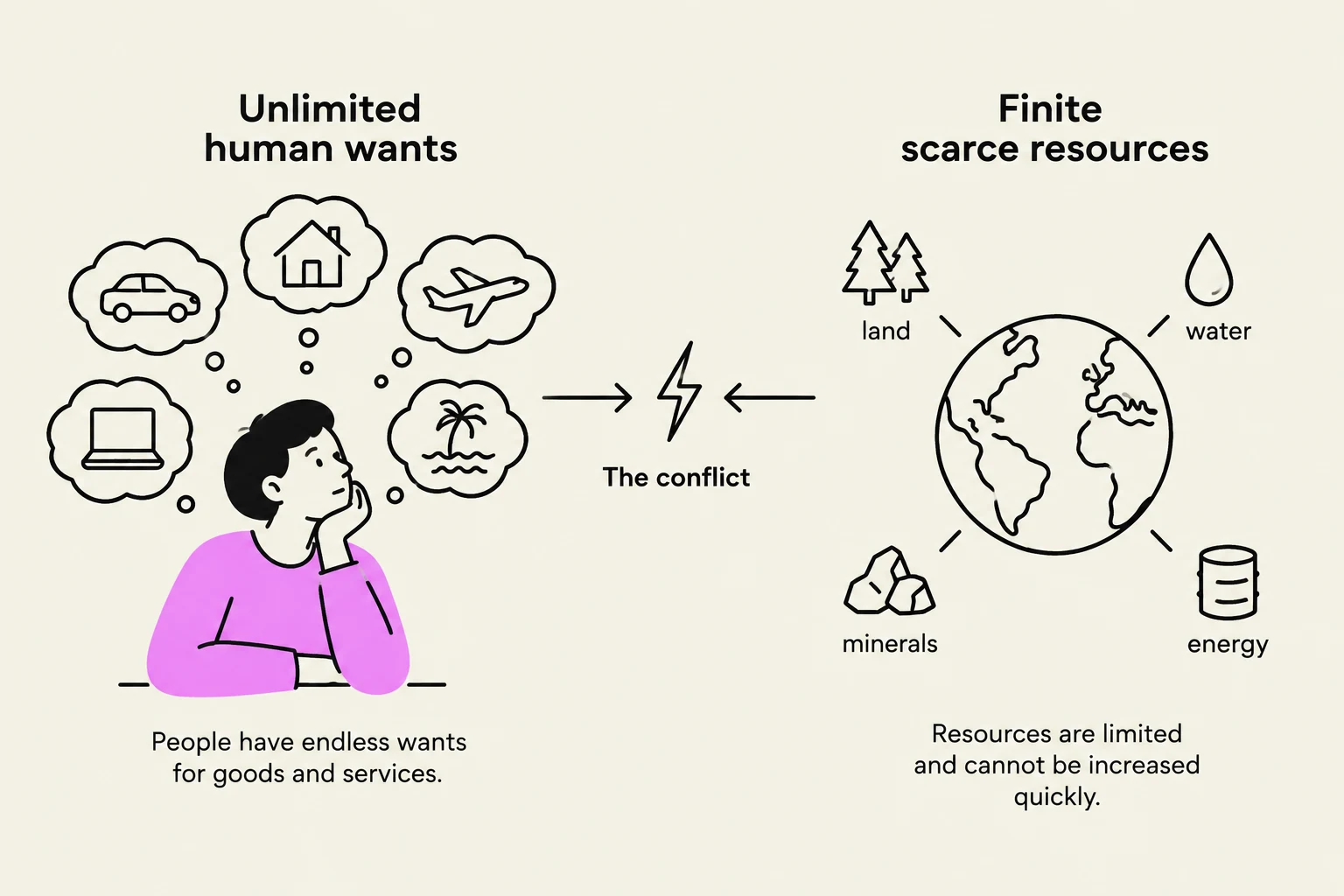
At its core, economics is not just about money, stocks, or banking. It is a fundamental way of looking at the world to understand how humans interact with the world around them. Specifically, economics is the study of how society chooses to allocate its scarce resources to the production of goods and services to satisfy unlimited wants. This tension between what we want and what we actually have drives almost every decision made by individuals, businesses, and governments.
The Foundation: Scarcity and Choice
The starting point for all economic thought is the concept of scarcity. We live in a world where human desires are virtually limitless, yet the resources required to fulfill those desires—such as time, labor, land, and raw materials—are finite.
Because we cannot have everything we want, scarcity forces every society to make difficult choices. These choices generally fall into three categories:
- What combination of goods and services should be produced?
- How should these goods and services be produced?
- Who will receive the limited supply of these goods and services?
Student Tip: Remember that scarcity applies to everyone. It isn't just about "not having enough money"; it also applies to time. Even a billionaire has only 24 hours in a day, meaning they must make choices about how to allocate their time.
Two Lenses: Microeconomics and Macroeconomics
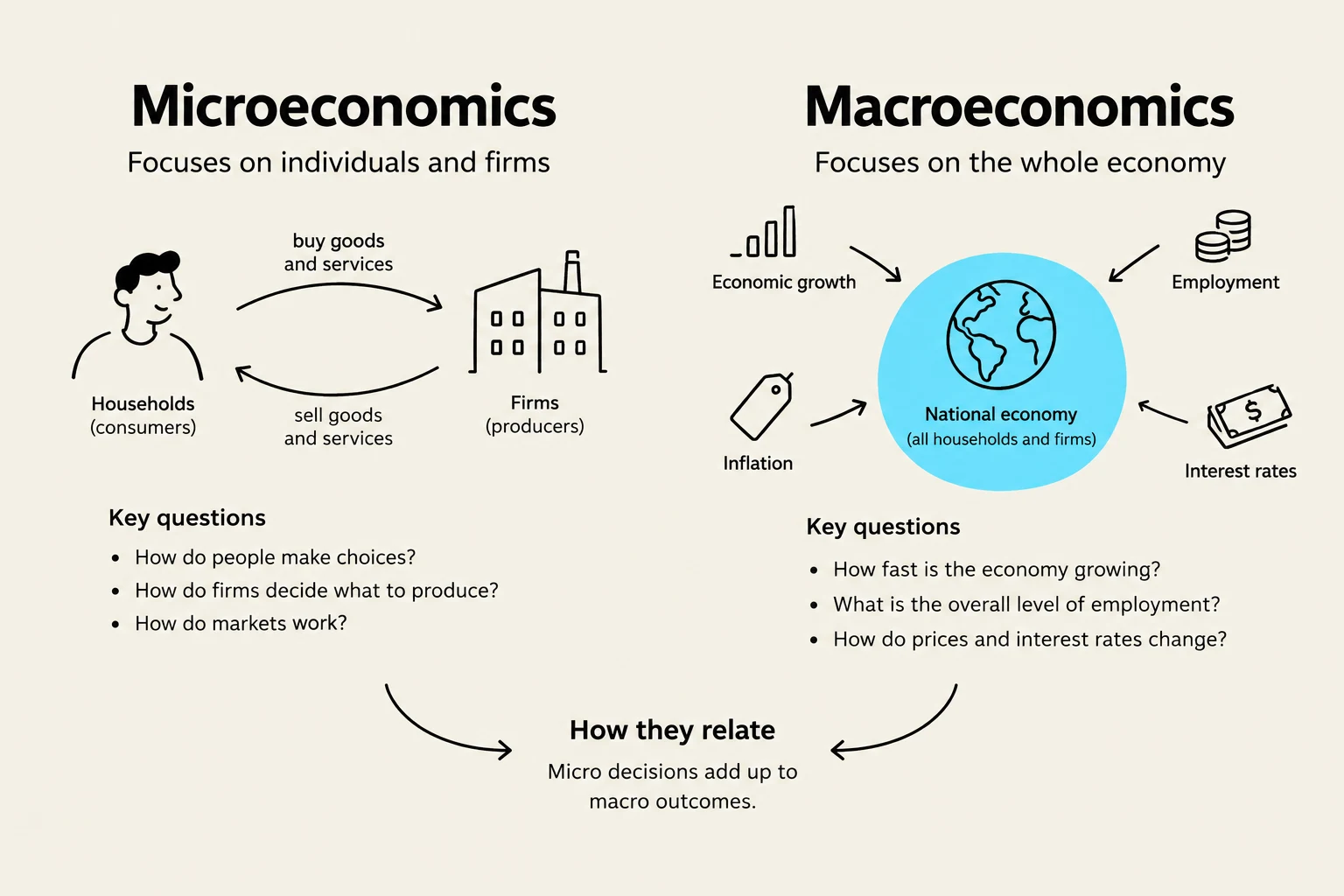
To make sense of the vast amount of data and behavior in the world, economists divide their study into two primary branches: microeconomics and macroeconomics.
Keep reading for free.
Create an account to finish this reading and make it part of your study routine.
Continue reading freeAlready have an account? Log in
Updated