


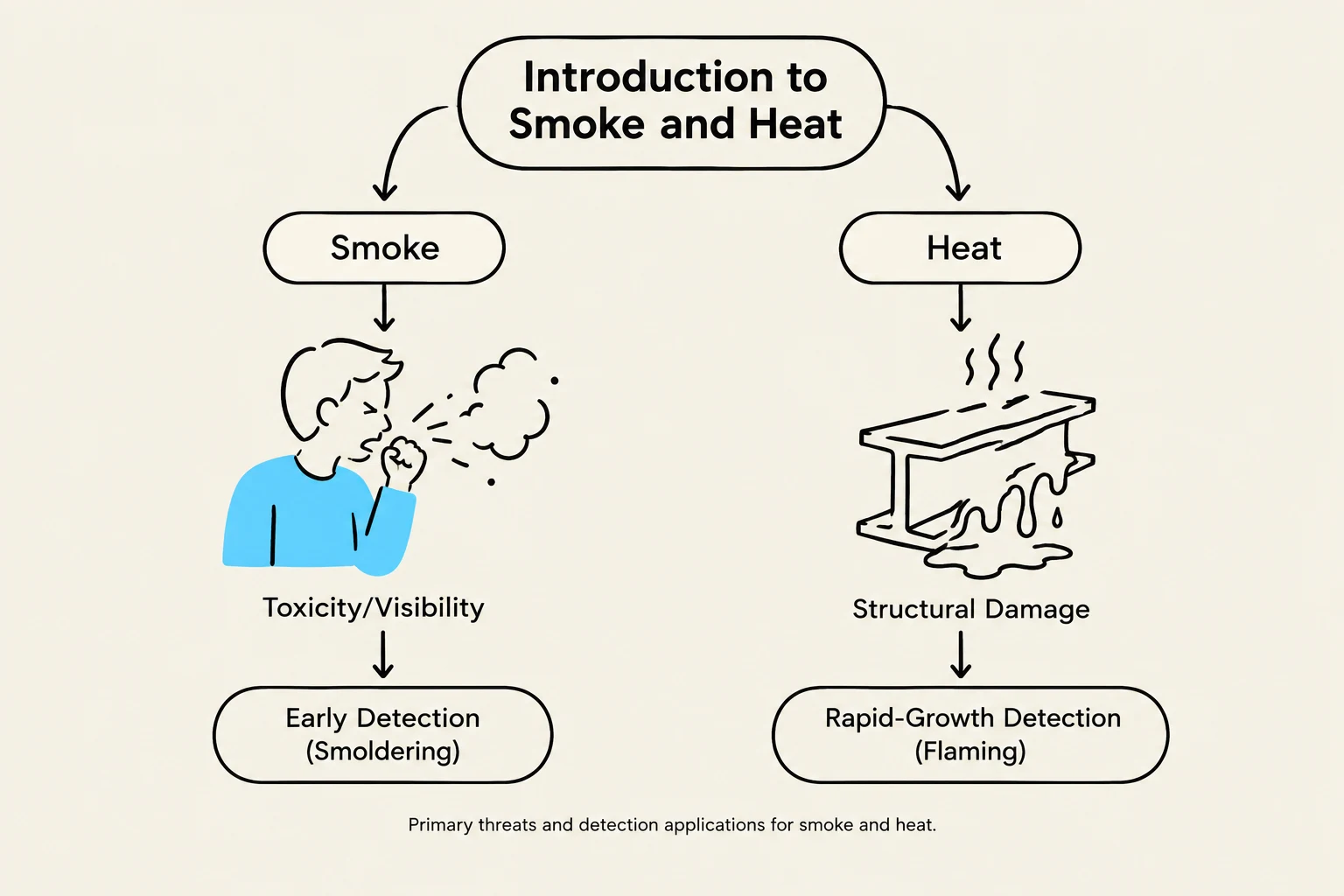
In the study of fire science and fire alarm systems, few elements are as critical as the understanding of smoke and heat. While we often associate fire with flames, the most significant threats to human life and property are frequently the invisible or obscured byproducts of combustion: smoke and heat. These two elements are the primary drivers of fire damage and are the fundamental phenomena that fire protection systems are designed to detect and mitigate.
The Production of Smoke and Heat
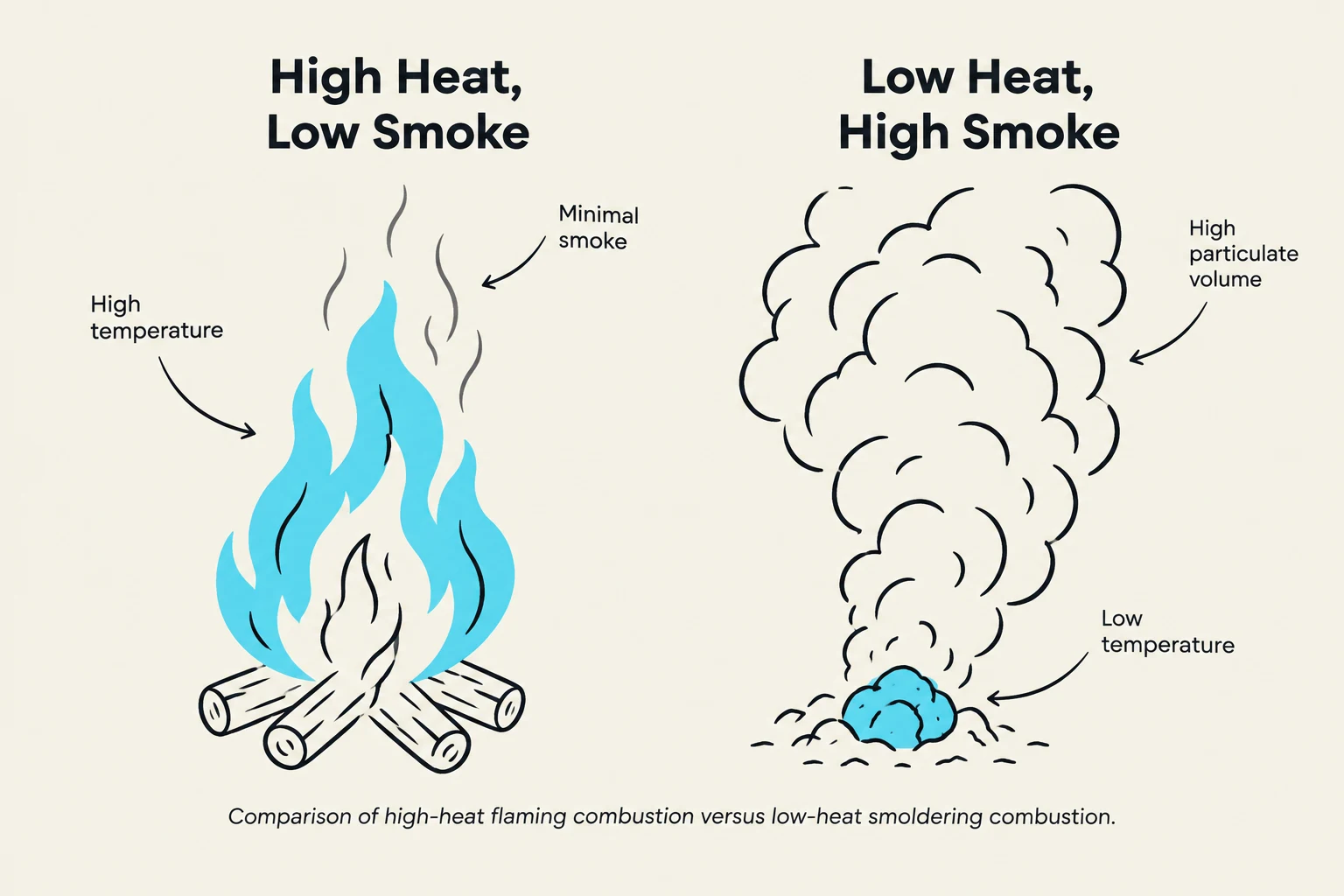
The production of these elements can be categorized into two distinct behaviors:
- High Heat, Low Smoke: Some combustion processes are highly efficient or involve specific materials that burn rapidly, generating intense thermal energy (heat) while producing relatively little visible particulate matter (smoke).
- Low Heat, High Smoke (Smoldering): Conversely, certain fires undergo a process known as smoldering. This is characterized by slow, incomplete combustion that can last for long durations. Smoldering fires are particularly dangerous because they produce massive volumes of thick, toxic smoke even though the temperature levels (heat) may remain relatively low compared to a flaming fire.
Exam Tip: When analyzing fire scenarios, remember that the presence of heavy smoke does not always indicate a high-temperature environment. Always distinguish between "flaming combustion" and "smoldering combustion" when determining which type of detection (heat vs. smoke) might be more effective.
Keep reading for free.
Create an account to finish this reading and make it part of your study routine.
Continue reading freeAlready have an account? Log in
Updated