


In the complex environment of a living organism, cells are never truly isolated. To function as part of a multicellular whole, they must constantly sense their surroundings and communicate with their neighbors. This communication is not merely a simple "on/off" switch; it is a sophisticated biological process known as signal transduction. By understanding how signals are sent, received, and processed, we can understand how organisms grow, respond to injury, and maintain homeostasis.
What is a Signal Transduction Pathway?
At its core, a signal transduction pathway is a sequence of molecular events and chemical reactions that lead to a specific cell response to a signal. Think of it like a relay race: a baton (the signal) is passed from one runner (a molecule) to the next, eventually reaching a finish line (the cellular response).
The process generally follows three fundamental stages:
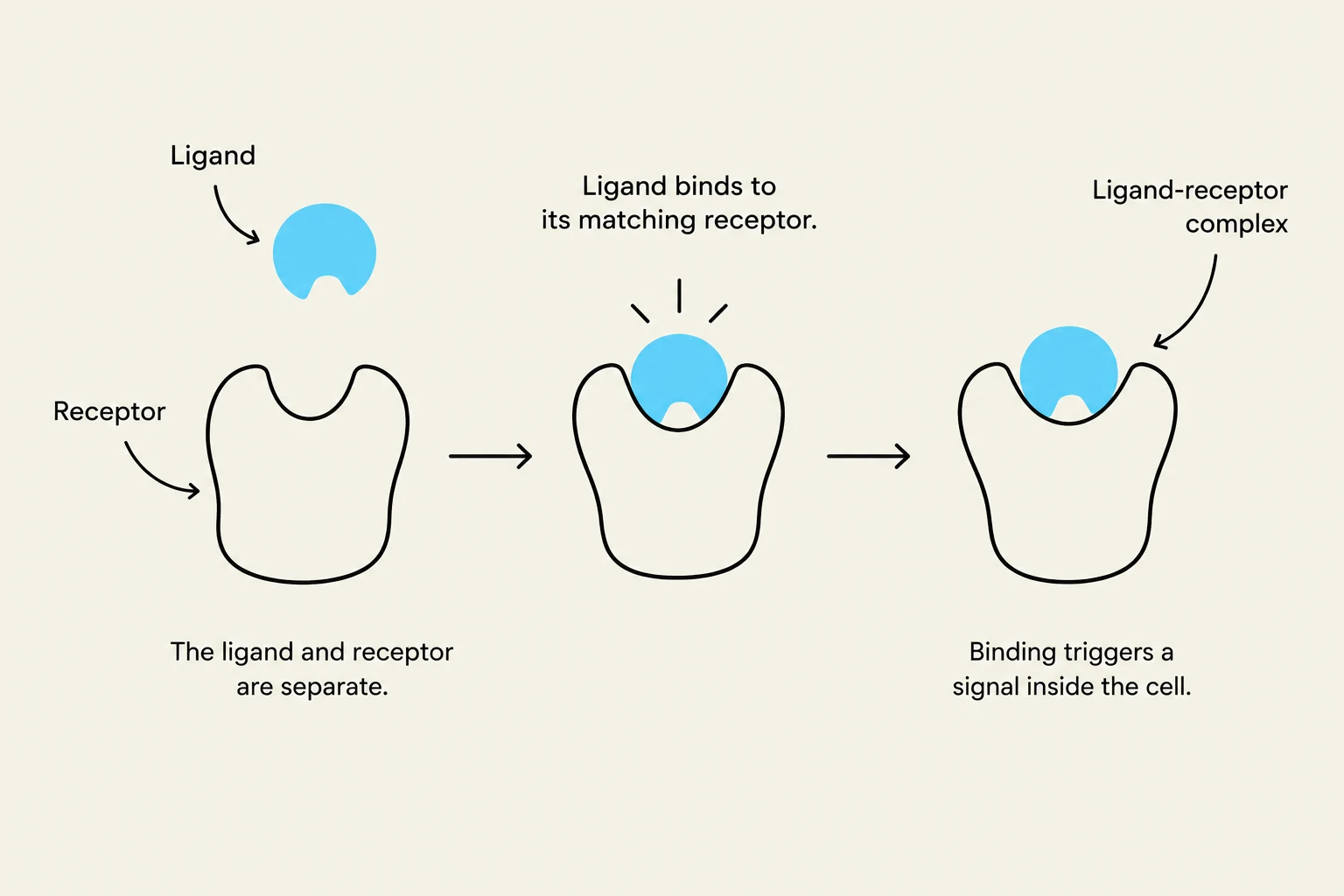
- Reception: The cell detects a signal from its environment.
- Transduction: The signal is relayed through a series of signal transduction molecules inside the cell.
- Response: The cell undergoes a specific change based on the signal.
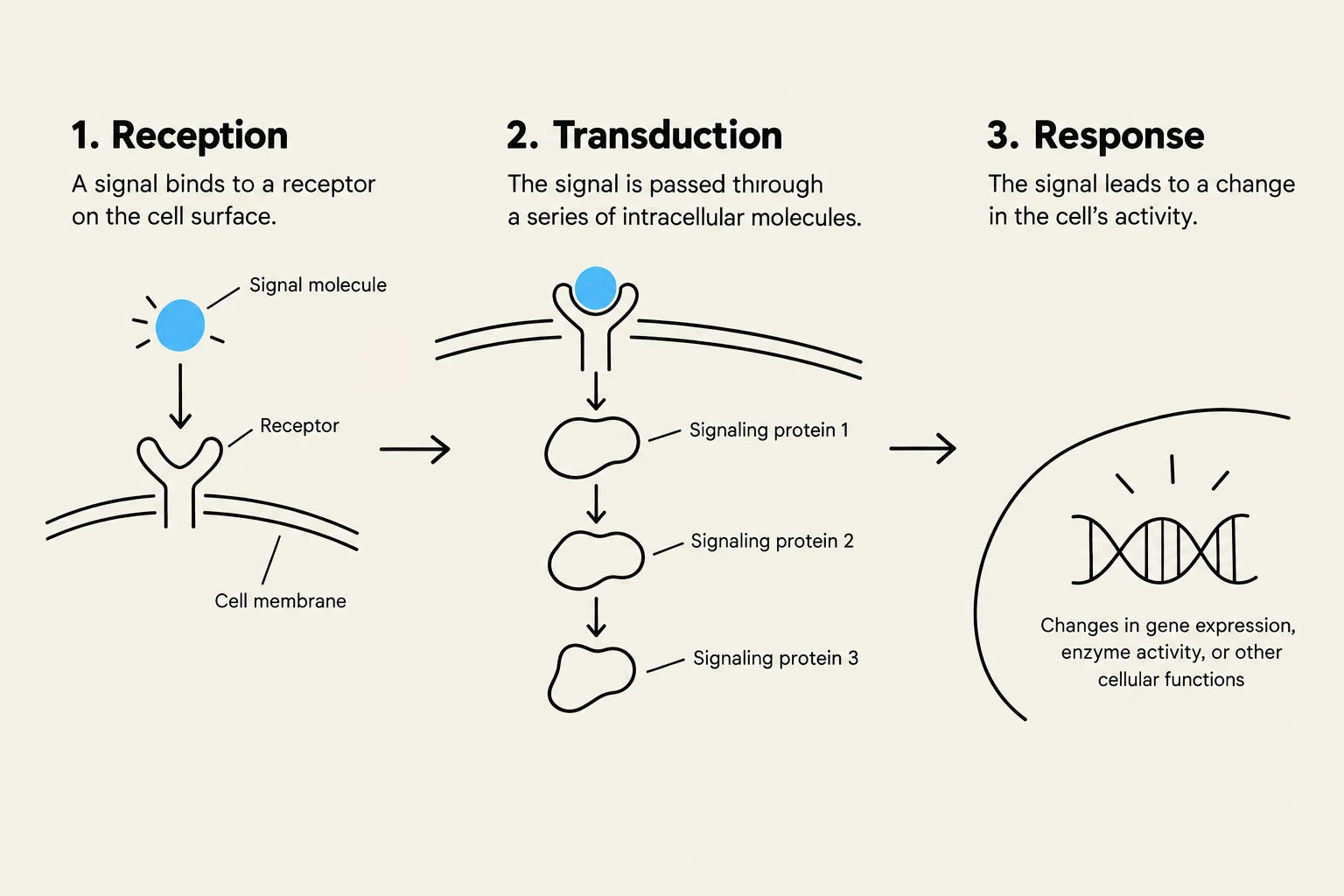
Exam Tip: When asked to define signal transduction, always emphasize that it is a sequence of events. It is not just one step, but a cascade of reactions that converts an extracellular signal into an intracellular action.
Keep reading for free.
Create an account to finish this reading and make it part of your study routine.
Continue reading freeAlready have an account? Log in
Updated