


Have you ever wondered why you feel a sudden rush of anxiety before a presentation, or why certain habits are so difficult to break? The answers to these questions lie within the realm of psychology. While often misunderstood as merely "reading minds," psychology is actually a rigorous, empirical science dedicated to understanding the complexities of the human experience.
What is Psychology?
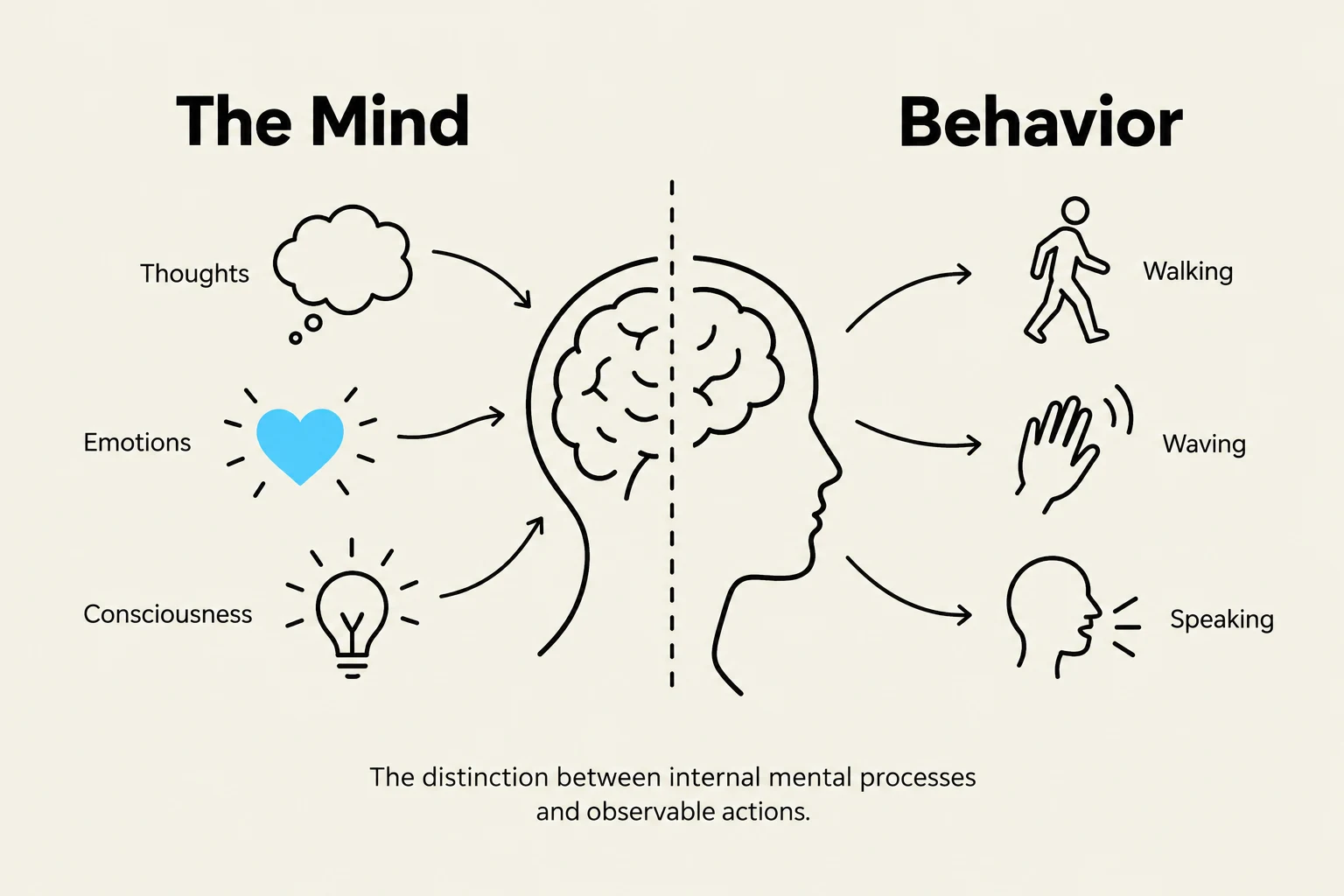
At its core, psychology is the scientific study of the mind and behavior. To understand this definition, we must distinguish between its two primary components:
- The Mind: This encompasses our internal, subjective experiences, such as thoughts, emotions, consciousness, and motivation.
- Behavior: This refers to the observable actions and reactions of an organism—anything an organism does that can be seen or measured.
Psychologists do not rely on intuition or "gut feelings." Instead, they utilize empirical methods—systematic, data-driven observations and experimentation—to examine how these mental processes and actions function across different contexts.
The Four Goals of Psychology
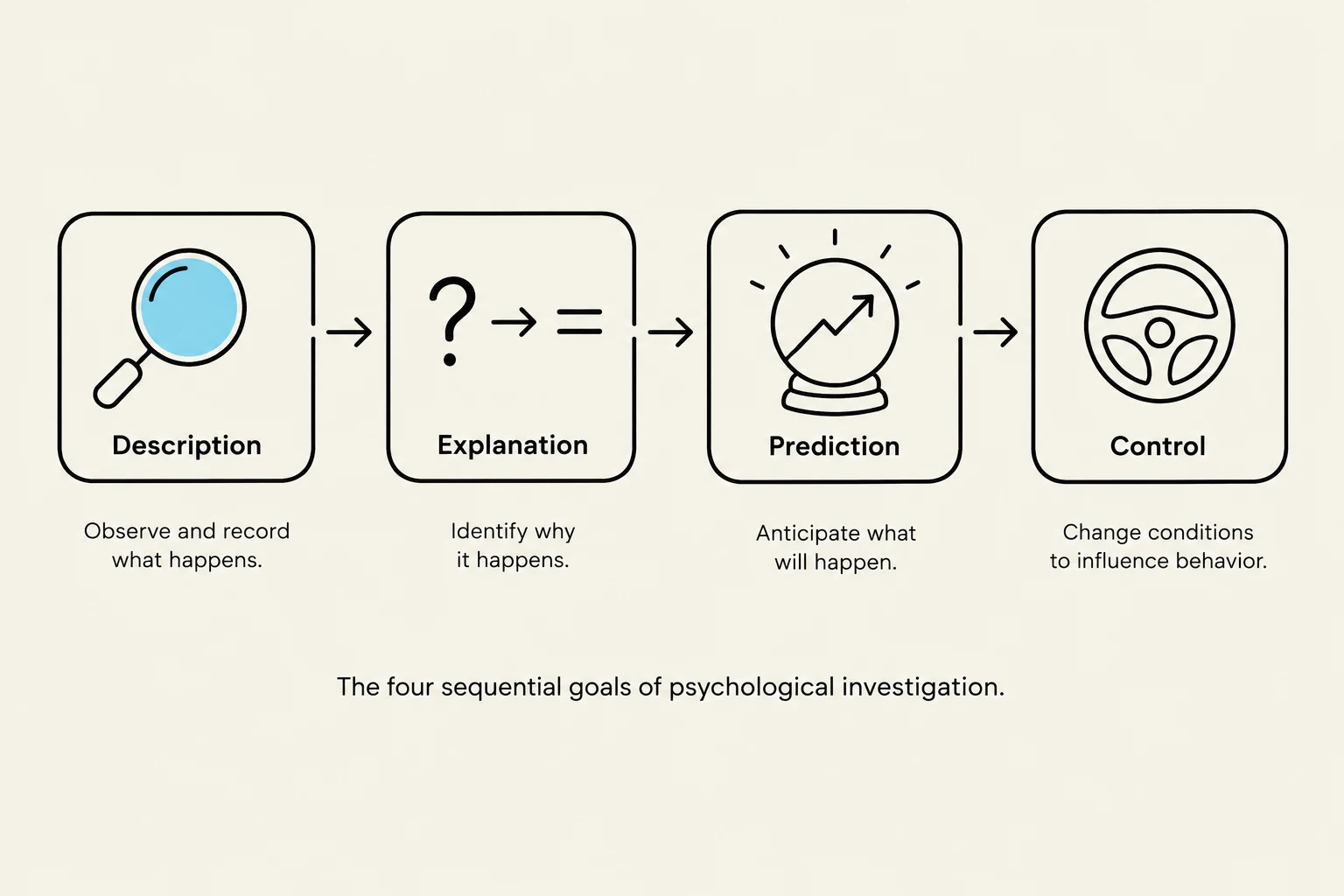
- Description: The first step is to observe and document specific behaviors or phenomena. For example, a researcher might ask, "How do humans make decisions?" or "How do babies learn to talk?".
- Explanation: Once a behavior is described, psychologists seek to understand why it happens. This involves developing theories and hypotheses to uncover underlying causes. A classic question might be, "Why do we experience hunger?".
- Prediction: After understanding the causes, researchers aim to determine the likelihood or timing of when specific behaviors or mental processes will occur in the future. For instance, "When are people most likely to offer help to a stranger?".
- Control: The ultimate goal in many applied settings is to modify, limit, or bolster behaviors and mental processes. This could involve techniques for reducing stress or strategies for increasing healthy self-care.

Keep reading for free.
Create an account to finish this reading and make it part of your study routine.
Continue reading freeAlready have an account? Log in
Updated