


In the realm of commercial fire protection, not all alarm systems are created equal. While some systems are designed merely to notify a central monitoring station, protected premises systems—often referred to as "local systems"—are sophisticated installations designed specifically to protect the integrity of a commercial building and its occupants. Based on the standards set forth in the 2023 NEC (National Electrical Code), these systems serve as the intelligent backbone of a building's emergency response strategy.
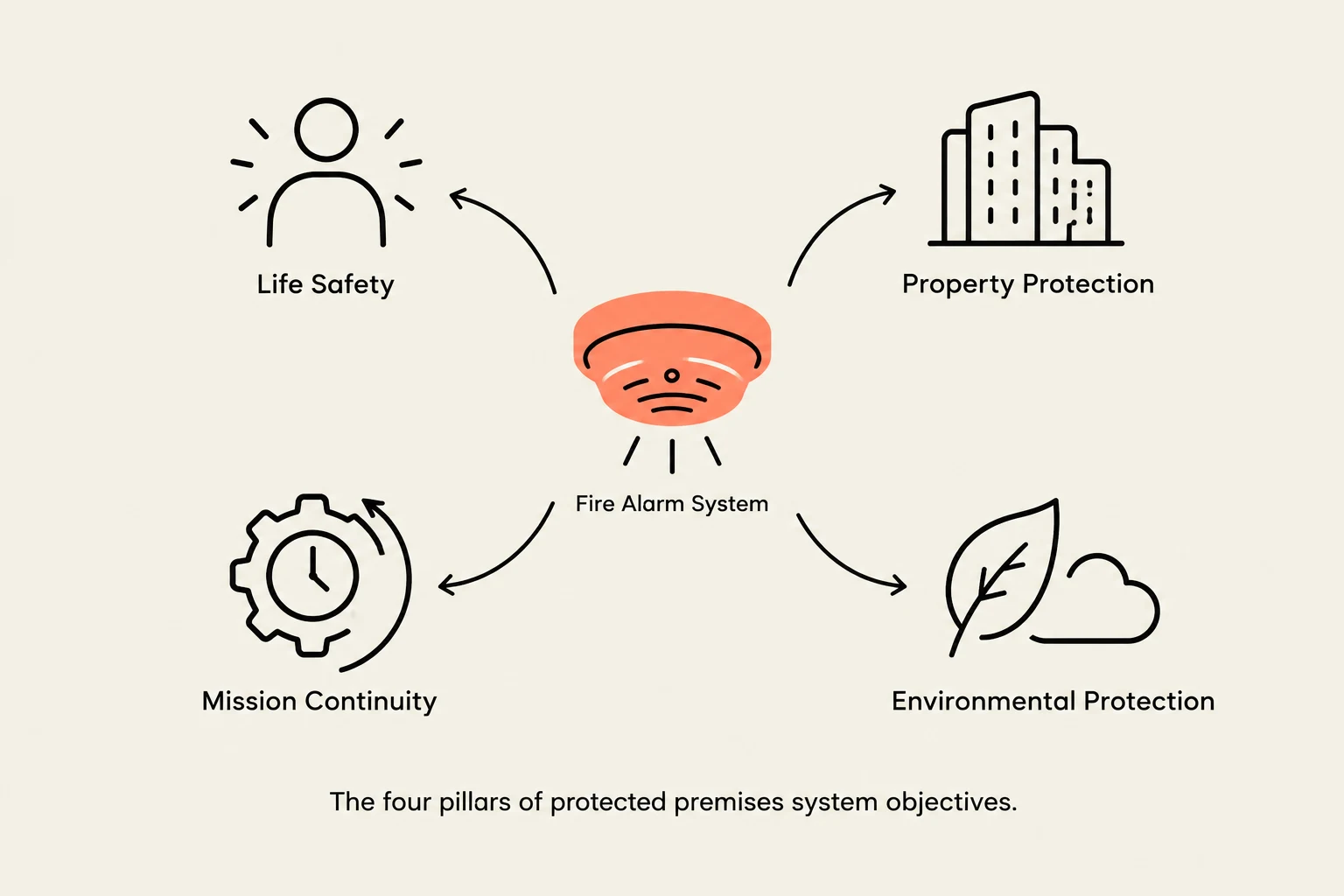
Core Objectives of Protected Premises Systems
A protected premises system is defined by its ability to address four critical areas of concern during an emergency:
- Life Safety: The highest priority is the protection of human life. The system provides early warning through audible and visual signals, allowing occupants to follow evacuation protocols before smoke or heat becomes unmanageable.
- Property Protection: By detecting a fire in its incipient stage, the system helps minimize physical damage to the building's structure and its valuable contents.
- Mission Continuity: For many businesses, downtime is a significant risk. These systems aim to contain incidents quickly so that business operations can continue or resume as soon as possible.
- Environmental Protection: Beyond the building walls, these systems help prevent the release of hazardous materials or smoke into the surrounding environment.
Keep reading for free.
Create an account to finish this reading and make it part of your study routine.
Continue reading freeAlready have an account? Log in
Updated