Introduction to Plants and Life: The Foundation of Our World
Explore the fundamental role of plants as producers, their process of photosynthesis, and the diversity within the plant kingdom, including angiosperms, gymnosperms, and non-flowering plants. Understand the basic properties of life such as metabolism, growth, reproduction, response, evolution, and cellular organization
Plants are much more than just scenery in our landscape; they are the fundamental pillars of human survival. From the food we eat to the clothes we wear, the shelter we inhabit, and the fuel that powers our lives, plants are involved in nearly every aspect of human necessity. By understanding how plants function and how they relate to the broader properties of life, we gain a deeper appreciation for the biological systems that sustain our planet.
The Engine of Life: Producers and Photosynthesis
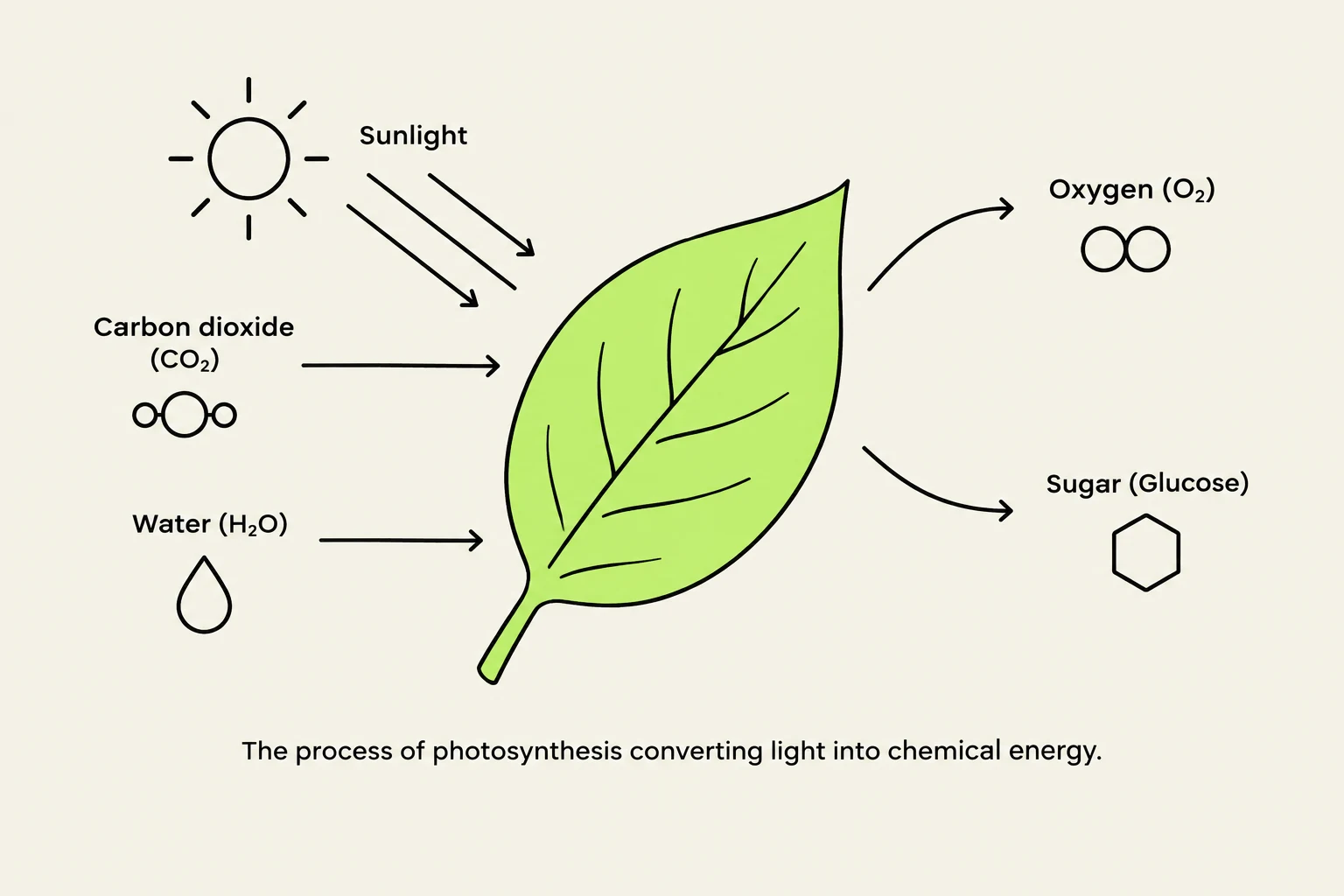
The process of photosynthesis converting light into chemical energy.
At the heart of almost all life on Earth is a process called photosynthesis. Plants are classified as producers because they occupy the base of the food chain. Unlike animals, which must consume other organisms to obtain energy, producers create their own food.
In photosynthesis, plants utilize solar energy to convert carbon dioxide and water into sugars. A vital by-product of this chemical reaction is oxygen, which serves as Earth's only continuous supply of oxygen. This process creates a flow of energy through various levels:
The plant kingdom is incredibly diverse, ranging from microscopic organisms to massive trees. We can categorize these organisms into several distinct groups based on how they reproduce and their structural characteristics.
Angiosperms: The Flowering Plants
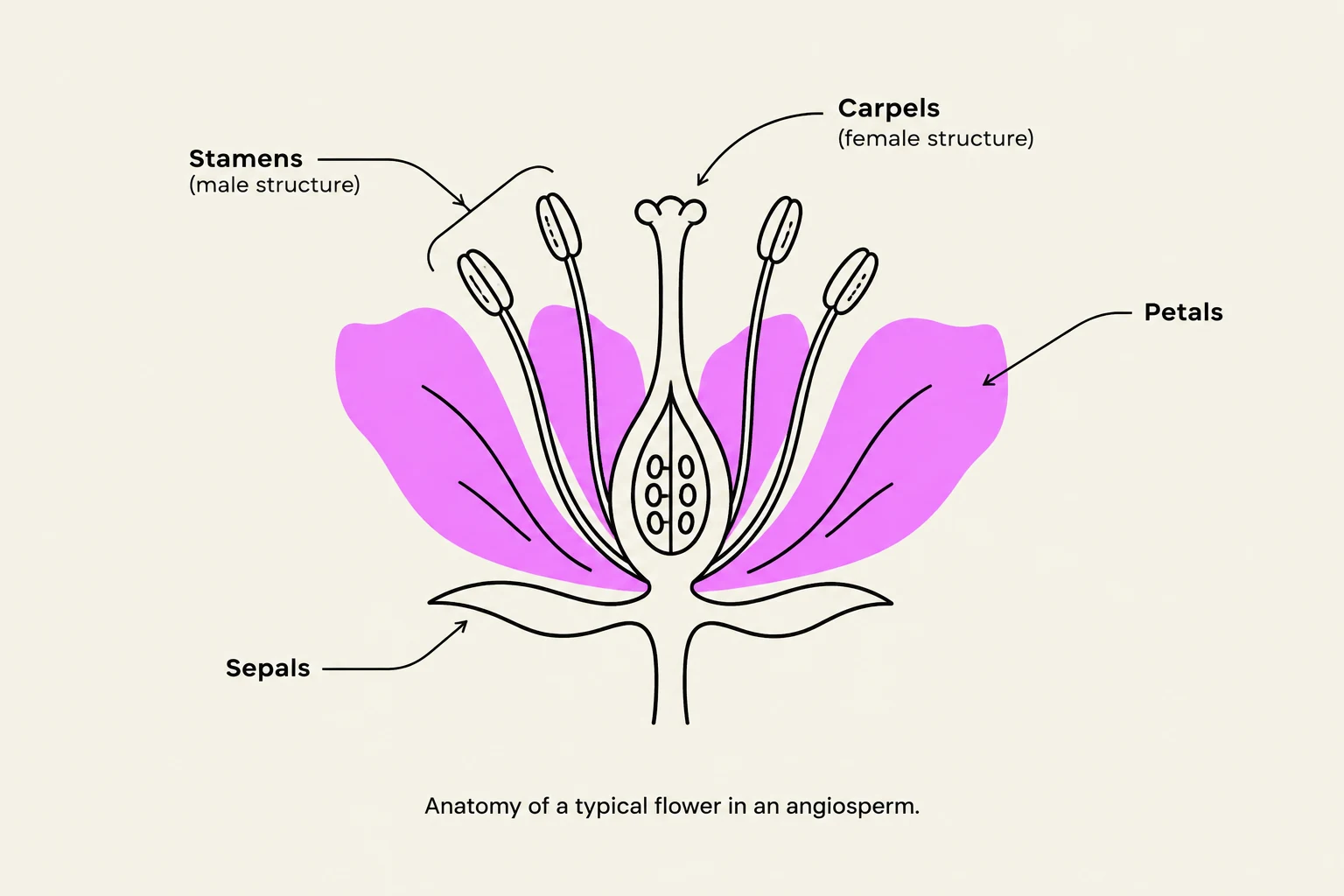
Anatomy of a typical flower in an angiosperm.Angiosperms are the most abundant, diverse, and economically significant group of plants. They include essential staples like wheat, rice, and corn, as well as many sources of medicine, perfume, and rubber.
Angiosperms are characterized by two main features:
Flowers: These consist of four floral whorls: sepals, petals, stamens (the male reproductive structure), and carpels (the female reproductive structure).
Fruits: These develop from the carpel and contain one or more seeds.
Within the angiosperms, we distinguish between two main groups based on their anatomy:
Monocots: Examples include grasses, lilies, palms, and orchids.
Dicots: Examples include roses, tomatoes, dandelions, and most broadleaved trees.
Other Plant and Non-Flowering Groups
Not all plants produce flowers. Other important groups include:
Gymnosperms: These are seed-producing plants that do not produce flowers. Instead, their seeds are typically held in cones; conifers are a well-known example and are vital for construction and fuel.
Non-flowering plants: This category includes mosses, ferns, and algae. Algae are diverse photosynthetic organisms that form the base of aquatic food chains. However, they can also cause "algal blooms"—often due to nutrient runoff—which can lead to toxic conditions and massive fish kills.
The Role of Fungi
While once classified as plants, fungi (such as molds, yeasts, and mushrooms) are now recognized in a separate kingdom. Unlike plants, fungi are non-photosynthetic. They consist of thread-like bodies called mycelium and reproduce via spores. Fungi play critical ecological roles as saprobes (decomposers), pathogens, or symbionts. Economically, they are second only to angiosperms, providing everything from penicillin to fermented foods like cheese and bread.
Exam Tip: Remember that while both fungi and plants are essential to ecosystems, fungi are not producers because they cannot perform photosynthesis.
Fundamental Properties of Life
To understand plants, we must understand what defines "life" itself. All living organisms, whether a single-celled bacterium or a complex oak tree, share several fundamental properties:
1. Metabolism, Growth, and Reproduction
Metabolism is the sum of all chemical reactions in an organism. This includes photosynthesis (building sugars) and cellular respiration (breaking down glucose to release energy).
Living things also exhibit growth, which is an irreversible increase in size, and the ability to reproduce. Reproduction can be sexual (the fusion of sperm and egg to create a zygote) or asexual (producing offspring that are genetic clones of a single parent).
2. Response, Evolution, and Adaptation
The environment is constantly shifting, and life must keep up. Organisms have the ability to respond to environmental changes—for example, plant stems growing toward light or trees changing leaf chemistry to deter insect attacks. Over long periods, life demonstrates the ability to evolve and adapt, undergoing changes that promote survival in changing environments.
3. Organized Structure: The Cell
Comparison between prokaryotic and eukaryotic cell structures.
All life is organized into cells, the basic unit of life. There are two primary types of cells:
Prokaryotic Cells: Found in bacteria, these are "primitive" cells that lack a defined nucleus and membrane-bound organelles.
Eukaryotic Cells: Found in plants, animals, and fungi, these cells contain a clearly visible nucleus and compartmentalized organelles (such as chloroplasts in plants).
Summary Table: Cell Comparison
Feature
Prokaryotic Cells
Eukaryotic Cells
Nucleus
Absent
Present
Organelles
No membrane-bound organelles
Membrane-bound organelles present
Examples
Bacteria
Plants, Animals, Fungi
By mastering these foundational concepts—from the microscopic workings of a eukaryotic cell to the massive economic impact of angiosperms—we can better understand the intricate web of life that sustains us all.
Keep reading for free.
Create an account to finish this reading and make it part of your study routine.