


All living organisms, from the smallest bacteria to the largest trees, share certain fundamental properties. Among these is an organic composition, meaning their physical structures and metabolic processes are built from specific types of chemical compounds. These compounds are centered around the element carbon and are often referred to as the "molecules of life".
Many of these molecules are macromolecules—massive, complex structures constructed from many smaller, repeating units. Understanding these four classes of organic compounds—carbohydrates, proteins, lipids, and nucleic acids—is essential to understanding how life functions, grows, and reproduces.
Carbohydrates: Energy and Structure
Carbohydrates are organic compounds composed of carbon, hydrogen, and oxygen ($C, H, O$). They serve two primary roles in biological systems: acting as a quick source of energy and providing structural integrity to cells. For example, glucose is a vital energy source for cells, while cellulose provides the rigid structure necessary for plant cell walls.
Carbohydrates are classified based on the number of sugar units (monomers) they contain:
- Monosaccharides: These are single sugar molecules, such as glucose.
- Disaccharides: These consist of two sugar molecules bonded together.
- Polysaccharides: These are long chains containing many bonded sugar molecules.
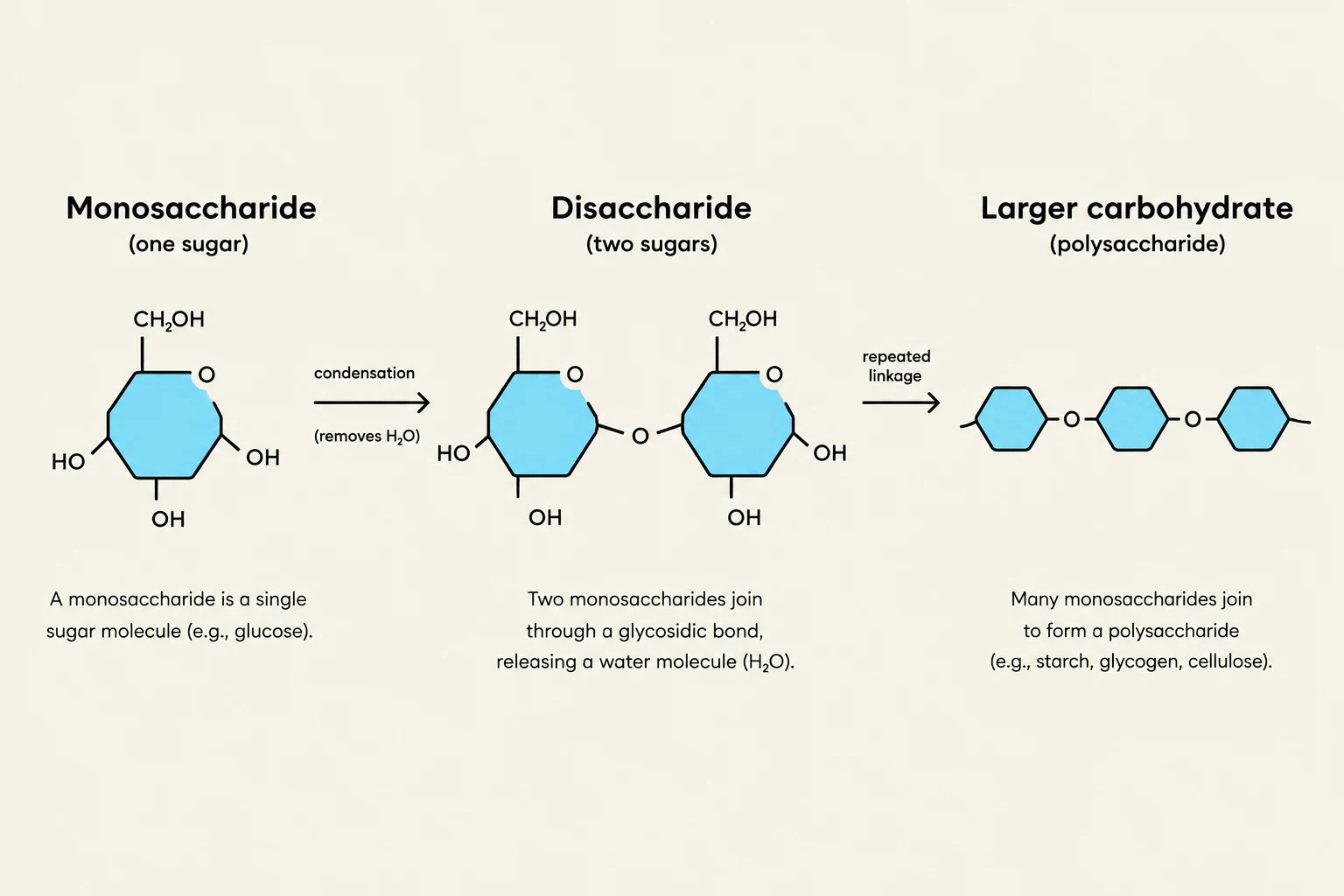
Study Tip: When identifying carbohydrates in a biological context, look for the ratio of Carbon, Hydrogen, and Oxygen. If you see a large chain of sugars like starch or cellulose, you are looking at a polysaccharide.
Keep reading for free.
Create an account to finish this reading and make it part of your study routine.
Continue reading freeAlready have an account? Log in
Updated