


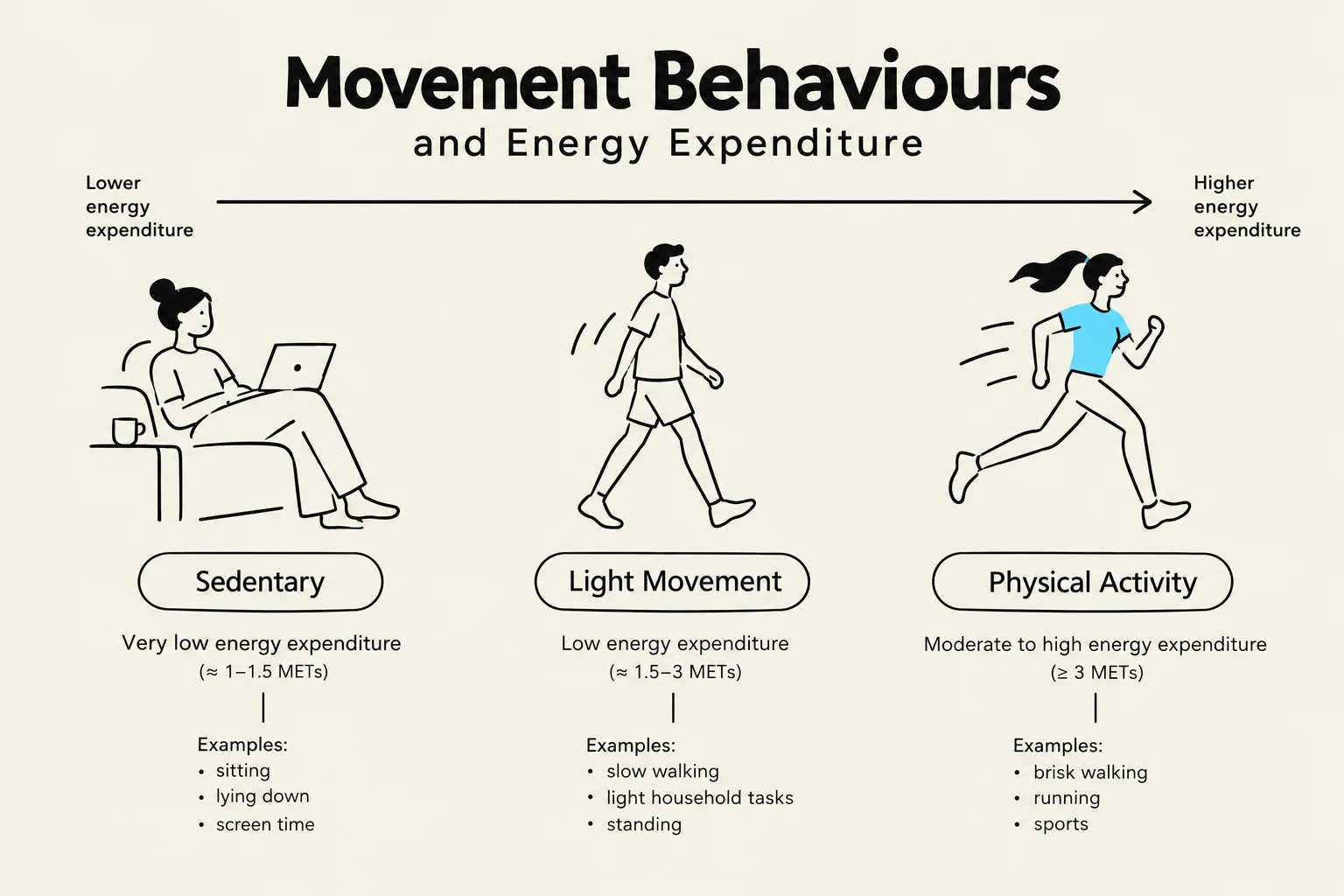
Understanding how we move throughout a 24-hour period is essential for maintaining long-term health. Movement behaviours are not a single category; rather, they represent a spectrum of activities that include physical activity, sedentary behavior, and sleep. While these categories are primarily defined by how much energy we expend, they are also characterized by our physical posture, such as sitting, standing, or lying down.
Defining Physical Activity and Exercise
Physical activity is defined as any bodily movement produced by skeletal muscles that requires energy expenditure. This is a broad term that encompasses everything from purposeful workouts to daily chores like housework, gardening, or active commuting (such as walking or biking to work).
It is crucial to distinguish physical activity from exercise. While all exercise is physical activity, not all physical activity is exercise. Exercise is a specific subset of physical activity that is planned, structured, and specifically aimed at improving physical fitness.
The Health Benefits of Being Active
Regular physical activity provides extensive physiological and psychological benefits. By engaging in consistent movement, we can manage several key aspects of our health:
- Cardiovascular Health: Physical activity makes the heart—which is a muscle—stronger and more efficient. An efficient heart can pump more blood with each beat, meaning it requires fewer beats per minute to circulate blood throughout the body. This efficiency helps reduce the risk of hypertension (high blood pressure), a condition where the heart must work harder due to resistance in the arteries.
- Cholesterol Management: Activity helps regulate lipid levels by decreasing low-density lipoproteins (LDL), often called "bad cholesterol" because they can clog arteries, and increasing high-density lipoproteins (HDL), the "good cholesterol" that helps remove LDL from the arteries.
- Bone Health: Engaging in weight-bearing and strength-bearing exercises is vital for preventing osteoporosis, a condition characterized by low bone mass and increased fracture risk.
- Metabolic Regulation: Physical activity influences your metabolic rate (the rate at which you burn calories). Notably, your metabolic rate remains elevated for several hours after vigorous activity, and increasing muscle mass through resistance training further boosts this rate.
- Mental Health and Homeostasis: Exercise acts as a stress management tool by helping the body return to homeostasis (a state of internal balance). It also improves self-esteem and can enhance immune function when performed at moderate intensities.


Keep reading for free.
Create an account to finish this reading and make it part of your study routine.
Continue reading freeAlready have an account? Log in
Updated