


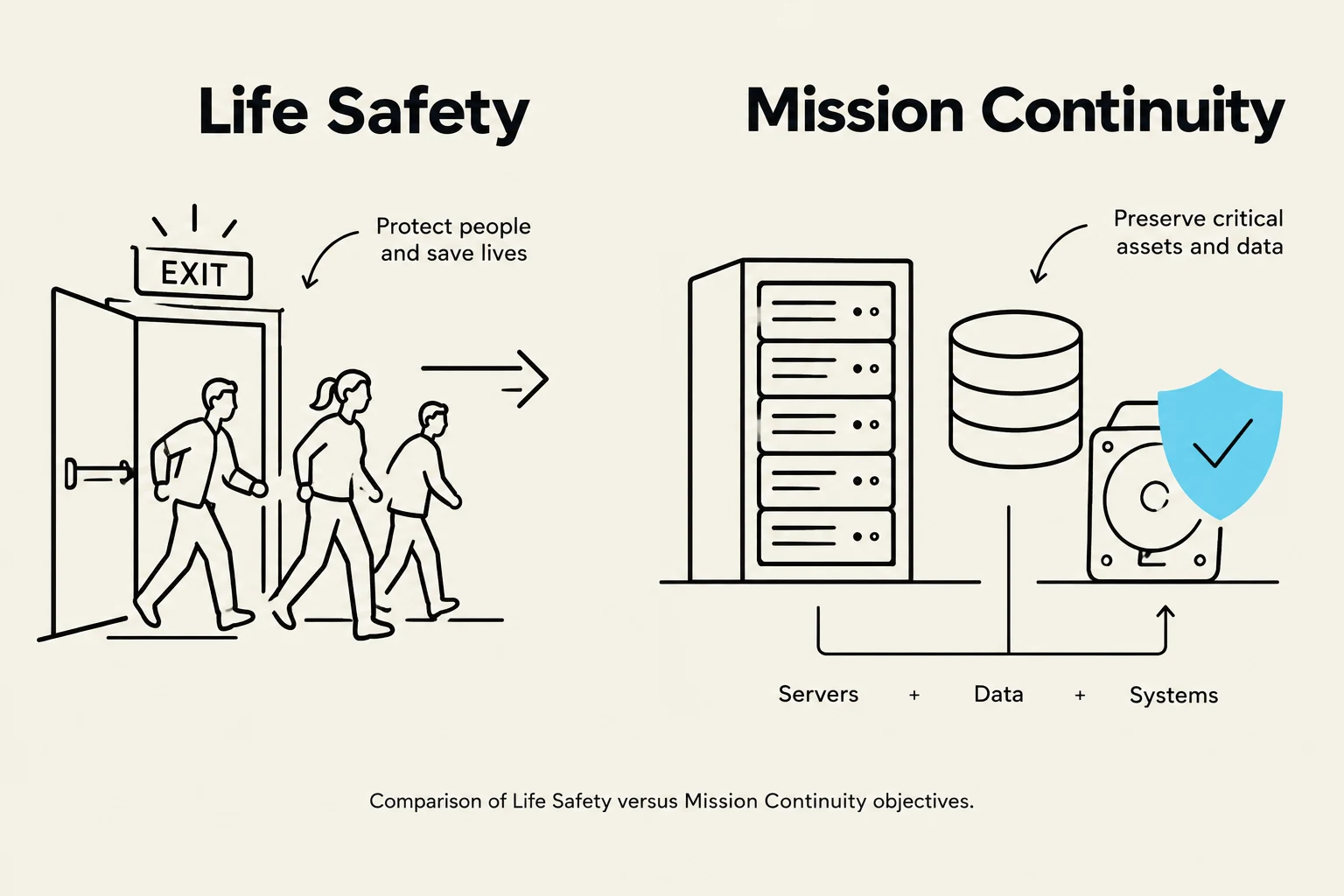
When we think about fire alarm systems, the first priority that comes to mind is life safety—getting people out of a building before smoke and flames become overwhelming. While life safety is the most critical function of any fire protection strategy, modern fire alarm systems serve a much broader purpose in high-stakes environments. For many organizations, the goal is not just to save lives, but to ensure that the organization itself survives the event. This concept is known as mission continuity.
Understanding Mission Continuity
In a professional or industrial context, mission continuity refers to the strategic use of detection and notification technology to ensure that an organization can maintain its core operations and protect its vital assets during and after a fire event.
While traditional fire protection focuses on the evacuation of personnel, a mission continuity approach emphasizes the preservation of data, critical infrastructure, and the economic stability of a facility. If a company loses its physical building but keeps its data and equipment intact, it can recover much faster than a company that loses its intellectual property or its ability to process transactions.
Key Distinction:
- Life Safety: Focuses on the prevention of injury and death through evacuation.
- Mission Continuity: Focuses on the prevention of catastrophic loss of information, hardware, and operational capability.
The Criticality of Data and Infrastructure
To understand why mission continuity is so vital, consider the example of a financial institution. A bank may have many physical branches, but its true "heart" is the data center.

Keep reading for free.
Create an account to finish this reading and make it part of your study routine.
Continue reading freeAlready have an account? Log in
Updated