


Life is essentially a continuous process of energy transformation. From the movement of a cheetah to the microscopic synthesis of proteins within a cell, organisms must constantly convert energy from one form to another to sustain themselves. This study explores the fundamental principles of how biological systems manage matter and energy through the lens of metabolism and bioenergetics.
Metabolism and Metabolic Pathways
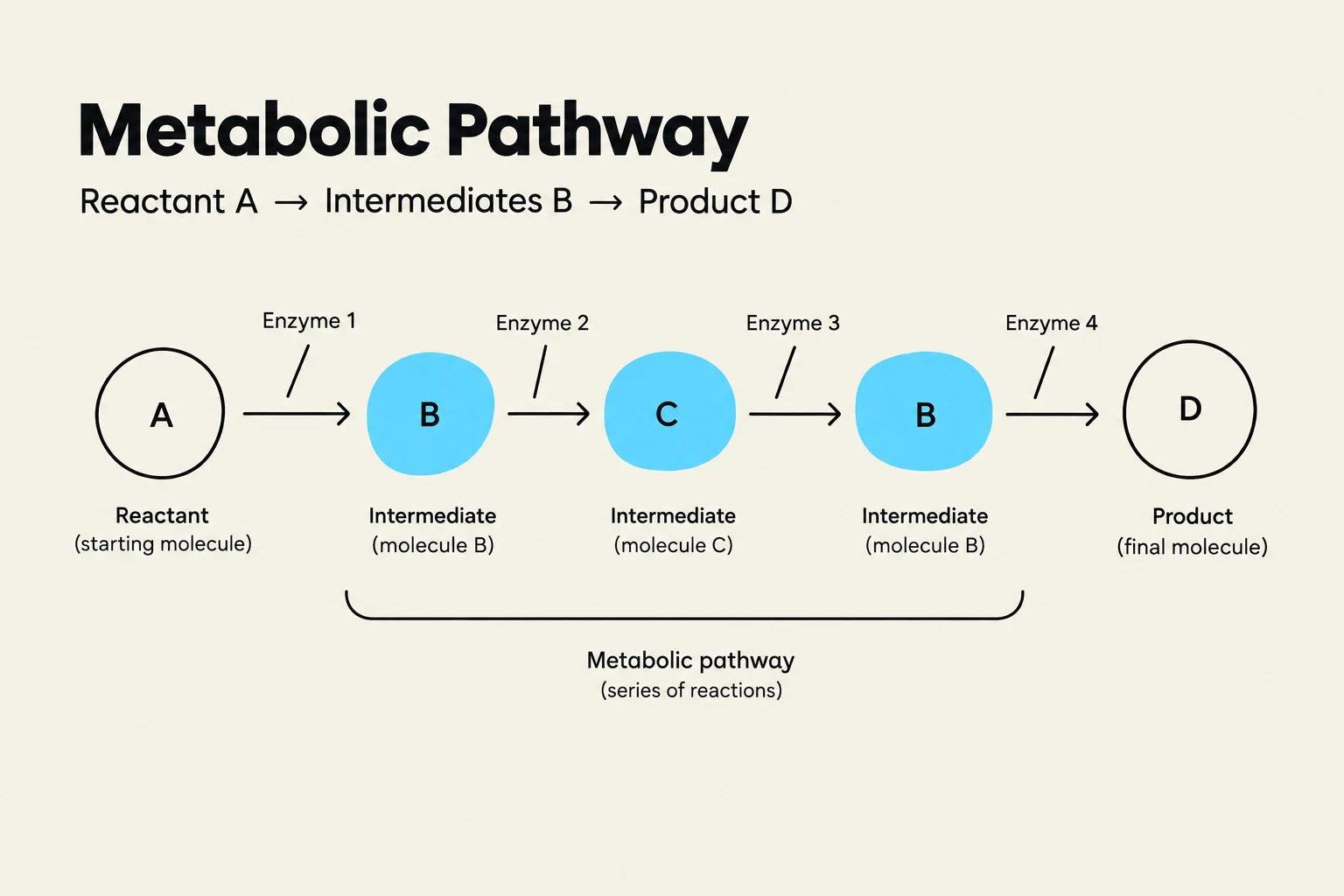
At the most fundamental level, metabolism is the totality of an organism's chemical reactions. These reactions involve the breaking and reforming of chemical bonds, where starting molecules, known as reactants, are converted into new molecules called products.
Metabolism rarely consists of a single, isolated step. Instead, it occurs through metabolic pathways, which are series of linked chemical reactions. In these pathways, the product of one reaction becomes the reactant for the next. Along the way, various short-lived molecules called intermediates are formed. To ensure these reactions happen at a rate sufficient to support life, every step in the pathway is catalyzed by an enzyme—a specialized protein that speeds up the reaction by lowering the energy required to reach the transition state.
Catabolism vs. Anabolism
Metabolic pathways are categorized into two opposing but complementary types based on their energy requirements and the complexity of the molecules involved:
Catabolic Pathways (Catabolism)
Catabolism is the process of breaking down large, complex molecules into smaller, simpler ones. A primary example is cellular respiration, where a complex molecule like glucose is broken down into carbon dioxide and water. These are exergonic reactions, meaning they release energy into the system, resulting in a negative change in free energy ().
Keep reading for free.
Create an account to finish this reading and make it part of your study routine.
Continue reading freeAlready have an account? Log in
Updated