


Every day, millions of different chemical compounds are being created. From the sugar in your morning cereal to the salt on your dinner table, these substances are all around us, forming the very fabric of our physical world. To understand how these substances behave, scientists classify them into two primary groups based on how their atoms are held together: ionic compounds and molecular compounds.
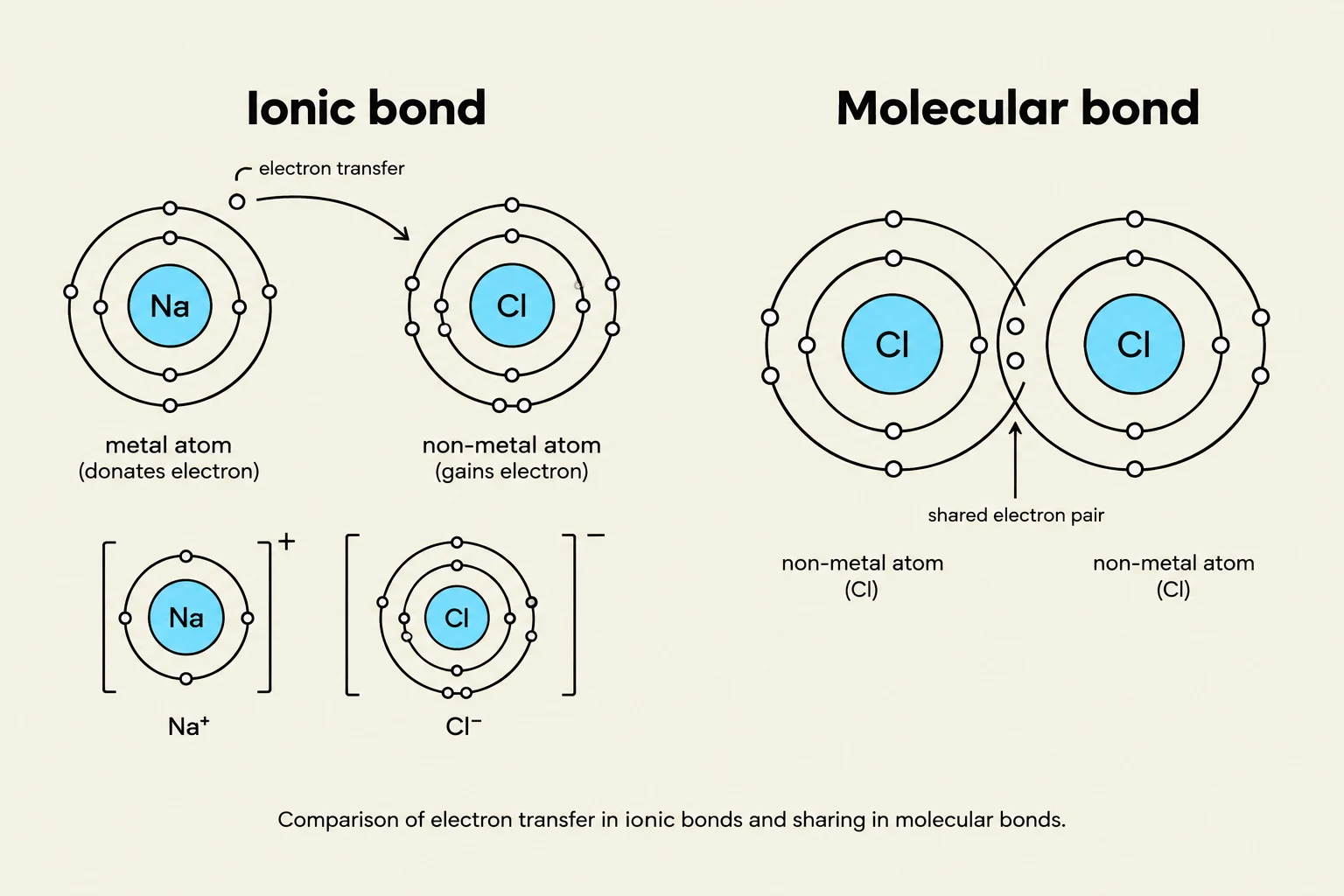
The fundamental difference between these two groups lies in the type of chemical bonding that occurs between the elements involved. By understanding these bonds, we can predict the physical and chemical properties of the substances we encounter in everyday life.
Chemical Bonding and Classification
Chemical bonding is the process by which atoms join together to form more stable structures. The way atoms interact depends heavily on whether they are metallic elements or non-metallic elements.
Ionic Compounds
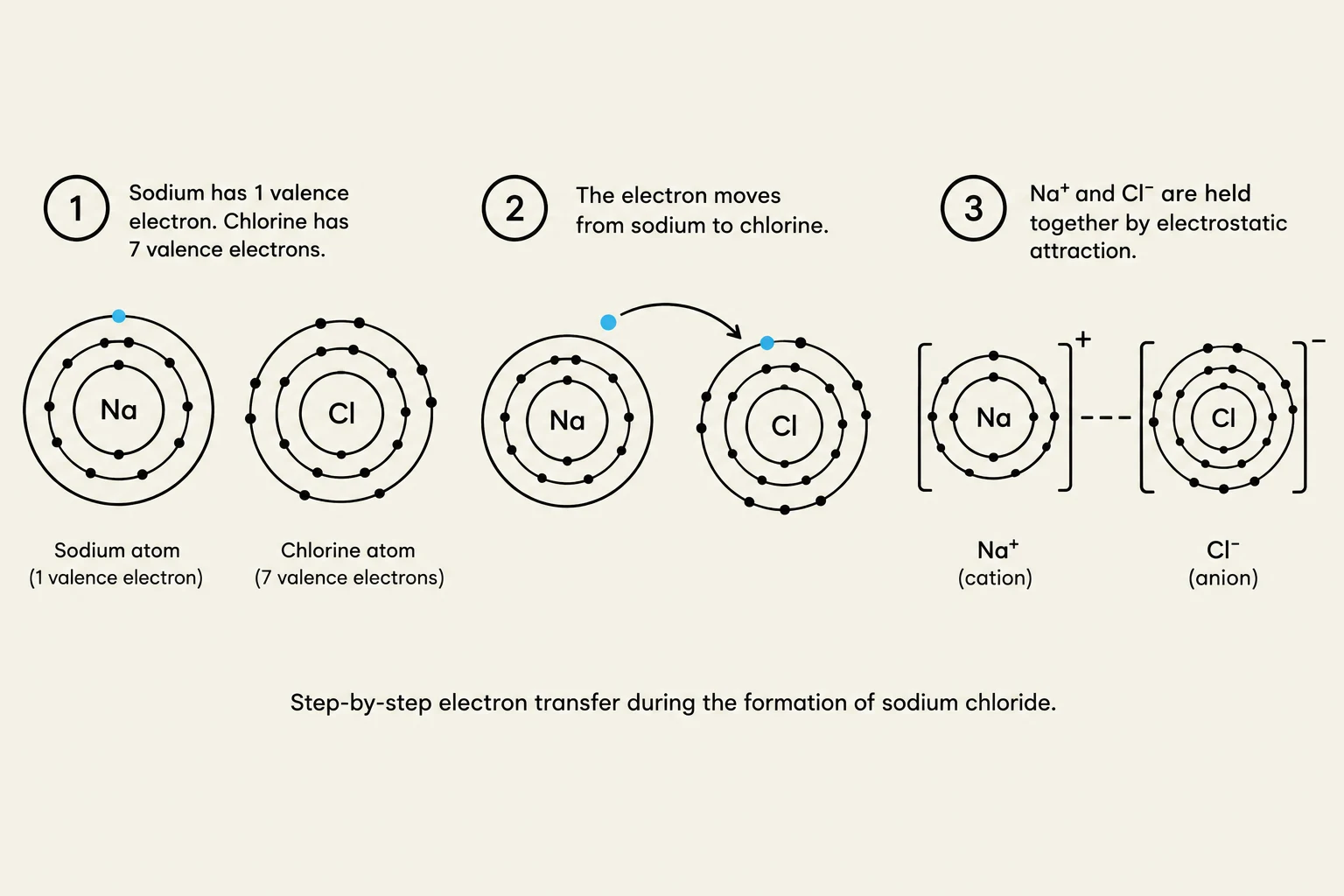
Ionic compounds are formed through the combination of one or more metallic elements and one or more non-metallic elements. In many scientific contexts, a specific type of ionic compound—one produced from a metal and a non-metal—is referred to as a salt.
Common examples of ionic compounds include:
- Sodium Chloride (): Common table salt.
- Calcium Carbonate (): Often found in limestone.
- Magnesium Oxide (): A stable ionic compound.
- Mercury(II) sulfide (): Also known as cinnabar.
- Lead(II) sulfide (): Another example of a metal-nonmetal combination.
Molecular Compounds
In contrast, molecular compounds are formed when two or more non-metallic elements bond together. Unlike ionic compounds, which involve the transfer of electrons, molecular compounds involve the sharing of electrons between non-metals.
Keep reading for free.
Create an account to finish this reading and make it part of your study routine.
Continue reading freeAlready have an account? Log in
Updated