Introduction to Immunopharmacology and Rheumatoid Arthritis
This document provides an overview of immunopharmacology, focusing on Rheumatoid Arthritis (RA) and Systemic Lupus Erythematosus (SLE). It covers the basic principles of the immune system, the pathophysiology of autoimmune diseases, diagnostic markers, and treatment strategies for RA and SLE.
The immune system is a complex, highly regulated network designed to protect the host from pathogens. However, when this system malfunctions and begins to attack the body's own tissues, it leads to autoimmune diseases. This is where the field of immunopharmacology becomes essential. By understanding the molecular drivers of inflammation, scientists can develop targeted therapies to restore balance and prevent tissue destruction.
What is Immunopharmacology?
Immunopharmacology is the study of how we can manipulate the immune system and its responses through the use of pharmacological modulators for the benefit of the host. While this field is ancient in its origins, it is a constantly growing area of modern medicine, particularly as we develop more sophisticated ways to target specific cellular pathways.
Pharmacological modulators can act in various ways: they might suppress an overactive immune response (immunosuppression), enhance a deficient response (immunostimulation), or target specific signaling molecules to prevent inflammation. Recent examples of the rapid evolution of this field include the experimental development of treatments for COVID-19.
Rheumatoid Arthritis (RA)
Rheumatoid Arthritis is a systemic, inflammatory autoimmune disease that primarily targets the synovial joints. While the joints are the main site of pathology, the disease is systemic and can also affect vital organs such as the skin, eyes, heart, kidneys, and lungs.
Epidemiology and Risk Factors
RA affects approximately 1–2% of the population. It is most commonly diagnosed in individuals between the ages of 35 and 60, and it is three times more common in females than in males.
The development of RA is driven by a combination of factors:
Genetic Factors: A significant contribution comes from genetics, specifically the presence of certain MHC-HLA DR4 alleles, which are involved in T cell function and activation.
Environmental Factors: Triggers such as smoking, air pollutants, and certain infections (e.g., E. coli, parvoviruses, and retroviruses) can influence the onset of the disease.
Pathophysiology: The Cytokine Storm and Tissue Damage
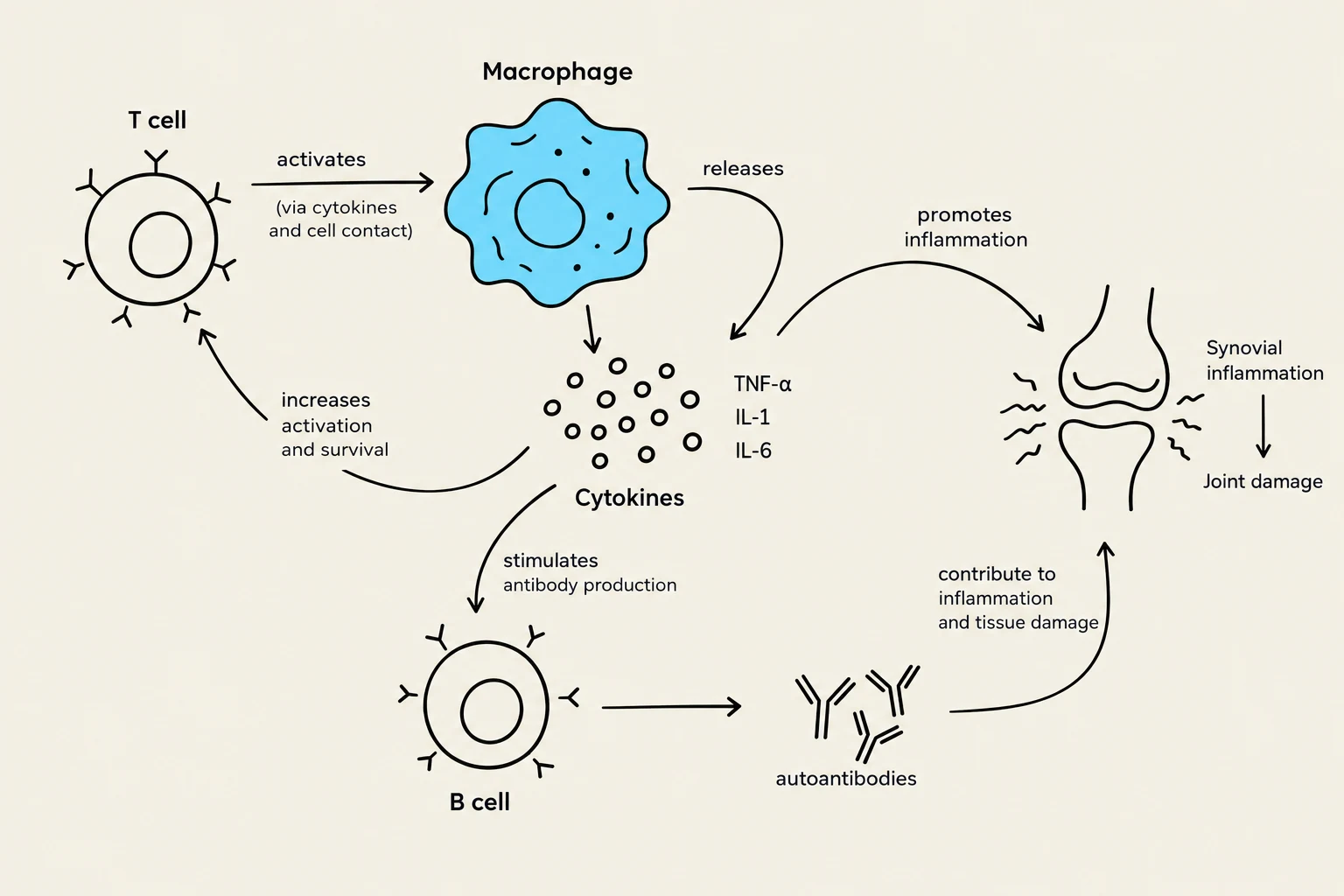
In a healthy joint, the synovial membrane maintains a balance. In RA, an uncontrolled cascade of cytokines—signaling proteins that mediate inflammation—leads to massive tissue destruction.
Key cytokines involved in the RA inflammatory process include:
Pro-inflammatory cytokines: TNF (Tumor Necrosis Factor), IL-1, IL-6, and IL-17.
Regulatory/Modulatory cytokines: IL-2, IL-4, and IL-10.
When these cytokines are released by macrophages, T cells, and synoviocytes, they trigger a destructive cycle. For example, TNF and IL-1 promote the activity of enzymes that lead to cartilage degradation and stimulate osteoclasts, which cause bone erosion.
This diagram illustrates the role of T cells, macrophages, and cytokines in promoting synovial inflammation and joint damage, potentially leading to autoimmune conditions.
Exam Tip: When discussing RA pathology, always link the specific cytokine (e.g., TNF) to its physiological outcome (e.g., bone erosion via osteoclast activation). This demonstrates an understanding of the mechanism of action.
Diagnosis of Rheumatoid Arthritis
Diagnosing RA is notoriously difficult because there is no single definitive test. Clinicians must rely on a combination of blood tests and imaging to form a diagnosis.
Laboratory Markers
Blood tests look for markers of systemic inflammation and specific autoantibodies:
Inflammatory Markers: The Erythrocyte Sedimentation Rate (ESR) and C-reactive protein (CRP) are used to measure the level of systemic inflammation in the body.
Autoantibodies: The presence of Rheumatoid factor and Anti-CCP antibodies (also known as ACPA) are strong indicators of the disease.
Imaging
To visualize the physical damage to the joints, doctors utilize scans such as MRIs and X-rays.
Treatment Strategies for RA
Since there is currently no cure for RA, the primary goals of treatment are to manage pain and to slow or stop further joint damage. Treatment is often organized into "lines" of therapy:
First-line (Pain Management): Non-steroidal anti-inflammatory drugs (NSAIDs), corticosteroids (such as methylprednisolone), and opioids.
Second-line (DMARDs): Disease-modifying anti-rheumatic drugs (DMARDs) aim to alter the course of the disease. Examples include Methotrexate, leflunomide, sulfasalazine, and hydroxychloroquine.
Newer Treatments (Biologicals): These are highly targeted therapies that inhibit specific cytokines or their receptors. Examples include Infliximab, Adalimumab, Etanercept, Abatacept, and Tocilizumab.
Last Resort: Surgery may be required if joint damage is severe.
Comparison: Systemic Lupus Erythematosus (SLE)
While RA primarily targets joints, Systemic Lupus Erythematosus (SLE) is a chronic systemic autoimmune disease that can affect many different organ systems.
Characteristics of SLE
Demographics: It mainly affects women between the ages of 20 and 40, with a female-to-male ratio of 10:1. It is more frequent in African-American and Hispanic females.
Mechanism: The body produces auto-antibodies against ubiquitous self-antigens found in nucleated cells, specifically nucleoprotein particles (a combination of protein and nucleic acids).
Aetiology: Like RA, SLE has genetic components (MHC genes, complement pathway genes, etc.) and environmental triggers (sunlight, stress, smoking, and viruses).
Clinical Presentation and Management
The severity of SLE can range from mild skin and joint problems to life-threatening inflammation of the heart, lungs, brain, or kidneys. Diagnosis often involves testing for anti-nuclear antibodies (ANA) and performing biopsies on the skin or kidneys.
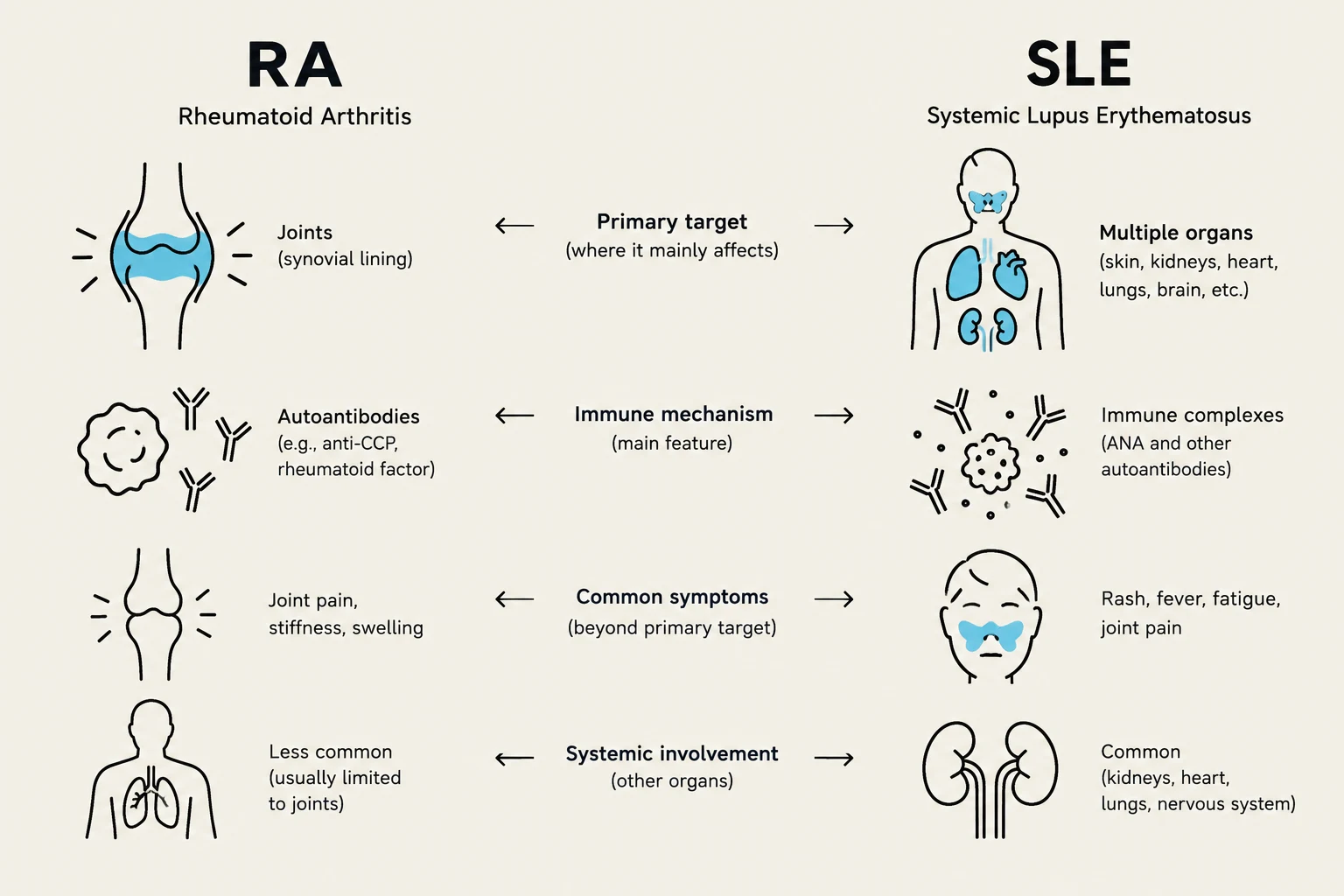
Comparison of Rheumatoid Arthritis (RA) and Systemic Lupus Erythematosus (SLE), highlighting their primary targets, immune mechanisms, common symptoms, and systemic involvement.
Treatment for SLE includes:
Symptom management: NSAIDs and sun protection.
Inflammation control: Corticosteroids and hydroxychloroquine (for fatigue and skin/joint issues).
Advanced therapy: Immunosuppressants like methotrexate, biological medicines like Belimumab, and steroid injections for organ-specific inflammation.
Keep reading for free.
Create an account to finish this reading and make it part of your study routine.