


The International Classification of Diseases, 10th Revision, Clinical Modification (ICD-10-CM) is a sophisticated system used to classify diseases, symptoms, and various medical conditions. At its core, the system utilizes a set of characters—which can reach up to seven characters in length—to represent specific patient diagnoses. These codes are organized within a comprehensive codebook designed to provide not just a list of diagnoses, but also the specific instructions necessary for their correct application.
To master medical coding, one must look beyond simply finding a word in a book. Success requires a deep understanding of the rules, the clinical context, and the nuances of medical documentation.
Code Assignment and the Role of Documentation
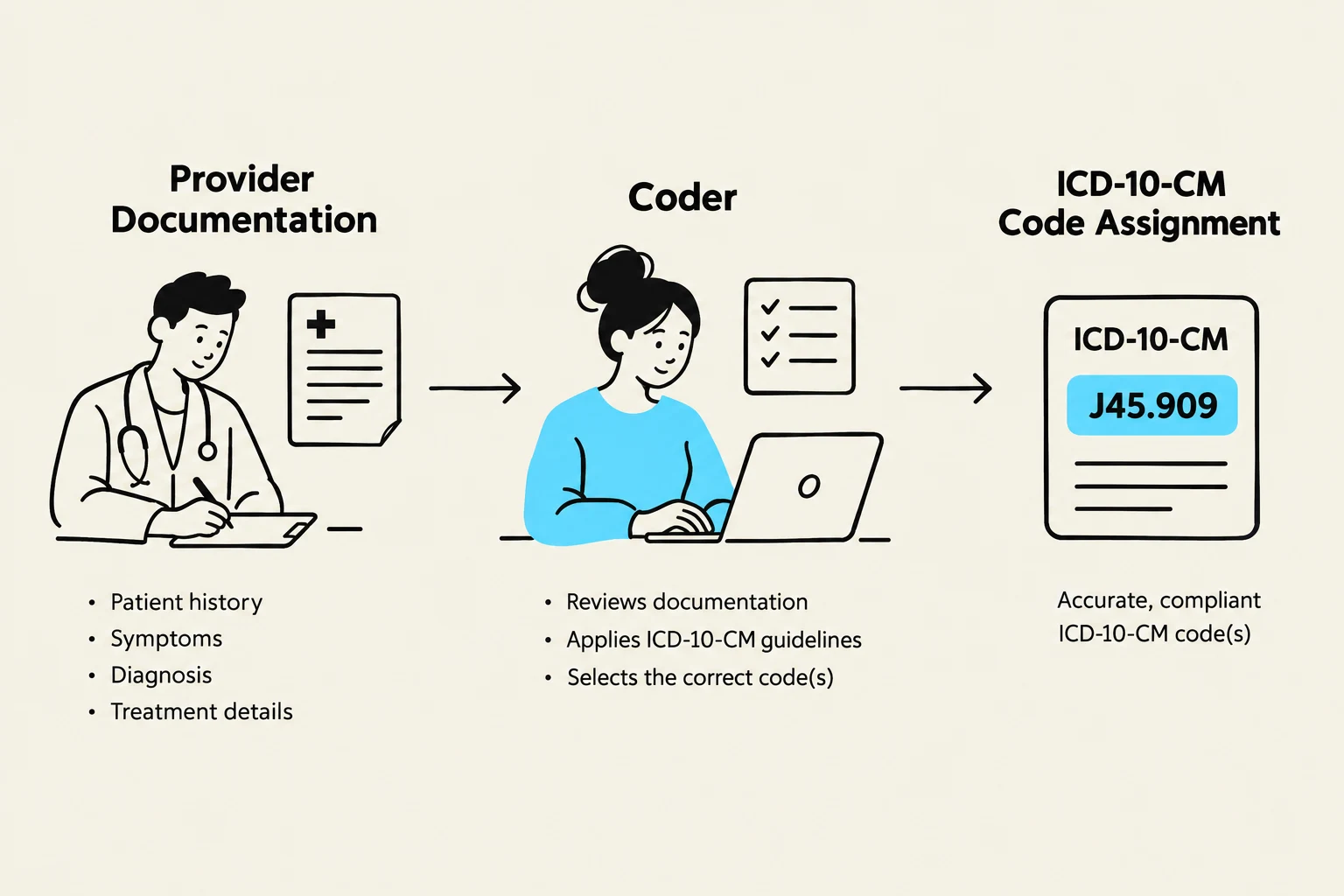
Code assignment is the fundamental process of selecting the most accurate ICD-10-CM code(s) to represent a patient's specific condition. While the codebook provides the options, the "map" for the coder is the medical record itself.
The most critical tool in this process is documentation. This refers to the written record of a patient's medical history, physical examinations, and treatments provided by a healthcare professional. Accurate assignment is directly dependent on the quality of this record; if a provider's documentation is unclear, incomplete, or ambiguous, the coder may find it impossible to assign the correct code.
Exam Tip: Always remember that the coder cannot assume a diagnosis. If it is not documented by the provider, it cannot be coded.
Keep reading for free.
Create an account to finish this reading and make it part of your study routine.
Continue reading freeAlready have an account? Log in
Updated