


When we think of fire alarm systems, we often think of life safety—ensuring that people can exit a building quickly and safely during an emergency. However, there is a specialized branch of fire protection design that focuses on something much more permanent: the preservation of history itself. This is known as heritage protection.

In many environments, the loss of a building to fire is a tragedy, but in others, it is an irreversible loss to human civilization. Heritage protection systems are designed to address these unique challenges, where the goal is not just to save lives, but to safeguard the irreplaceable cultural, historical, and architectural essence of a site.
Understanding Culturally Significant Buildings
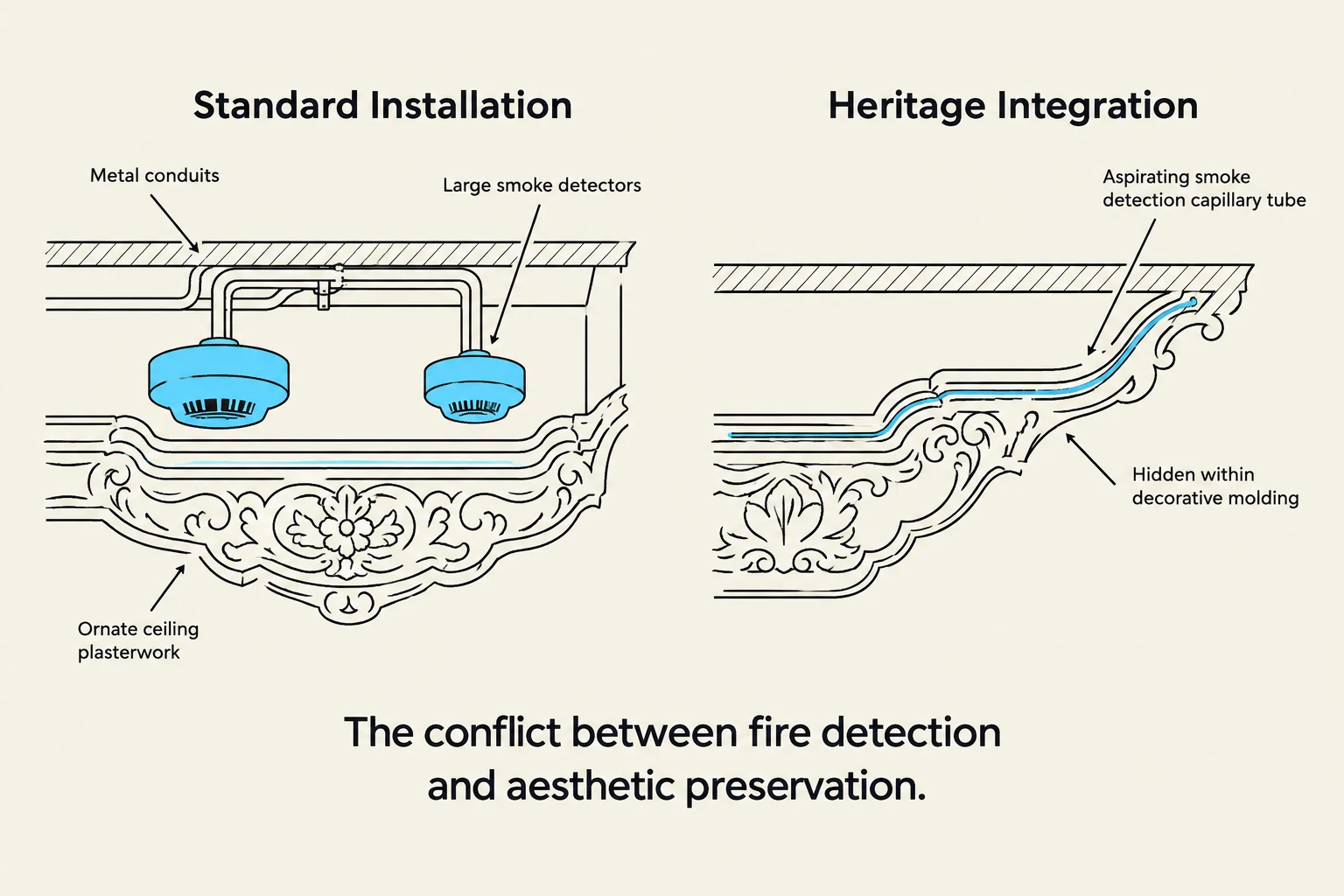
Heritage protection is not a "one size fits all" approach applied to every structure. Instead, it is specifically afforded by installing specialized systems in culturally significant buildings. These structures are defined by their unique value to society, which often makes them difficult to protect using standard commercial methods.
Common examples of these environments include:
- Libraries: Housing rare manuscripts, ancient texts, and unique archival collections that are highly combustible and irreplaceable.
- Museums: Containing artifacts, fine art, and historical relics that may be sensitive to both fire and the methods used to suppress it.
- Architecturally Important Buildings: Structures where the building itself is the artifact—such as cathedrals, government landmarks, or historic estates—where the structural integrity and aesthetic design are of paramount importance.
Keep reading for free.
Create an account to finish this reading and make it part of your study routine.
Continue reading freeAlready have an account? Log in
Updated