


When we think of a fire alarm, we often picture a red strobe light flashing or a loud siren ringing in a hallway. While these are essential components, the scope of modern fire alarm and signaling systems is far more comprehensive than simple noise. These systems are highly specialized life safety technologies that are meticulously designed, installed, and maintained to protect both people and property from a wide array of emergencies.
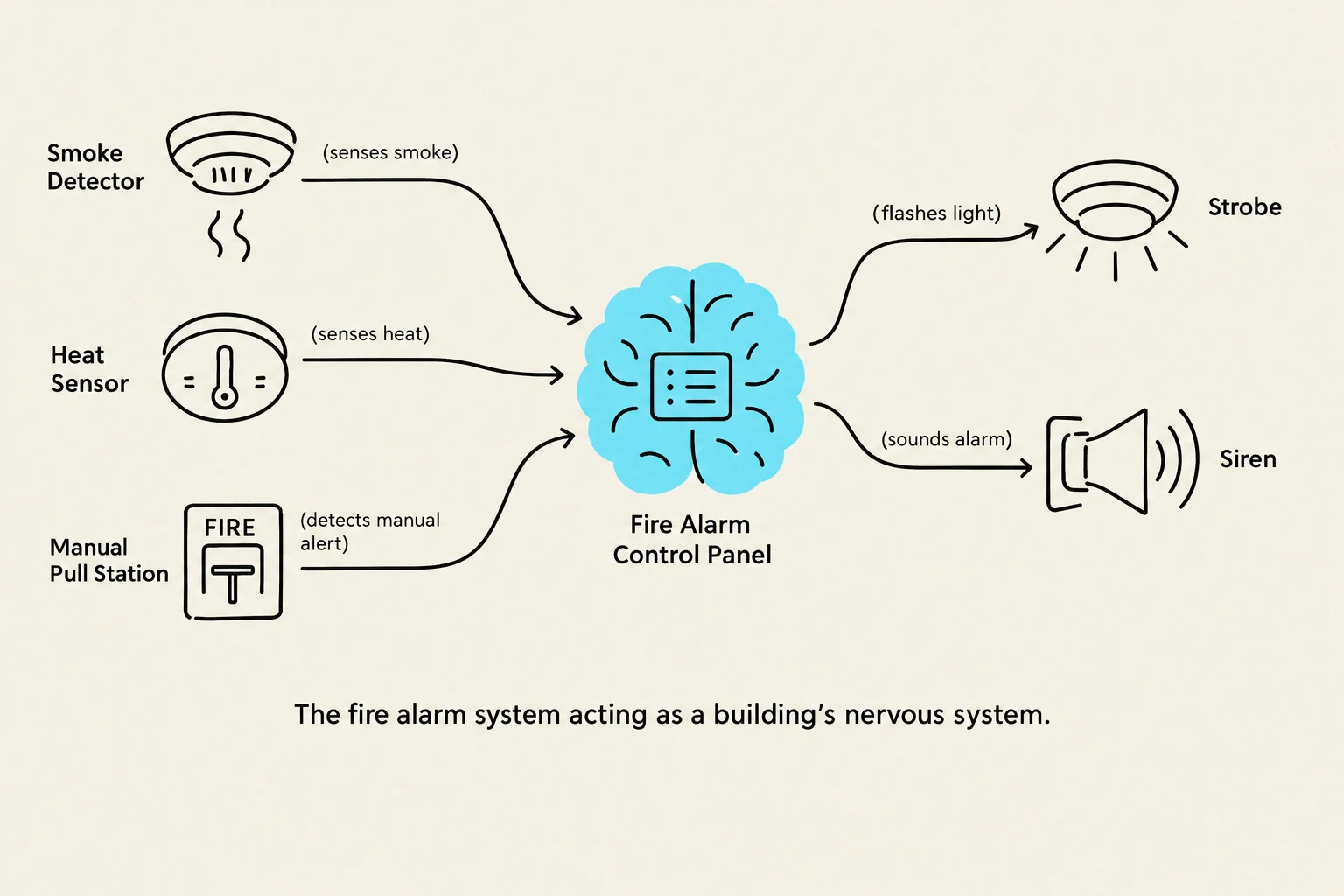
In today's complex architectural environments, these systems serve as the "nervous system" of a building, sensing danger and coordinating a response to ensure the safety of everyone inside.
The Core Mission: Protecting People and Property
The fundamental objective of any fire alarm system is twofold: life safety and property protection.
- Life Safety: The primary goal is to provide occupants with enough warning to evacuate a building safely before conditions become unsurvivable. This involves clear notification through audible and visual signals.
- Property Protection: By detecting a fire in its incipient (early) stage, these systems allow for faster intervention, which can significantly reduce the physical damage to the structure and its contents.
To achieve these goals, all system designs and installations must adhere to strict safety standards. In the United States, for example, these systems are governed by specific regulations such as the 2023 NEC (National Electrical Code) to ensure that the electrical components are reliable and compliant with life-safety requirements.

Keep reading for free.
Create an account to finish this reading and make it part of your study routine.
Continue reading freeAlready have an account? Log in
Updated