An overview of fire alarm and signaling systems, their functions in emergency event warning and building system management, and relevant standards and compliance.
Fire alarm and signaling systems are much more than just simple sirens used to detect smoke. These specialized technical installations are meticulously designed, installed, and maintained with a singular, vital objective: to protect both people and property from fires and a wide array of other life-safety emergencies.
As modern architecture evolves, so do the systems required to keep occupants safe. Whether in a dense urban skyscraper, a sprawling open landscape, or a busy commercial district, these systems serve as the first line of defense in crisis management.
Fire Alarm Systems
Emergency Event Warning
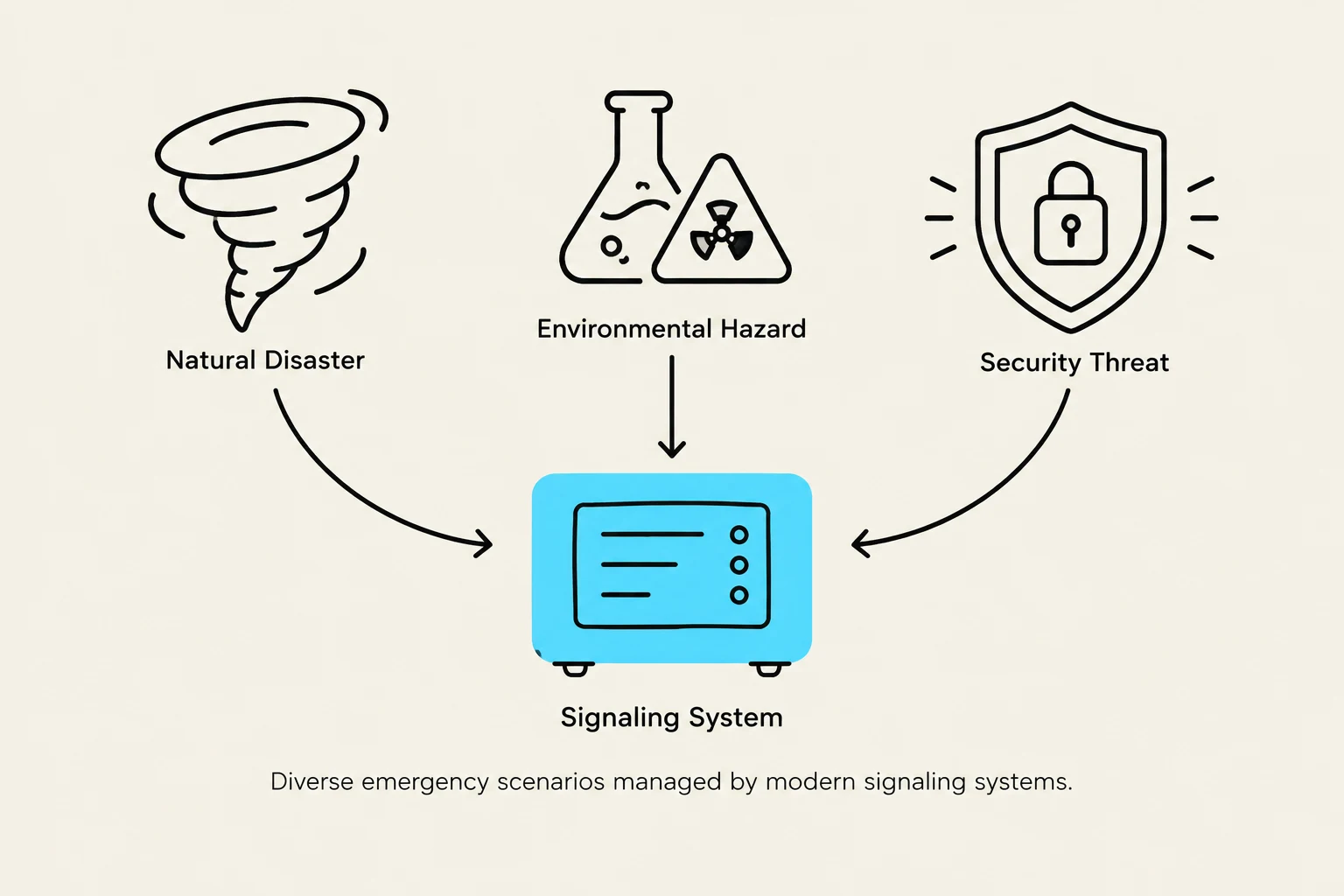
This diagram illustrates how a signaling system can manage diverse emergency scenarios, including natural disasters, environmental hazards, and security threats.
While the traditional focus of these systems is fire detection, modern technology has expanded their capabilities significantly. Today's signaling systems are multi-purpose tools capable of warning building occupants and providing critical information during a diverse range of emergency scenarios.
Beyond fire, these systems are utilized to communicate warnings for:
Natural Disasters: Such as tornadoes or severe weather events.
Environmental Hazards: Including hazardous material spills.
Security Threats: Such as active shooter scenarios or terrorist activities.
Key Takeaway: A modern fire alarm system is a communication hub designed to deliver life-saving information during any critical event, not just a fire.
Building System Management
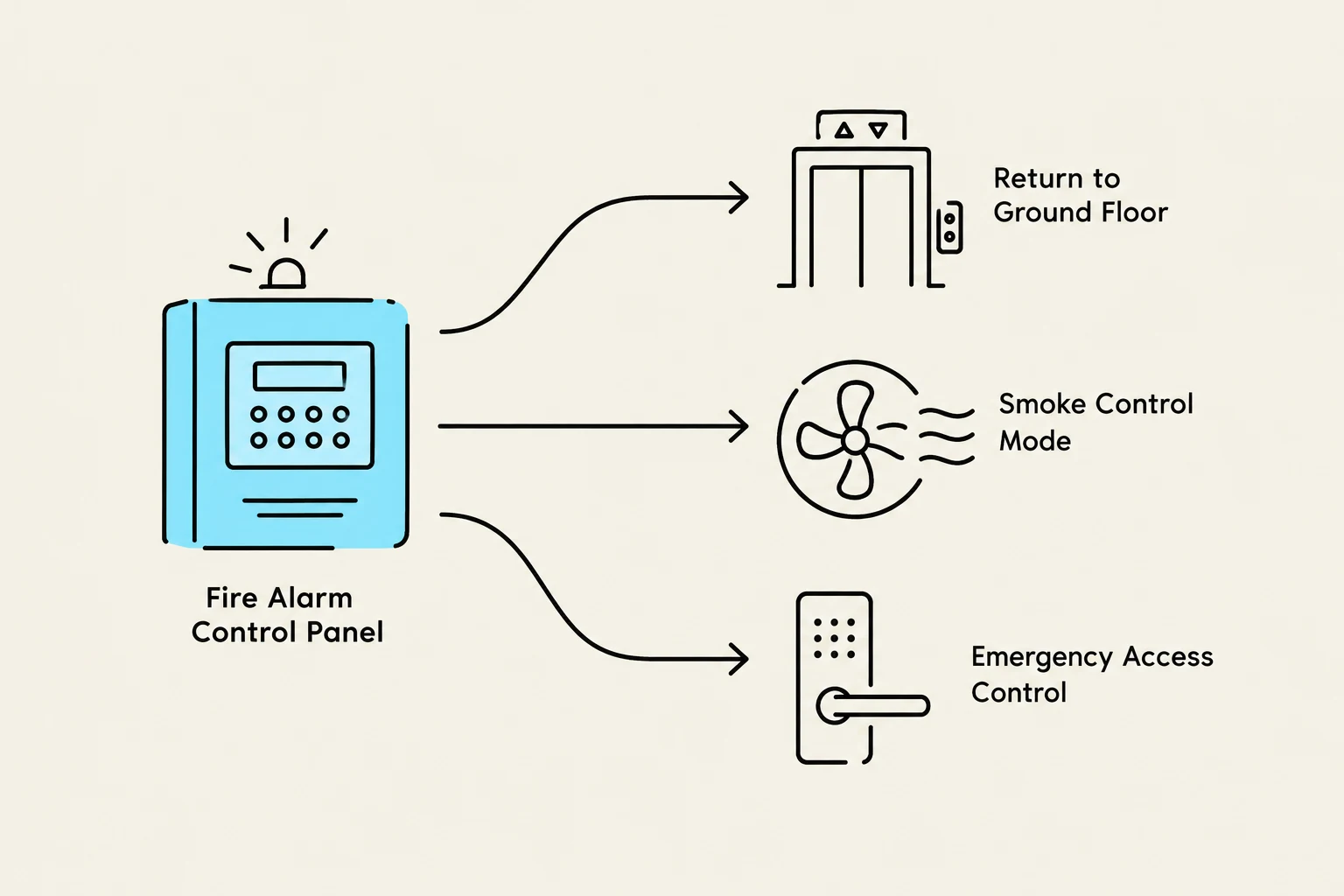
Diagram illustrating the functions of a fire alarm control panel, including returning elevators to the ground floor, activating smoke control mode, and enabling emergency access control.
One of the most sophisticated features of contemporary fire alarm systems is their ability to integrate with and manage other building systems. Rather than acting as an isolated unit, the fire alarm system functions as a central safety coordinator.
By communicating with other mechanical and electrical components, the system can automatically trigger safety protocols, such as:
Controlling elevators to prevent occupants from being trapped.
Managing ventilation systems to control smoke spread.
Adjusting door locks to facilitate or restrict movement based on the emergency type.
Standards and Compliance
To ensure that these systems are reliable and effective in the high-stakes environments they serve, they must be designed and implemented according to strict safety standards. In the United States, these installations are governed by the 2023 National Electrical Code (NEC), which provides the necessary framework for the safe installation of fire alarm and signaling equipment.
Keep reading for free.
Create an account to finish this reading and make it part of your study routine.