This document explains accounting as a systematic process for collecting, organizing, and recording financial transactions to produce meaningful reports. It covers the core purpose of resource allocation, the accounting cycle, and the two main branches: financial and managerial accounting.
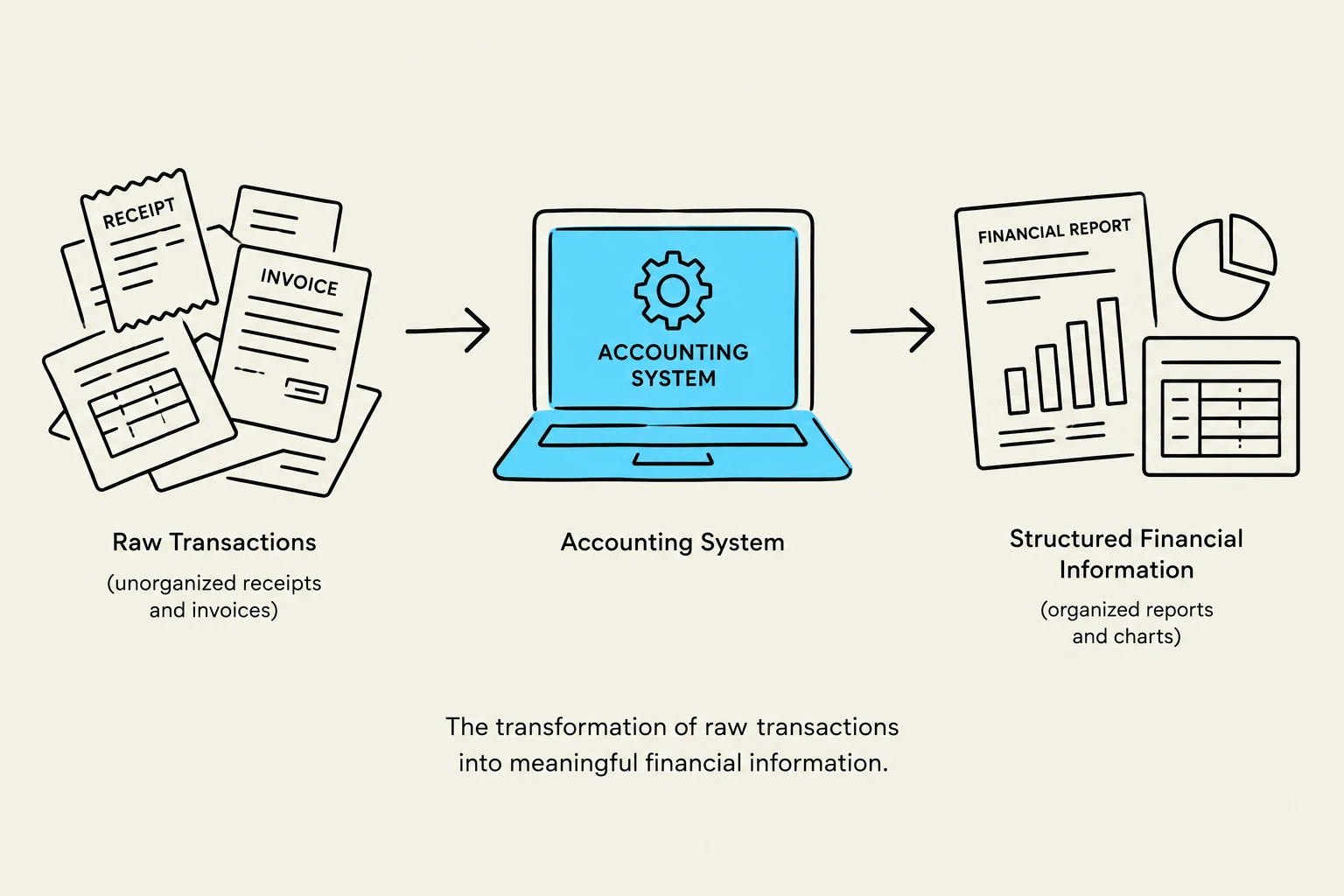
At its simplest level, accounting is often misunderstood as merely "working with numbers." However, a more accurate definition is that accounting is a systematic process used to collect, organize, and record financial transactions to produce meaningful reports. This process transforms raw, unorganized data into structured information that allows individuals and organizations to understand their economic reality.
This diagram illustrates the process of transforming raw financial transactions, such as receipts and invoices, into structured financial information through an accounting system, resulting in organized reports and charts.
The Core Purpose: Resource Allocation
The fundamental role of accounting in society is to facilitate resource allocation. Resource allocation refers to the process of deciding how to distribute available assets—such as money, time, or equipment—to achieve the best possible outcome. This concept operates at two distinct levels:
Personal Resource Allocation: On an individual level, people use financial information to make life decisions. For example, an investor might look at the financial health of companies like Amazon or Tesla to decide whether to put their savings into those stocks.
Business Resource Allocation: Within a company, management uses accounting data to plan for the future. If a business anticipates a massive surge in sales, accounting information helps them decide whether they have enough cash to hire more employees, buy new equipment, or expand their warehouse capacity.
The Accounting Cycle: From Data to Statements
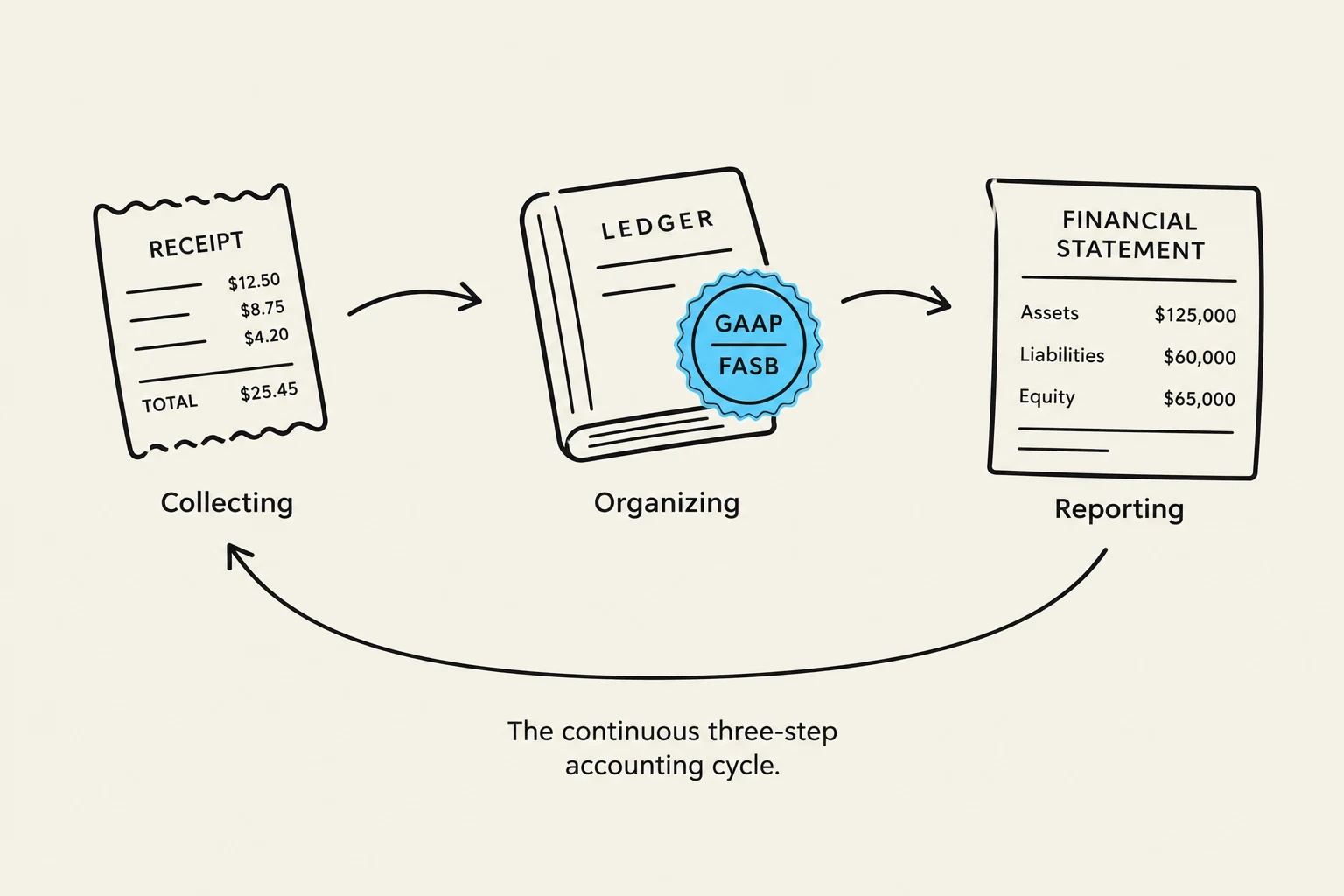
The continuous three-step accounting cycle, illustrating collecting, organizing, and reporting financial information.
The journey of accounting data follows a specific flow, moving from the initial event to a finished report.
1. Collecting Financial Transactions
Everything begins with a financial transaction—an economic event that affects the financial position of a business. This could be anything from paying rent to receiving cash from a customer.
2. Organizing Accounting Data
Once transactions occur, they must be recorded as accounting data. This involves categorizing the data so it can be tracked over time. In a professional setting, this is often governed by the Financial Accounting Standards Board (FASB), which establishes the rules (known as GAAP or Generally Accepted Accounting Principles) to ensure that all companies "play by the same rules" and allow for "apples-to-apples" comparisons.
3. Producing Financial Statements
The final stage of the cycle is the creation of financial statements. These are formal, structured reports that summarize the collected data into a readable format. The most common statements include:
The Income Statement: Shows revenue and expenses to determine profit or loss.
The Balance Sheet: Shows the company's financial position (Assets, Liabilities, and Equity).
The Statement of Cash Flows: Tracks how much cash entered and left the business through operating, investing, and financing activities.
Exam Tip: The Matching Concept
When studying how transactions are recorded, remember the "Matching Concept." Under the accrual basis of accounting, you must match revenues to the period in which they were earned and expenses to the period in which they were incurred, regardless of when the actual cash changes hands.
Two Main Branches of Accounting
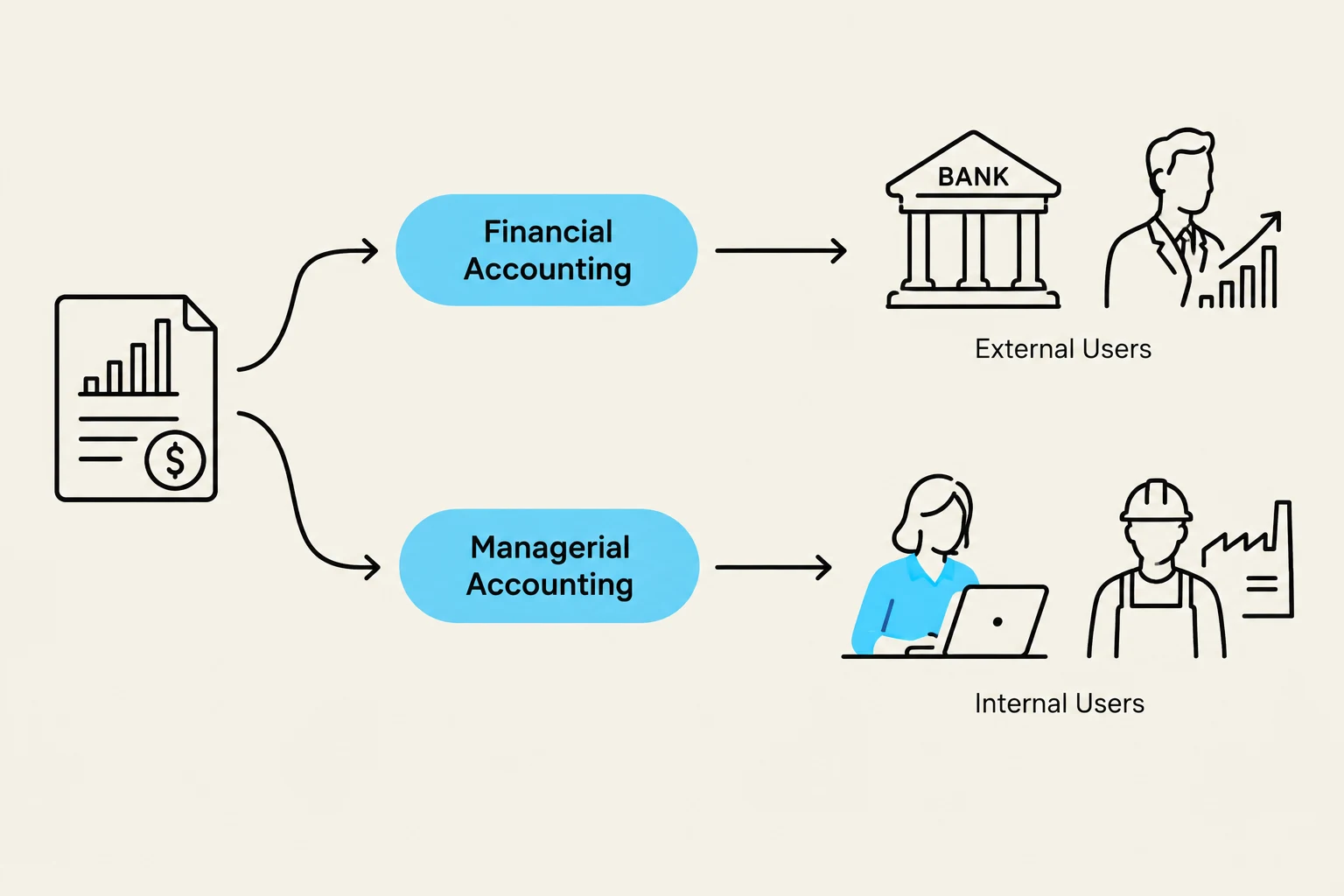
This diagram illustrates the distinction between financial accounting, which serves external users like banks, and managerial accounting, which is utilized by internal users such as employees.
Depending on who needs the information, accounting is generally divided into two specialized fields:
Financial Accounting
This branch is focused on external users. These are people outside the immediate management of the company, such as investors (stockholders), creditors (banks/lenders), and government regulators. Because these users need to compare different companies, financial accounting must strictly follow standardized rules like GAAP.
Managerial Accounting
This branch is focused on internal users. These are the managers and employees within the company who need specific, detailed data to make managerial decisions. While financial accounting looks backward at what happened, managerial accounting often looks forward to help with planning, controlling, and strategic decision-making.
Summary Table: Users and Their Needs
User Type
Branch
Primary Goal
External (Investors, Banks)
Financial Accounting
Assessing financial health and risk before investing or lending.
Internal (Managers, Employees)
Managerial Accounting
Planning operations, setting budgets, and making daily business decisions.
By transforming raw transactions into organized data and eventually into formal statements, accounting provides the essential "language of business" required to direct the flow of resources effectively.
Keep reading for free.
Create an account to finish this reading and make it part of your study routine.