


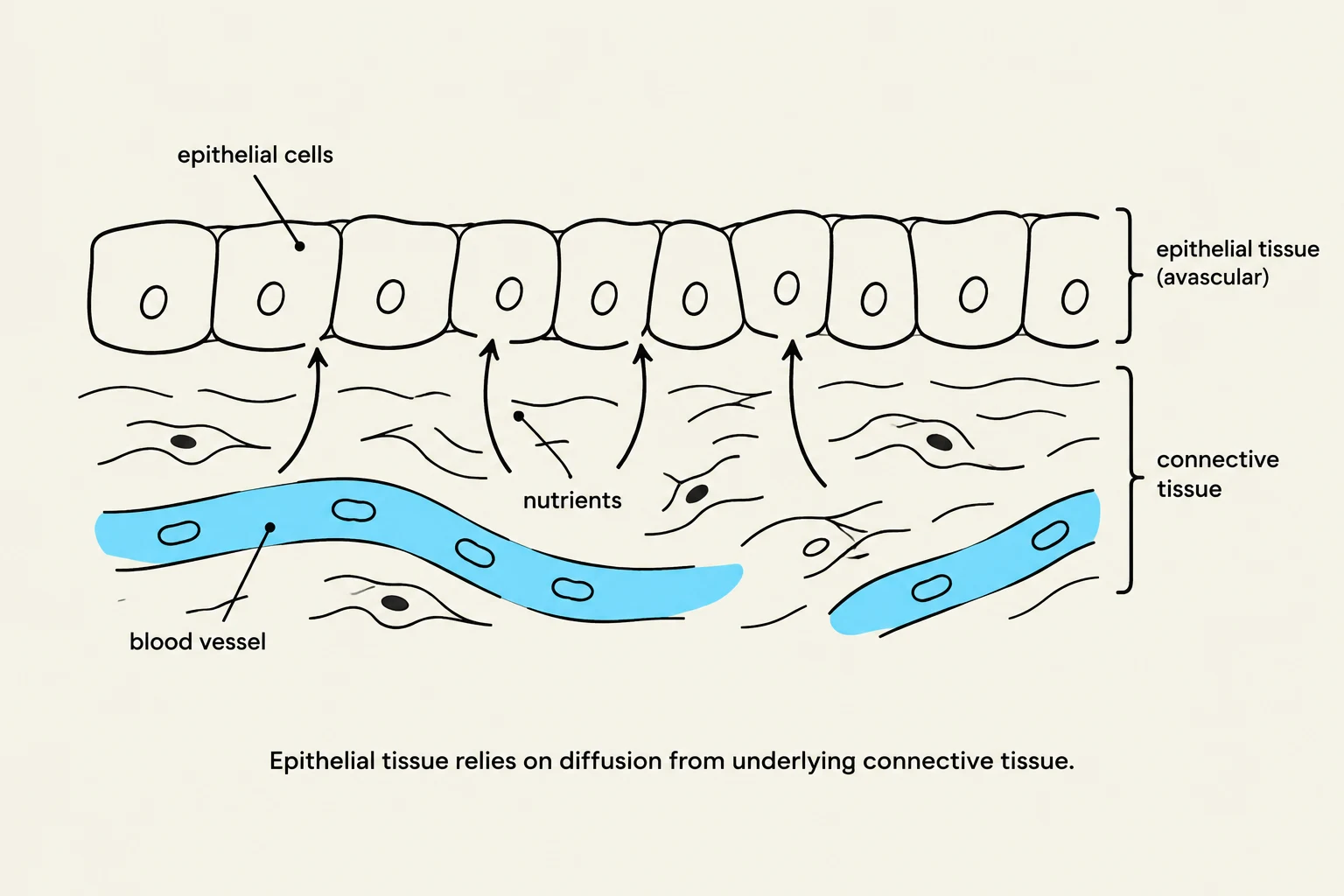
Epithelial tissue serves as the body's primary interface with the environment. It forms continuous sheets of cells that cover exposed body surfaces, line internal cavities and passageways, and constitute the functional units of many glands. Because these tissues act as barriers, they are characterized by being avascular, meaning they lack their own blood vessels. To survive, epithelial cells must rely on attachment to underlying connective tissue, which provides the necessary nourishment via diffusion.
Primary Functions of Epithelia
Epithelial tissues are not merely passive coverings; they perform several dynamic roles essential for homeostasis:
- Physical Protection: They shield delicate underlying surfaces from mechanical abrasion, dehydration, and destruction by chemical or biological agents.
- Control of Permeability: Most epithelia are capable of selective absorption or secretion. These barriers are dynamic and can be modified in response to stimuli; for example, the skin can develop calluses in response to repeated friction.
- Sensation: Specialized epithelial cells can detect environmental changes. A notable example is neuroepithelium, which consists of sensory epithelium found in special sense organs.
- Specialized Secretion: Glandular epithelial cells are specialized to produce and release various substances.
Cellular Polarity and Structure
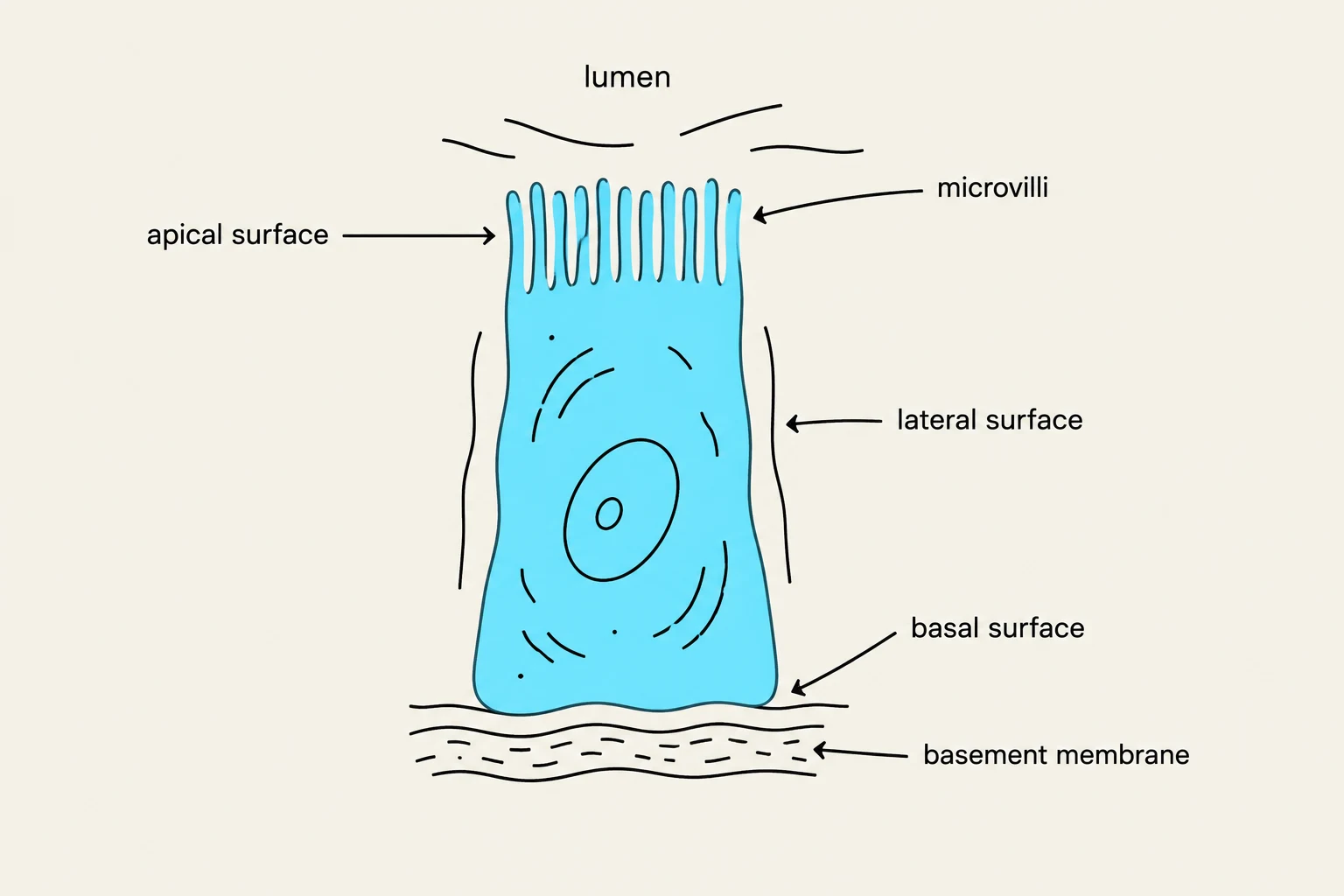
A defining structural feature of epithelial tissue is polarity. This means the cells have distinct structural and functional differences between their exposed surface and their attached surface.
The Apical Surface
Keep reading for free.
Create an account to finish this reading and make it part of your study routine.
Continue reading freeAlready have an account? Log in
Updated