This content provides a foundational understanding of epidemiology, including its core functions like surveillance, disease distribution classification (endemic, epidemic, pandemic), investigation, evaluation, and policy development. It also covers essential epidemiological models and measures for quantifying health an
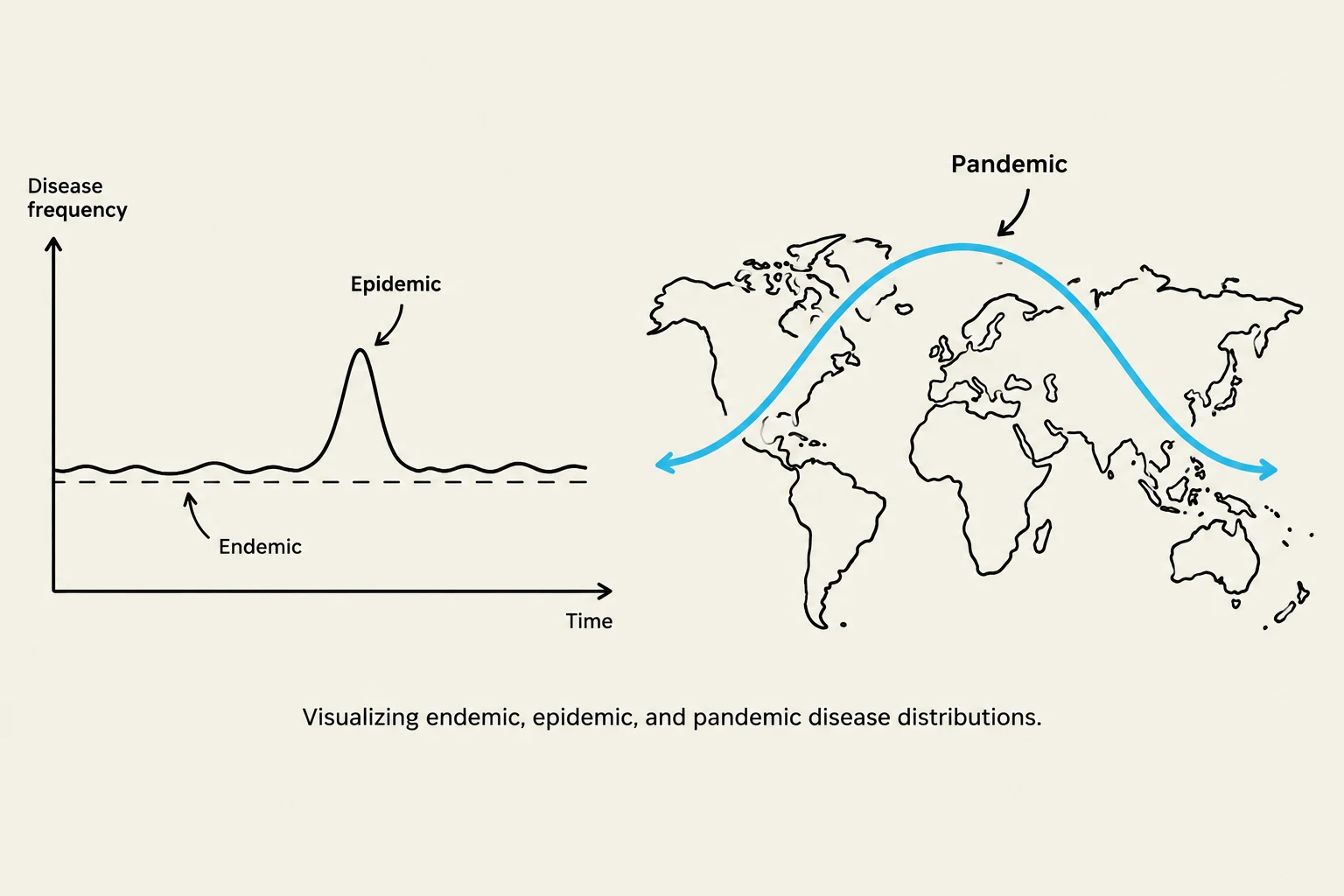
Visualizing endemic, epidemic, and pandemic disease distributions.
At its core, epidemiology is the scientific study of how health-related states and events occur and are distributed within specific populations. Rather than focusing on the health of a single individual, epidemiologists look at the "big picture" to understand patterns of disease, injury, or even wellness.
The field is not merely observational; it is also practical. It involves the application of this gathered knowledge to control health problems and improve the well-being of communities. By identifying who is getting sick, where they are located, and why, public health professionals can implement targeted interventions to prevent further harm.
The Engine of Public Health: Surveillance
One of the most critical tools in an epidemiologist's toolkit is surveillance. Surveillance is defined as the ongoing, systematic collection and interpretation of health data. It is not a one-time event but a continuous cycle that allows health organizations, such as the Centers for Disease Control and Prevention (CDC), to monitor the pulse of a nation's health.
The primary purposes of surveillance include:
Assessing and monitoring the health states of specific populations to identify trends.
Investigating, diagnosing, and addressing emerging or existing health problems.
Evaluating the effectiveness of public health interventions and programs to see if they are actually working.
Exam Tip: Think of surveillance as the "eyes and ears" of public health. Without constant data collection, health officials would be "flying blind" when trying to respond to a new outbreak.
Classifying Disease Distribution
To effectively communicate the severity and scale of a health issue, epidemiologists categorize disease presence into three distinct levels based on its distribution and expected frequency:
Endemic: This refers to the baseline or expected presence of a disease within a specific population or geographic area. For example, if a certain type of flu is always present in a specific region at a predictable level every year, it is considered endemic.
Epidemic: An epidemic occurs when the presence of a disease rises significantly above the expected baseline level within a specific population. This represents an unexpected surge in cases.
Pandemic: A pandemic is essentially an epidemic that has spread to a much larger scale, typically crossing international borders and affecting multiple countries or even continents.
Core Functions and Methodologies
Beyond surveillance, the practice of epidemiology involves several interconnected functions that move from data collection to real-world action:
Investigation and Analysis
When surveillance detects an unusual pattern, a systematic inquiry or investigation begins. This is often seen in outbreak investigations, where infectious diseases are traced back to their original source. To understand these patterns, researchers use analytic studies, which include a valid comparison group to determine why certain people are getting sick while others are not.
Evaluation and Policy
Once an intervention is launched, epidemiologists must determine if it is effective through evaluation. This can be:
Formative: Conducted during the planning and implementation stages.
Summative: Conducted on well-established programs to measure overall outcomes.
Finally, the findings from these investigations are used for policy development. Epidemiologists are frequently called upon to provide the evidence necessary to influence laws and public health regulations.
The Importance of Linkages
Epidemiology is rarely a solo endeavor. It requires linkages—an interprofessional team approach involving various geographical locations and disciplines. Maintaining these collaborative connections is essential for improving health outcomes.
Epidemiological Models
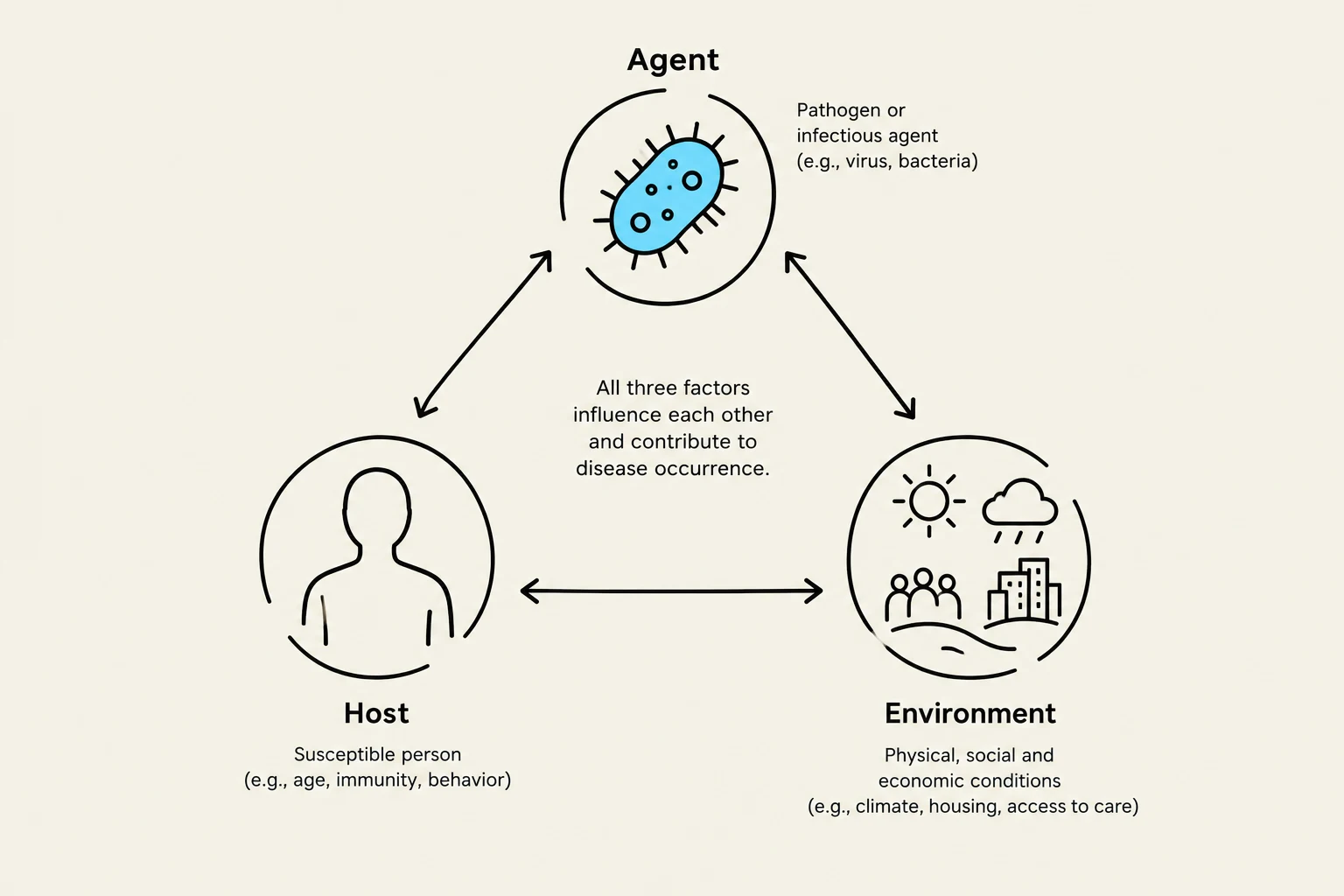
This diagram illustrates the three factors that contribute to disease occurrence: the agent (pathogen or infectious agent), the host (susceptible person), and the environment (physical, social, and economic conditions). These factors influence each other and collectively impact disease occurrence.
To visualize how diseases interact with populations, epidemiologists use specific models:
The Epidemiologic Triangle: This model displays the relationship between three essential factors: the Agent (the cause of the disease), the Host (the organism or person carrying the disease), and the Environment (the external factors that allow transmission).
Natural History of Disease: This model illustrates the expected progression of a disease over time if no intervention is provided.
Measuring Health: Frequency and Mortality
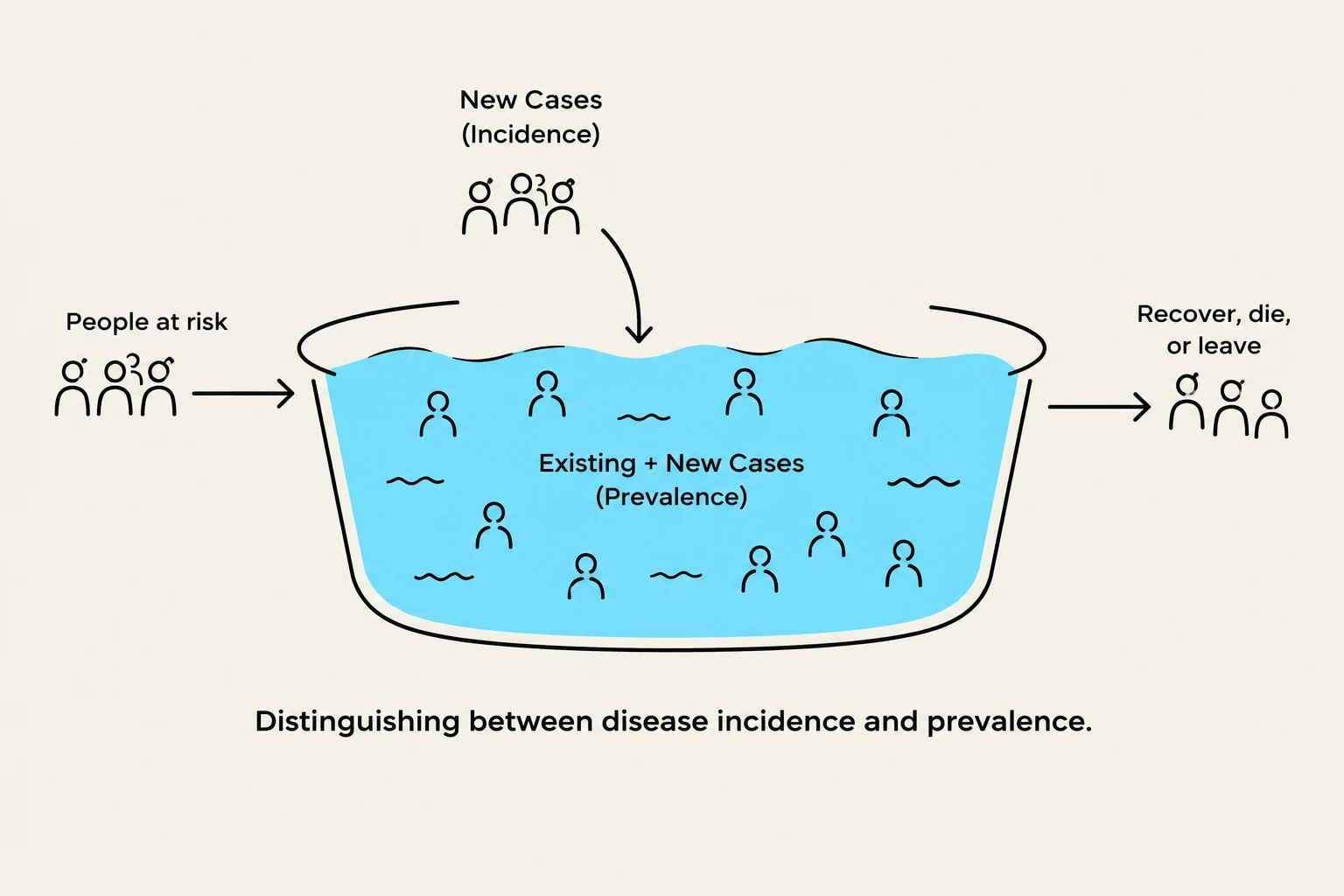
This diagram illustrates the distinction between disease incidence and prevalence. Incidence refers to new cases, while prevalence encompasses both existing and new cases within a population at a given time. The diagram shows individuals moving from a state of being at risk to becoming existing or new cases, and then potentially recovering, dying, or leaving the population.
To prioritize community health initiatives, epidemiologists use mathematical measures to quantify disease:
Frequency Measures
Incidence: The number of new cases occurring during a specific time period. To calculate this, only those currently at risk are included in the denominator.
Prevalence: The total number of people who have a disease at a specific point in time. This counts both new and existing cases.
Mortality Measures
Crude Mortality Rate: The number of people who died from all causes during a certain period, divided by the total population.
Cause-Specific Mortality Rate: The number of deaths from one specific cause, divided by the total population.
Screening Accuracy
When using tests to screen for diseases, two concepts are vital for understanding the results:
Sensitivity: The ability of a test to correctly detect a "true positive" (identifying those who actually have the disease).
Specificity: The ability of a test to correctly detect a "true negative" (identifying those who do not have the disease).
Keep reading for free.
Create an account to finish this reading and make it part of your study routine.