


The quest to discover new life-saving drugs is a multidisciplinary journey that bridges the gap between fundamental organic chemistry and clinical application. The field of "Medicines of Tomorrow" focuses on the systematic investigation of novel pharmaceuticals through a cycle of extraction, biological testing, structural identification, and chemical synthesis. By mastering these techniques, researchers can move from a raw mixture of natural substances to a pure, synthesized compound with a known structure and proven therapeutic effect.
The Foundation: Organic Chemistry and Drug Development
At the heart of pharmaceutical discovery lies organic chemistry. This discipline allows scientists to understand how molecules interact with biological systems. A primary target in modern medicine is the fight against bacteria. As antibiotic resistance grows, the ability to identify new antibacterial agents becomes critical.
The drug development process is not a single event but a series of logical steps:
- Extraction: Isolating potential candidates from a mixture.
- Bioassay: Testing those candidates for biological activity.
- Identification: Using physics and chemistry to "see" the molecule.
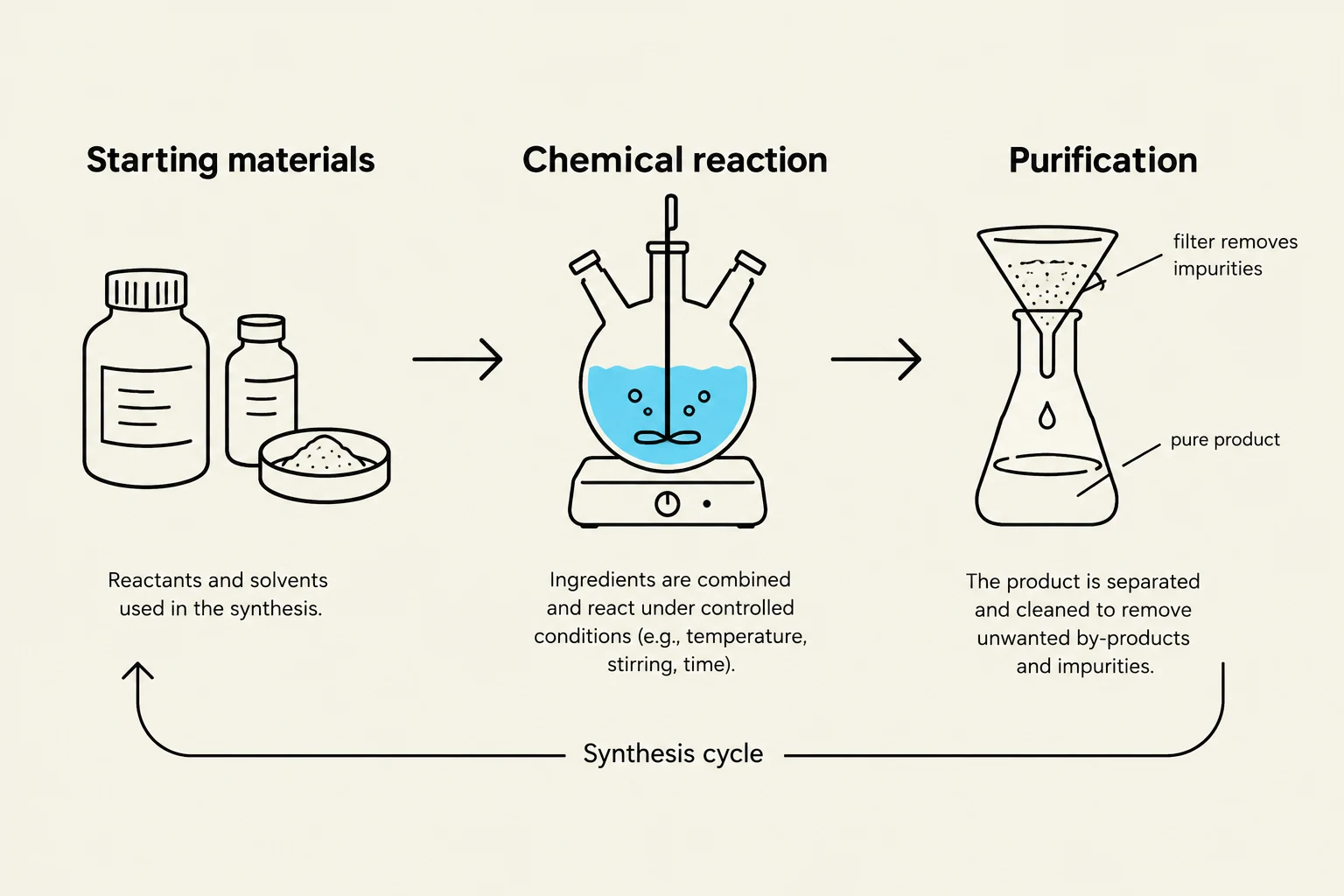
- Synthesis: Creating the molecule from scratch to prove its identity and scale up production.
Phase 1: Extraction and Solubility
The first step in finding a new medicine is often separating it from a complex mixture. This is achieved through extraction, a method based on the relative solubility of compounds in two different immiscible liquids (liquids that do not mix, such as oil and water).
The success of an extraction depends on the polarity of the molecules involved:
- Polar compounds: These contain many oxygen or nitrogen atoms (e.g., , ) or carry an ionic charge. They are generally soluble in water, which is a polar solvent.
- Non-polar compounds: These consist mainly of carbon and hydrogen (e.g., Benzene). They are soluble in organic solvents like ethyl acetate or ether.

Keep reading for free.
Create an account to finish this reading and make it part of your study routine.
Continue reading freeAlready have an account? Log in
Updated