An overview of communicable diseases, including their transmission, differences from infectious diseases, and the impact of epidemics, pandemics, and endemicity on the burden of disease. Covers public health interventions and Koch's postulates.
For much of human history, communicable diseases were the primary cause of death and disability, particularly affecting the youngest and oldest members of society. While modern public health and medical interventions significantly reduced the burden of these illnesses during the latter half of the 20th century, the 21st century has seen a resurgence of previously controlled infections and the emergence of new threats. Understanding how these diseases function, how they spread, and how we can interrupt their transmission is fundamental to the field of public health.
Communicable vs. Infectious Diseases
In casual conversation, the terms "infectious" and "communicable" are often used interchangeably, but in a public health context, they have distinct technical meanings.
Infectious Diseases: These are illnesses caused by a microorganism, such as a virus, bacteria, parasite, or fungus.
Communicable Diseases (CDs): These are infectious diseases that can be spread from one person to another, or from an animal to a person.
A helpful way to remember the distinction is that all communicable diseases are infectious, but not all infectious diseases are communicable. For example, Tetanus and Lyme disease are infectious because they are caused by microorganisms, but they are not considered communicable because they do not spread from human to human. Common examples of communicable diseases include the flu, COVID-19, HIV, measles, and tuberculosis.
Patterns of Disease: Endemic, Epidemic, and Pandemic
Public health officials categorize the spread of disease based on its geographic reach and the suddenness of its increase within a population.
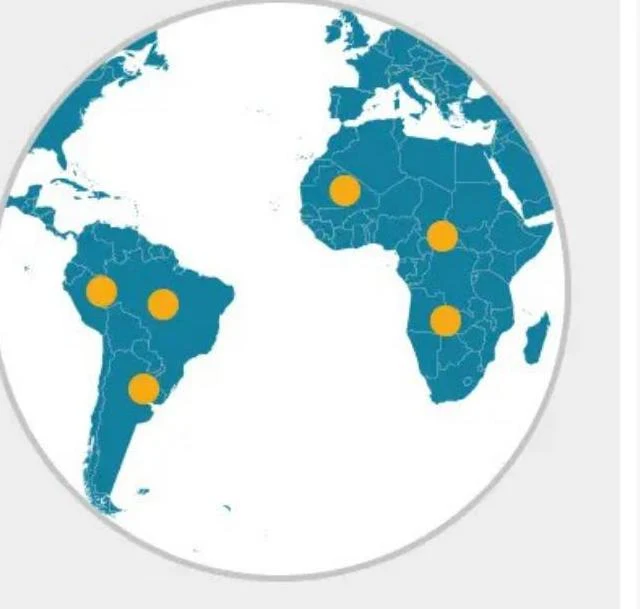
Endemic
An endemic disease is one that is constantly present in a specific population or region, typically with a relatively low and predictable level of spread.
A world map showing South America and Africa with several orange dots indicating specific locations.
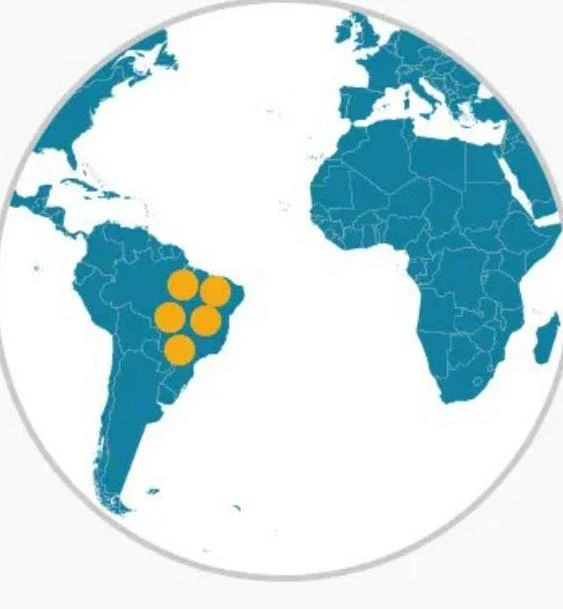
Epidemic
An epidemic occurs when there is a sudden, unexpected increase in the number of cases of a disease within a specific large population.
A world map highlighting several regions in Brazil with orange circles.
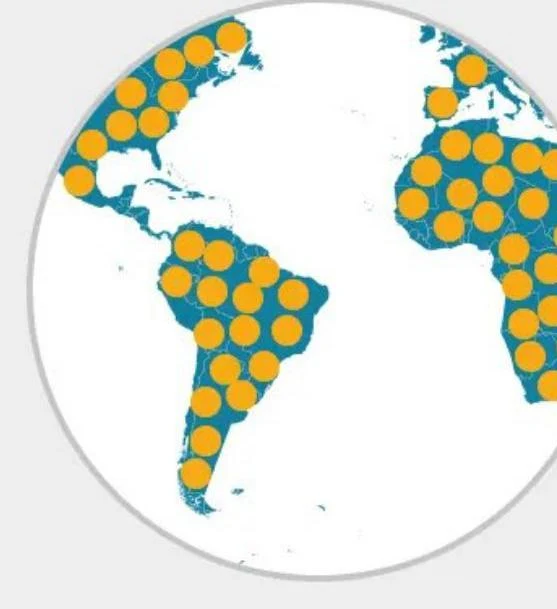
Pandemic
A pandemic is essentially a global epidemic—a sudden increase in cases that spreads across several countries, continents, or the entire world.
A world map illustration with orange dots representing various locations.
Transmission and the Burden of Disease
The "burden of disease" refers to the impact of health problems on a population, measured in terms of morbidity (illness) and mortality (death). Several factors influence how easily a communicable disease contributes to this burden, most notably its transmissibility.
Routes of Transmission
Diseases travel through various anatomical and physical methods. Common routes include:
Airborne: Person-to-person spread via respiratory droplets (e.g., Influenza, Measles, Tuberculosis).
Vector-borne: Spread through insects (e.g., Malaria via mosquitoes) or other animals (e.g., Rabies).
Fecal/Oral & Water/Food: Contamination through ingestion (e.g., Cholera, Polio).
Sexual Transmission: Spread through contact with open sores or bodily fluids (e.g., HIV, Syphilis).
Other: Including transplacental (mother to fetus), breastfeeding, and contaminated objects known as "fomites".
Factors Affecting Transmissibility
Two critical concepts determine how contagious a disease is:
Asymptomatic Transmission: The ability of an individual to spread a disease even when they show no symptoms.
Reproduction Ratio (R0): This is a measure of inherent transmissibility. It represents the average number of new cases generated by one single infected individual over the course of their communicable period.
Exam Tip: When calculating or discussing the spread of a disease, remember that R0 is heavily influenced by both the route of transmission and the prevalence of asymptomatic carriers.
Identifying the Cause: Koch's Postulates
To prove that a specific organism is the cause of a disease, scientists use established criteria. Historically, Robert Koch developed four postulates:
The organism must be present in every case of the disease.
The organism must not be found in healthy individuals or cases of other diseases.
The organism must be able to replicate the disease when introduced into an experimental animal.
The organism must be recoverable from that experimental animal.
Modern versions developed by the NIAID have evolved to include epidemiological associations—looking at patterns of distribution and frequency in human populations.
Public Health Interventions
To reduce the burden of disease, public health utilizes several layers of defense:
1. Barrier Protections
These are physical methods used to separate the pathogen from the host. Examples include using masks in healthcare settings, using condoms to prevent STDs, or using insecticide-impregnated bed nets to prevent malaria. Isolation and quarantine are also vital tools to separate infected or exposed individuals from the healthy population.
2. Immunizations
Vaccines strengthen the immune system to prevent or control disease. There are different types:
Passive immunity: Injecting antibodies for short-term protection.
Inactivated vaccines: Using dead organisms to build immunity.
Live vaccines: Using attenuated (weakened) organisms to create long-term, cell-mediated immunity.
A major goal of immunization is herd immunity, which occurs when enough of the population is immune that vulnerable individuals are indirectly protected from exposure.
3. Screening and Case Finding
Screening identifies cases before they can spread widely. This can be categorized into three levels:
Primary: Identifying at-risk individuals and intervening to keep them safe.
Secondary: Identifying cases before they spread widely, including asymptomatic cases.
Tertiary: Identifying cases after symptoms have already appeared.
4. Treatment
Treating symptomatic patients can reduce the "infectivity" of a person, thereby reducing the risk of transmission to others. Additionally, epidemiological treatment involves treating the contacts of an infected person (such as sexual partners in STD cases) to control the number of individuals with the disease.
The Goal of Eradication
Eradication—the permanent reduction to zero of the worldwide incidence of an infection—is not always possible. Certain characteristics make a disease a candidate for eradication, such as:
Having no animal reservoir (the disease only lives in humans).
The absence of a long-term carrier state.
The ability of vaccines or natural infection to produce long-term immunity.
For example, while we have made massive strides with diseases like Polio, others like Influenza remain difficult to control because they mutate rapidly, requiring new vaccines every year.
Keep reading for free.
Create an account to finish this reading and make it part of your study routine.