


Clinical nutrition is a specialized field that sits at the intersection of food science and medical intervention. It involves the practical application of diet and food for the prevention and treatment of disease. Often referred to as Medical Nutrition Therapy (MNT), this discipline integrates the science of nutrients with dietetic principles to optimize health and manage both physiological and mental well-being.
The Role of the Registered Dietitian
Registered Dietitians (RDs) are highly trained professionals responsible for delivering nutrition therapy. Their primary responsibility is to determine the appropriate level of care that is effective, appropriate, and considerate of a patient's unique needs to maximize health, independence, and dignity.
RDs do not work in isolation; they are vital members of interdisciplinary healthcare teams that may include physicians, nurses, pharmacists, physical therapists, and social workers. Within these teams, the RD's specific tasks include nutritional screening, assessment, developing nutritional diagnoses, implementing interventions, and monitoring outcomes.
Exam Tip: Remember that while many people provide "nutrition advice," only a Registered Dietitian is trained to provide Medical Nutrition Therapy (MNT) through a standardized clinical process.
The Nutrition Care Process (NCP)
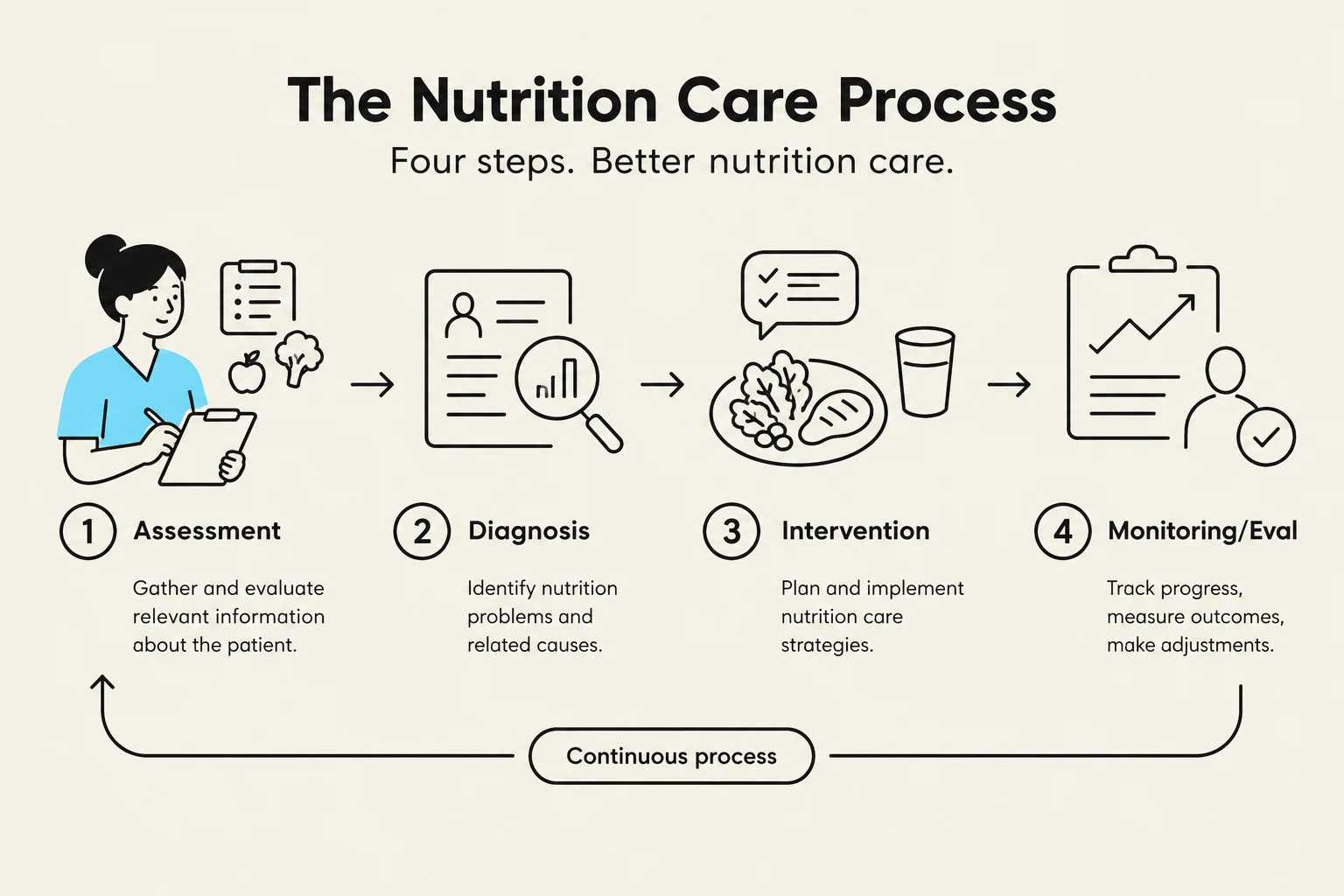
To ensure high-quality, consistent, and evidence-based care, RDs utilize the Nutrition Care Process (NCP). The NCP is a systematic, four-step problem-solving method used to address nutrition-related problems. It relies on standardized nutrition language to provide a common way for professionals to document and communicate their findings.
The four steps of the NCP are:
- Nutrition Assessment: Obtaining and verifying data such as food history, anthropometric measurements (e.g., height, weight), biochemical data (e.g., blood tests), and physical findings.
- Nutrition Diagnosis: Identifying a specific nutrition problem that can be treated by an RD. This is expressed as a PES Statement (Problem, Etiology, and Signs/Symptoms).
- Nutrition Intervention: Prioritizing diagnoses and implementing a plan, such as a nutrition prescription or behavioral changes.
- Nutrition Monitoring and Evaluation: Measuring outcomes to see if the intervention worked and determining if further care is needed.
Keep reading for free.
Create an account to finish this reading and make it part of your study routine.
Continue reading freeAlready have an account? Log in
Updated