


The autonomic nervous system (ANS) is the body's command center for involuntary functions, divided primarily into the Sympathetic Nervous System (SNS) and the Parasympathetic Nervous System (PNS). While the SNS is often associated with the "fight or flight" response, the PNS is responsible for "rest and digest" activities. Central to the function of the PNS is the neurotransmitter Acetylcholine (ACh). Drugs that modulate this system—either by mimicking or blocking the effects of ACh—are known as cholinergic and anti-cholinergic drugs.
The Foundation: Acetylcholine and Muscarinic Receptors
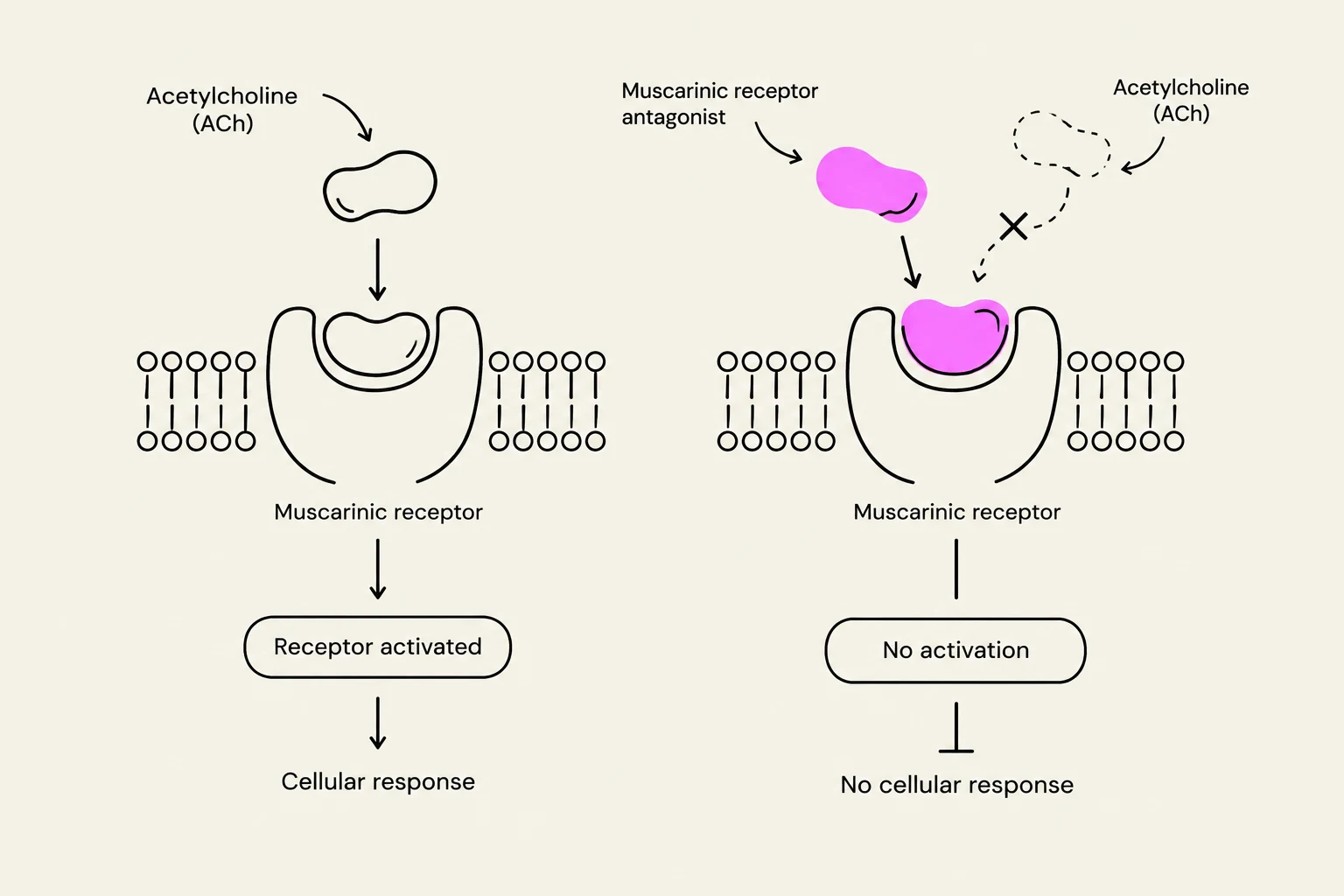
Acetylcholine (ACh) is the primary neurotransmitter used at the parasympathetic neuro-effector junction. Once released from a nerve terminal, ACh travels across the synaptic cleft to bind with specific receptors on the target organ. There are two main classes of cholinergic receptors: Nicotinic (N) and Muscarinic (M).
These receptors are distinguished by their affinity for different substances. For example, muscarine has a higher affinity for muscarinic receptors than ACh does, whereas nicotine has a higher affinity for nicotinic receptors. Muscarinic receptors are particularly important in the PNS, as they are located on various effector organs, including:
- Smooth Muscle: Found in the GI tract and bronchi.
- Exocrine Glands: Such as salivary and lacrimal glands.
- The Heart: Regulating heart rate and contractility.
When the PNS is stimulated via muscarinic receptors, the body undergoes specific physiological changes: decreased heart rate, constriction of the pupils (miosis), constriction of the bronchi, and increased motility and secretions in the gastrointestinal (GI) tract.
Cholinergic Agonists: Mimicking the PNS
Cholinergic agonists are drugs that act in the same pathway as ACh, often referred to as "parasympathomimetics" because they mimic the effects of the PNS. These drugs are categorized based on their Mechanism of Action (MoA):

Keep reading for free.
Create an account to finish this reading and make it part of your study routine.
Continue reading freeAlready have an account? Log in
Updated