


Carbohydrates are one of the most essential macronutrients in the human diet, serving as the body's primary energy source. Composed of carbon, hydrogen, and oxygen atoms, these molecules are vital for maintaining energy levels and protecting the body from breaking down protein or fat stores for fuel. Because liver glycogen stores can be depleted in as little as 18 hours if no carbohydrates are consumed, regular intake is critical. To ensure adequate energy, the Dietary Guidelines recommend that 45% to 65% of daily caloric intake come from carbohydrates.
Classification of Carbohydrates
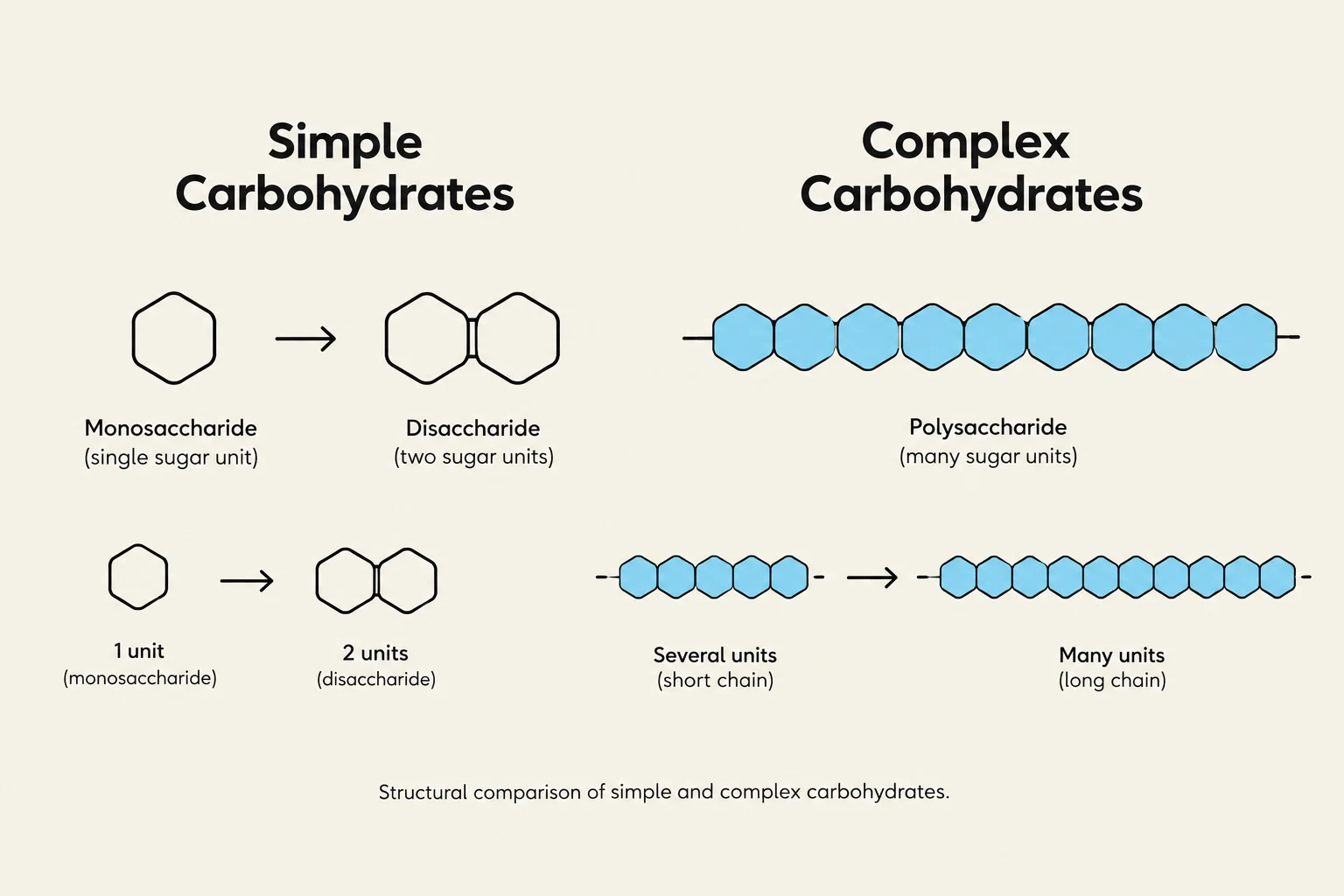
Simple Carbohydrates: Monosaccharides and Disaccharides
Simple carbohydrates consist of one or two sugar units and are digested rapidly by the body.
Monosaccharides
Monosaccharides are single sugar units that cannot be broken down further during digestion. The three primary types are:
- Glucose: Often called "blood sugar" or dextrose, it is the major monosaccharide in the body and the primary fuel for cells, including the brain and central nervous system.
- Fructose: Known as "fruit sugar," it is found in fruits, honey, and high-fructose corn syrup. Once ingested, the liver converts it into glucose.
- Galactose: Found in milk, this sugar is also converted into glucose by the liver.
Disaccharides
Disaccharides are double sugar units formed when two monosaccharides bond together through chemical bonding. Common examples include:
- Sucrose: Composed of glucose + fructose; it is the major sugar found in fruits and vegetables and is commonly known as table sugar.
- Lactose: Composed of glucose + galactose; it is the sugar found in milk.
- Maltose: Composed of glucose + glucose; it is often found in cereals and grains and is produced during the breakdown of starch.
Keep reading for free.
Create an account to finish this reading and make it part of your study routine.
Continue reading freeAlready have an account? Log in
Updated