


Preparing for a laboratory quiz on biomolecules requires more than just memorizing definitions; you must understand the chemical structures, the functional roles, and the specific reagents used to detect them in a lab setting. Biomolecules are the organic compounds that serve as the building blocks of life, categorized into four primary classes: carbohydrates, lipids, proteins, and nucleic acids.
This guide breaks down these essential molecules to help you navigate your upcoming quiz and laboratory experiments.
Carbohydrates: Energy and Structure
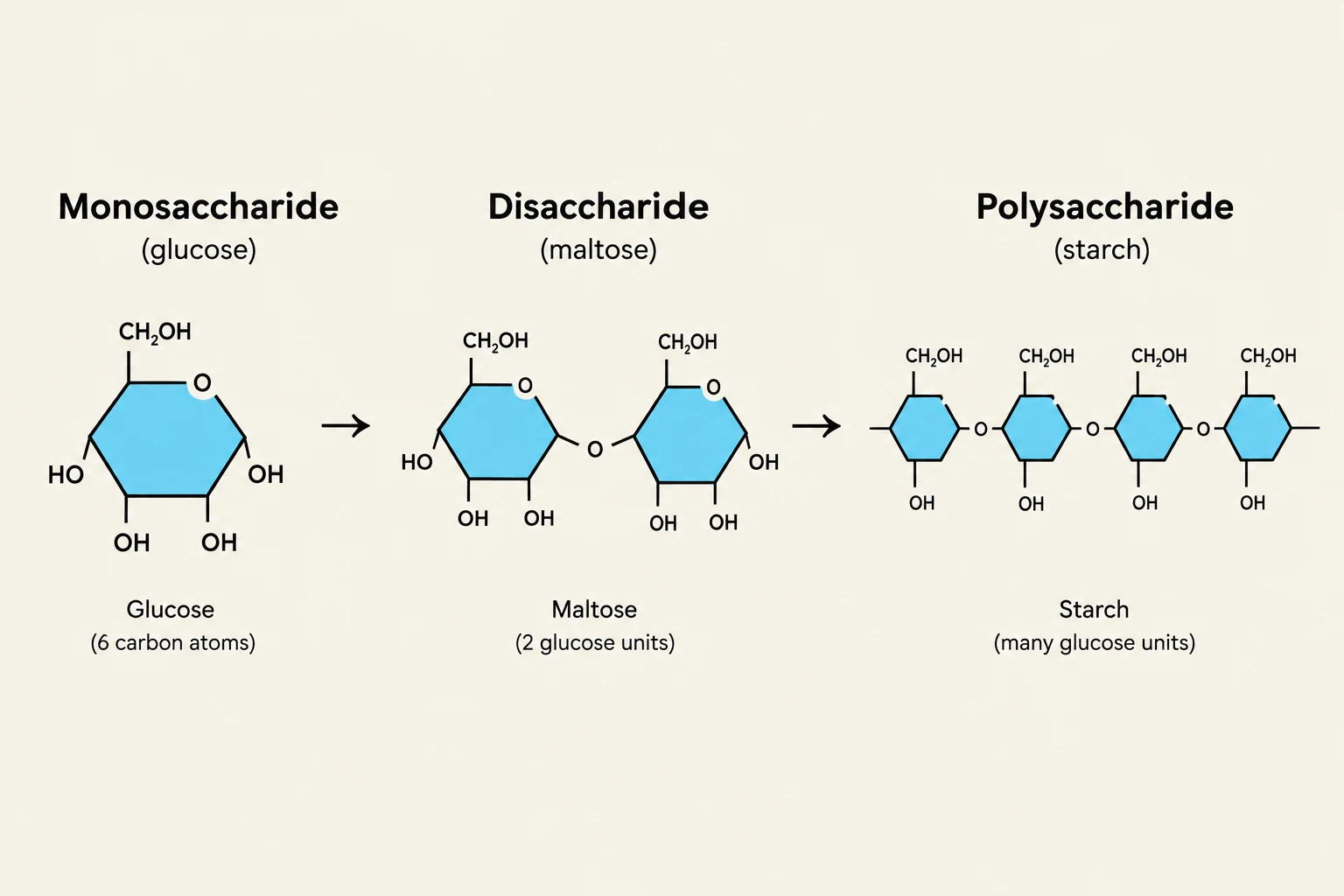
Carbohydrates are organic compounds composed of carbon, hydrogen, and oxygen, typically following a $1:2:1$ stoichiometric ratio. Their primary roles in biological systems are to provide immediate energy and to offer structural support to cells.
Carbohydrates exist in various levels of complexity:
- Monosaccharides: The simplest sugar units, such as glucose, which serve as the primary fuel for cellular respiration.
- Disaccharides: Two monosaccharides joined together.
- Polysaccharides: Long chains of sugar units (polymers) that form structures like starch (energy storage in plants), glycogen (energy storage in animals), or cellulose (structural component in plant cell walls).
These units are held together by a specific type of covalent bond known as a glycosidic linkage.
Exam Tip: If a question asks about the ratio of elements in a carbohydrate, remember the $1:2:1$ rule for Carbon, Hydrogen, and Oxygen.
Lipids: Hydrophobic Storage and Membranes
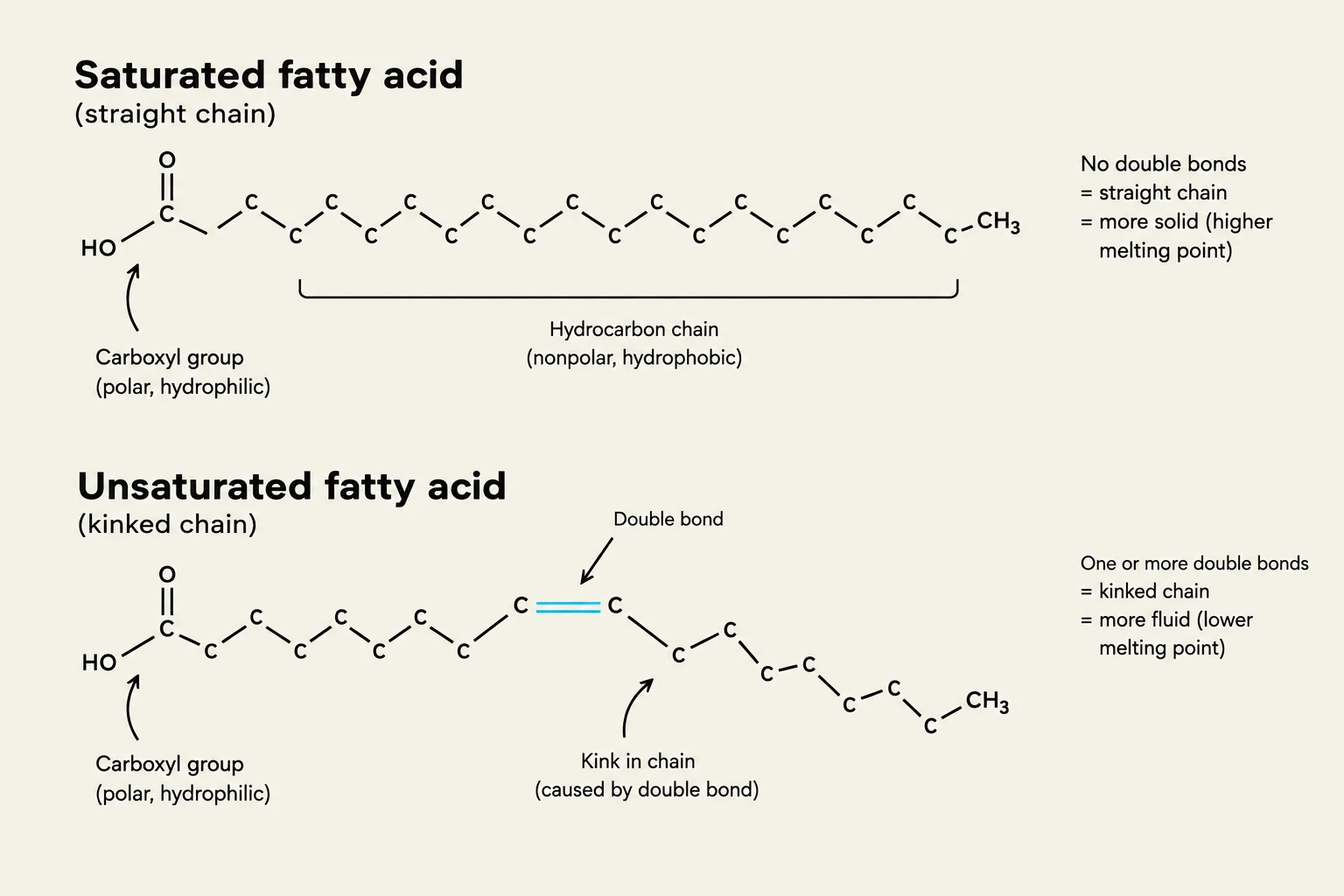
Unlike the other three classes, lipids are defined by their hydrophobicity (insolubility in water). They are essential for long-term energy storage, cell membrane integrity, and chemical signaling.
Keep reading for free.
Create an account to finish this reading and make it part of your study routine.
Continue reading freeAlready have an account? Log in
Updated