


In industrial environments where flammable gases, vapors, or combustible dusts are present, the risk of an electrical spark or thermal effect causing an explosion is a constant concern. One of the most sophisticated and effective methods for mitigating this risk is the use of Intrinsically Safe (IS) equipment. Unlike methods that rely on heavy containment (like explosion-proof enclosures) to keep an explosion inside, intrinsic safety works by limiting the energy available to the circuit so that an ignition event cannot occur in the first place.
The Core Principle: Energy Limitation
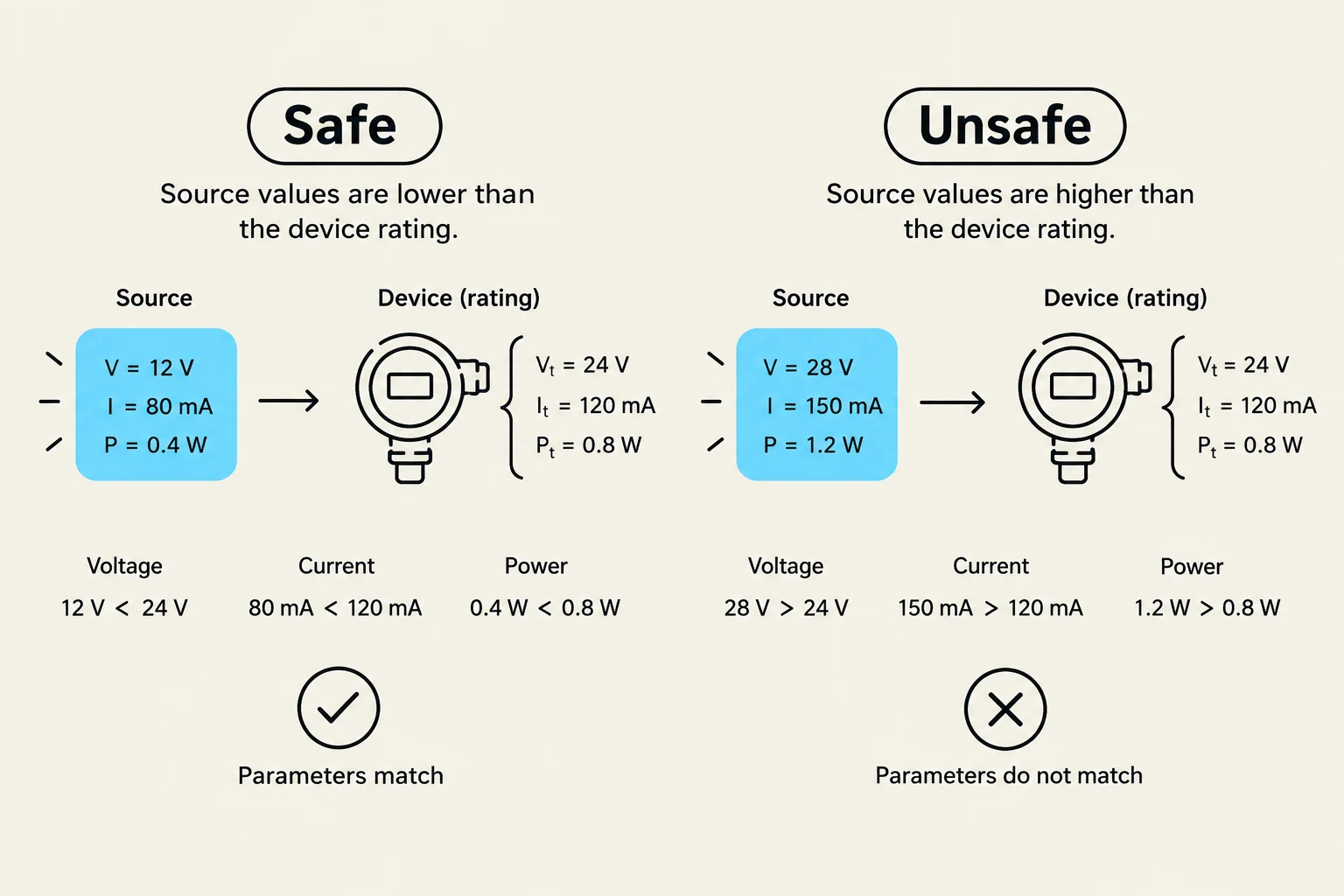
The fundamental concept behind intrinsic safety is the limitation of electrical and thermal energy. An explosion requires three elements: fuel, oxygen, and an ignition source. In a hazardous location, the fuel and oxygen are already present. Therefore, the goal of an intrinsically safe system is to ensure that even in a fault condition—such as a short circuit or a broken wire—the electrical energy released is insufficient to create a spark or heat a surface to its ignition temperature.
This is achieved through the use of specialized components, such as Zener barriers or galvanic isolators, placed in a non-hazardous area. These devices act as "gatekeepers," regulating the voltage and current that flow into the hazardous area.

Exam Tip: Remember that intrinsic safety is a "prevention" method rather than a "containment" method. While explosion-proof equipment is designed to withstand an internal explosion, intrinsically safe equipment is designed to prevent the ignition from ever happening.
Keep reading for free.
Create an account to finish this reading and make it part of your study routine.
Continue reading freeAlready have an account? Log in
Updated