Interferons and Monoclonal Antibodies in Immunomodulation
An overview of biologic response-modifying drugs, focusing on interferons (IFNs) and monoclonal antibodies (MABs). It details their mechanisms of action, types, clinical indications for treating infections, cancers, and autoimmune diseases, as well as their adverse effects and nursing considerations.
In modern medicine, treating complex diseases often requires more than just attacking a pathogen or a tumor directly. Sometimes, the most effective strategy is to manipulate the body's own defense mechanisms. This is the core principle behind biologic response–modifying drugs, a class of medications designed to alter the body's response to cancer, autoimmune, inflammatory, and infectious diseases. By modulating the immune system, these drugs can either augment a weakened response to fight off viruses and tumors or inhibit an overactive response that causes tissue damage in autoimmune conditions.
Biologic Response–Modifying Drugs
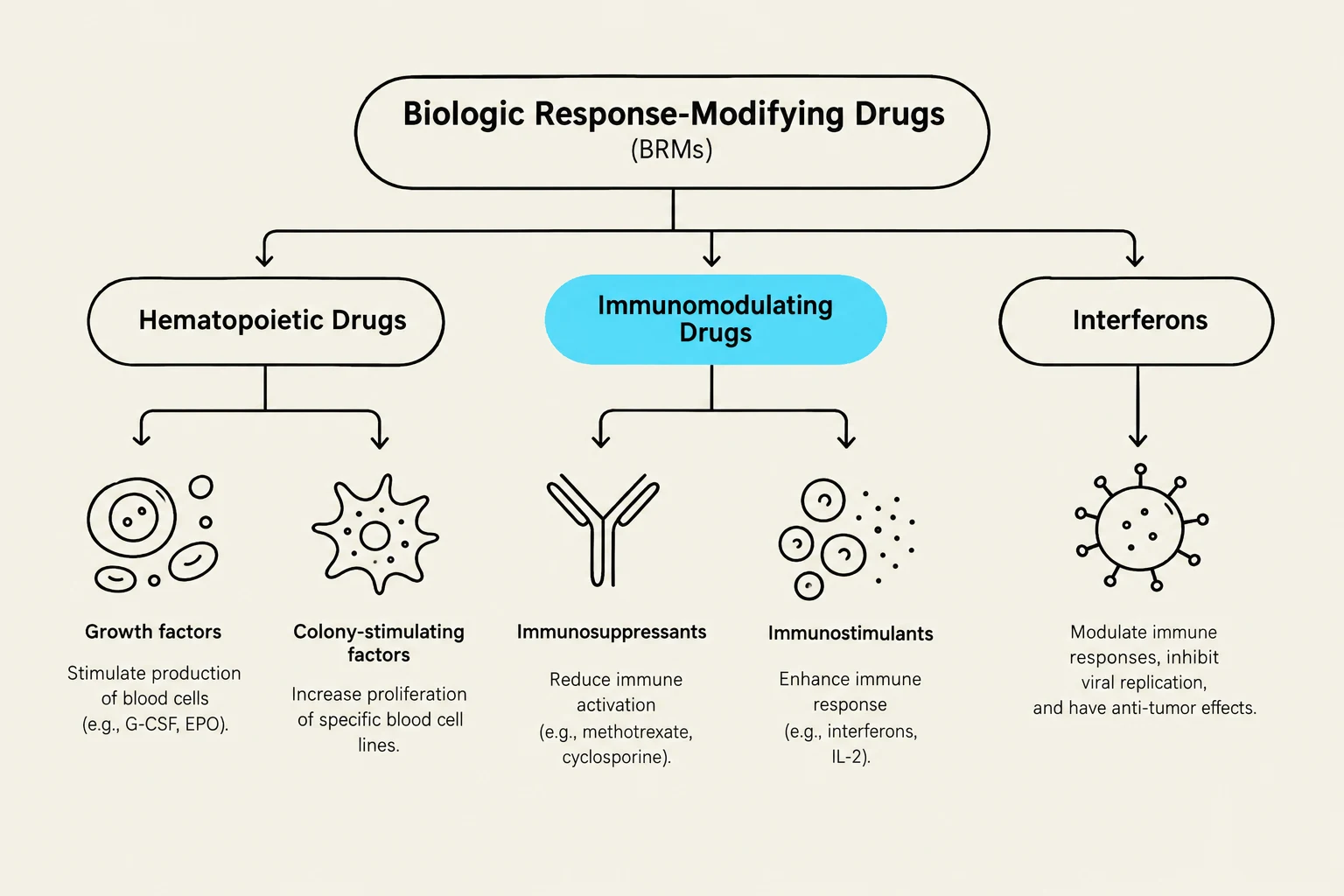
Biologic response–modifying drugs represent a broad category of therapeutic agents that change how the body reacts to disease. They are distinct from traditional therapies because they target the biological signaling pathways of the immune system. This category includes several specialized groups:
Hematopoietic drugs: Agents that affect blood cell production.
Immunomodulating drugs: Medications that specifically alter the immune response to malignant cells, viruses, or inflammatory states.
Interferons (IFNs): Cytokines with potent antiviral and antitumor properties.
Monoclonal antibodies (MABs): Highly specific proteins designed to target particular antigens.
Interleukin (IL) receptor agonists and antagonists: Drugs that mimic or block the signaling of interleukins.
Disease-modifying antirheumatic drugs (DMARDs): Used primarily to manage autoimmune diseases like rheumatoid arthritis.
Clinical Note: While surgery, chemotherapy, and radiation are the traditional pillars of cancer therapy, immunomodulating drugs are considered the "fourth part" of modern cancer treatment.
This diagram outlines different types of Biologic Response-Modifying Drugs (BRMs), including Hematopoietic Drugs, Immunomodulating Drugs (further categorized into Immunosuppressants and Immunostimulants), and Interferons, along with their functions and examples.
Interferons (IFNs)
Interferons are naturally occurring proteins (cytokines) that play a critical role in the body's innate immune response. In clinical practice, recombinant interferons—substances manufactured to be identical to those naturally found in the human body—are used to treat various infections and cancers.
Mechanisms of Action
Interferons possess three fundamental properties that drive their therapeutic use:
Antiviral: They protect human cells from viral attacks.
Antitumor: They prevent cancer cells from dividing and replicating.
Immunomodulating: They increase the activity of immune cells such as macrophages, neutrophils, and Natural Killer (NK) cells.
Interestingly, the immunomodulating effect is dual-natured. Interferons can augment the immune system to act as a defense against invaders, or they can inhibit the immune system to help manage autoimmune disorders where the body is attacking itself.
Types and Clinical Indications
Interferons are categorized into three main types: Alpha (α), Beta (β), and Gamma (γ).
IFN Alpha (α): Often called "leukocyte IFNs" because they are produced from human leukocytes. They are used to treat viral infections like hepatitis and genital warts, as well as various cancers including chronic myelogenous leukemia, follicular lymphoma, hairy-cell leukemia, Kaposi’s sarcoma, and malignant melanoma.
IFN Beta (β): Frequently used in the management of multiple sclerosis (MS).
IFN Gamma (γ): Used for specific immunomodulatory needs.
Adverse Effects and Nursing Considerations
Patients receiving interferons often experience "flu-like" symptoms, including fever, chills, headache, and myalgia. However, the most significant dose-limiting adverse effect is fatigue. Other side effects may include anorexia, dizziness, nausea, vomiting, and diarrhea.
Exam Tip: Always check for allergies to the medication or albumin before administration, especially if the drug is being given intravenously.
Monoclonal Antibodies (MABs)
Monoclonal antibodies (MABs) represent a highly targeted approach to therapy. Unlike traditional chemotherapy, which can damage healthy cells, MABs are designed to specifically target cancer cells or specific immune proteins, resulting in fewer adverse effects. They are used extensively in treating cancer, rheumatoid arthritis (RA), multiple sclerosis (MS), and in organ transplantation.
Key Examples in Clinical Practice
Several MABs are essential to understand due to their specific targets and side effect profiles:
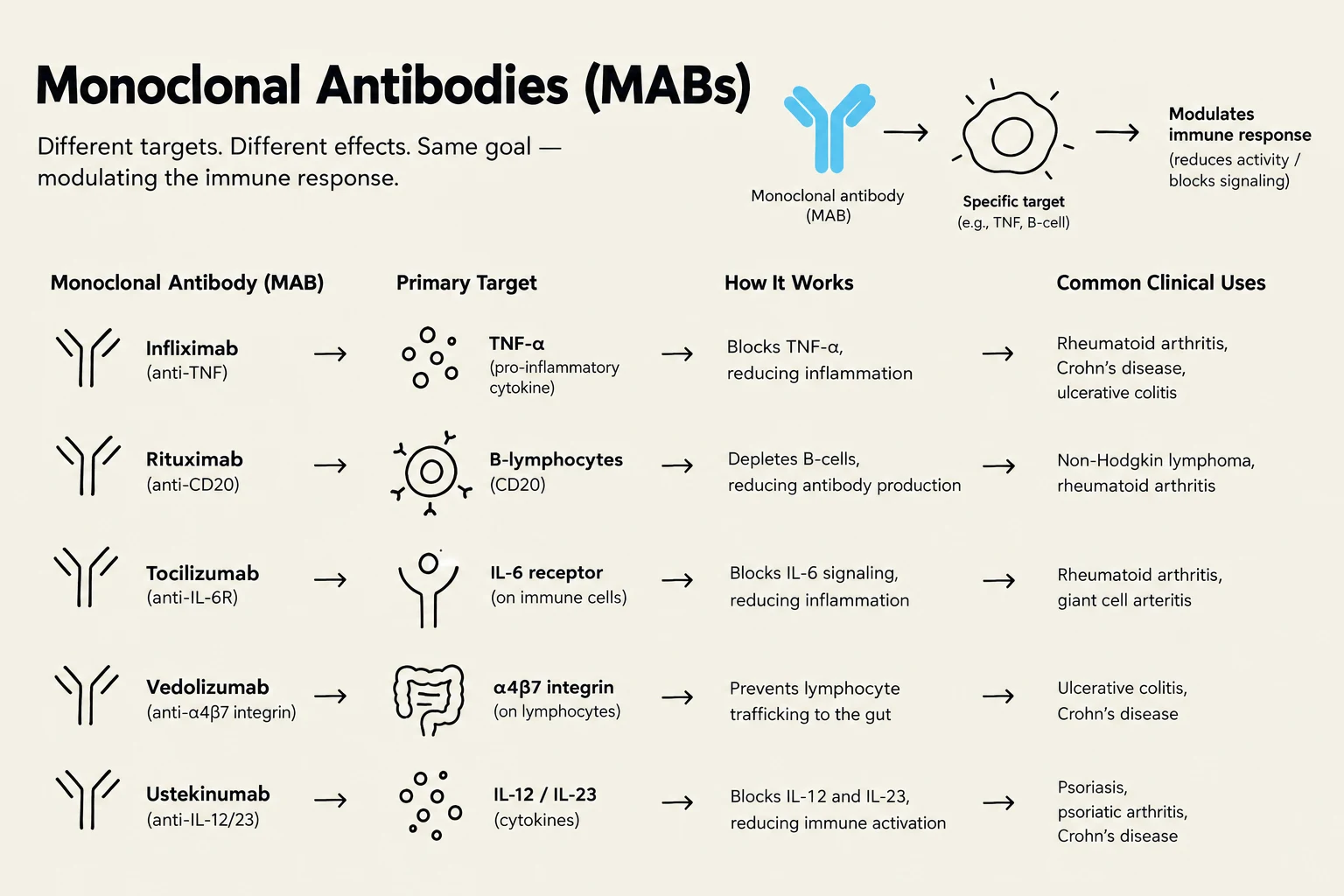
Adalimumab (Humira): Targets Tumor Necrosis Factor (TNF). It is used for RA, Crohn’s disease, and ulcerative colitis. Common side effects include injection site inflammation and increased risk of upper respiratory or urinary tract infections.
Belimumab (Benlysta): The first drug approved for Systemic Lupus Erythematosus (SLE); it works by inhibiting B-lymphocytes.
Infliximab (Remicade): An anti-TNF agent used for Crohn’s and RA. Warning: Patients must be tested for Tuberculosis (TB) before starting this drug, as it carries a black box warning for fatal TB or fungal lung infections.
Natalizumab: Used in the treatment of Multiple Sclerosis (MS) by inhibiting leukocyte adhesion mediated by alpha proteins. A rare but serious adverse effect is progressive multifocal leukoencephalopathy.
This diagram illustrates various monoclonal antibodies (MABs), their primary targets, mechanisms of action, and common clinical uses in treating immune-related conditions.
Summary of MAB Adverse Effects
While generally better tolerated than traditional antineoplastics, MABs can still cause:
Flu-like symptoms (fever, chills, dyspnea).
Specific risks such as infection, depression, or even malignancy depending on the specific agent.
In summary, the choice between an interferon or a monoclonal antibody depends on whether the goal is to stimulate a broad immune response against a virus or cancer, or to precisely target a specific protein to dampen an autoimmune attack.
Keep reading for free.
Create an account to finish this reading and make it part of your study routine.