The Myth of Convergence: Modernization vs. Westernization
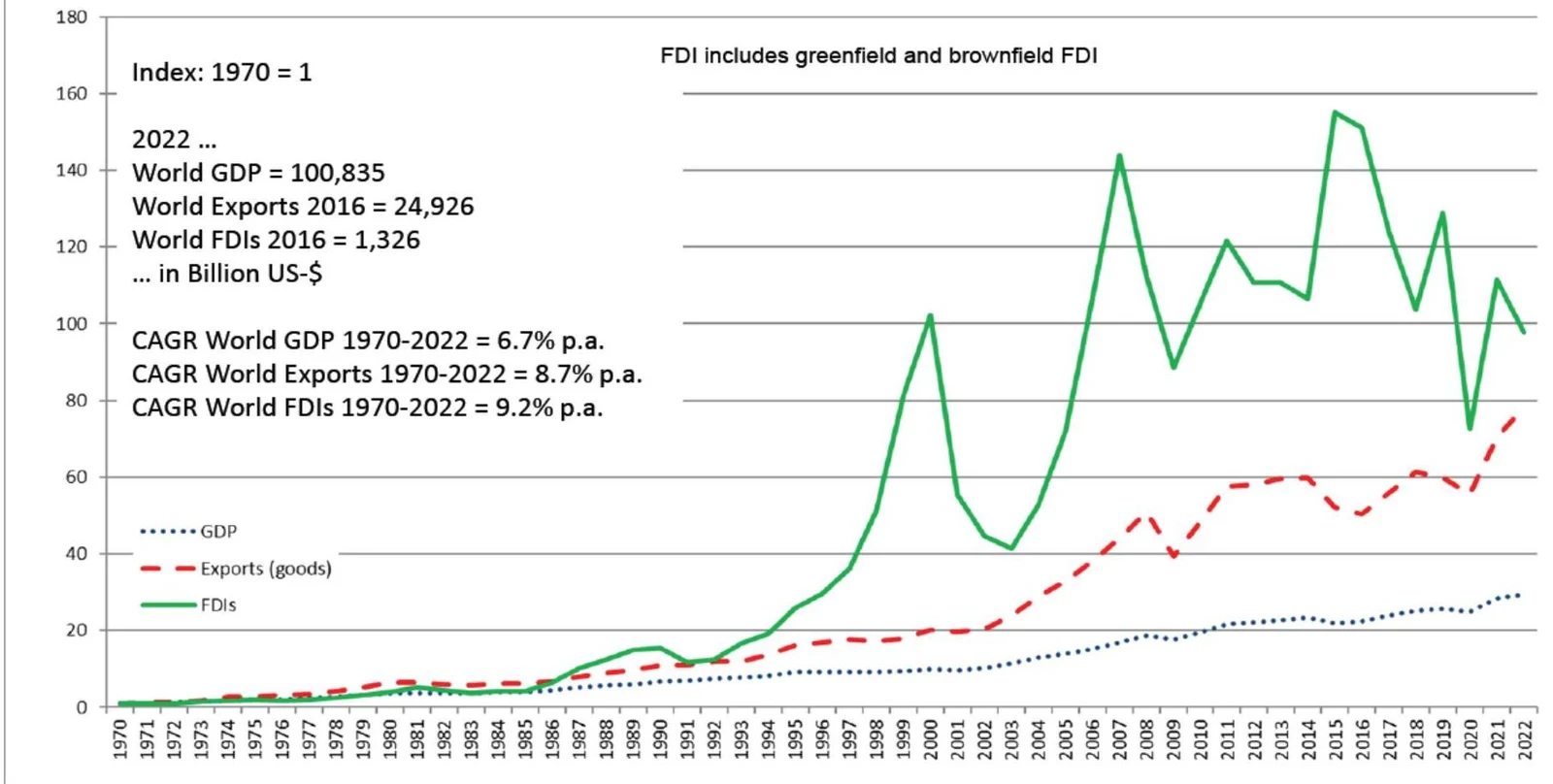
A common debate in global management is whether cultural differences are disappearing due to technology and the "globalization of markets". Some scholars, such as Francis Fukuyama, suggested an "End of History" where liberal democratic values would become universal. Others argue that technology leads to a convergence of consumer needs, where people everywhere want the same products, like iPhones or Big Macs.
However, a vital distinction must be made between modernization and westernization:
- Modernization: The adoption of modern technology, infrastructure, and consumer products (e.g., smartphones, fast food).
- Westernization: The adoption of Western social values, such as individualism or specific political structures.
While product tastes may converge, cultural values—the "software of the mind"—change very little over time. As Samuel Huntington argued, the assumption that Western values are universal is often perceived as Western arrogance.
The Pitfalls of Ethnocentrism
One of the greatest obstacles to successful international management is ethnocentrism: the feeling of one's own cultural superiority or the belief that one's own way of doing things is the "natural" or "correct" way.
Effective leadership requires cultural relativism—the understanding that there is no neutral vantage point from which to judge another culture. Managers must move away from making moral judgments about whether a culture is "better" or "worse" and instead focus on understanding the underlying value hierarchies that drive behavior.
Exam Tip: When discussing intercultural conflict, remember that it often stems from the manager's own subjectivity. We are always subjective; there is no "objective" view of the world.
Strategic Implementation Failure: Lessons from the Field
A common pattern in international business is that a strategy may look perfect on paper, but fails during strategic implementation due to a lack of cultural awareness.
| Company | Strategic Intent | The Reality of Failure |
|---|
| Daimler/Chrysler | "A marriage in heaven" (1998) | Separated in 2007 due to cultural clashes |
| BMW/Rover | Cover all market segments (1994) | BMW sold the business in 2000 |
| Walmart | Conquer the German market (1996) | Pulled out of Germany in 2006 |
Case Study: Walmart in Germany
Walmart's failure in Germany serves as a textbook example of implementation failure caused by ignorance of local requirements. The company attempted to transplant its US-centric model without adaptation:
- Management: They utilized US managers who lacked knowledge of the German market.
- Regulatory Environment: They struggled with local laws regarding employee protection and zoning.
- Consumer Tastes: They neglected the high importance German consumers place on food freshness.
- Service Culture: The US "service culture" (e.g., greeters and specific work ethics) did not translate to the local context.
Understanding the Layers of Culture
To avoid these failures, managers must understand that culture is not just what is visible. Using the "Iceberg" or "Onion" models, we can categorize cultural elements into layers:
- Visible Layers (Identity Building): These include symbols (flags, uniforms), heroes (national figures), and rituals (greetings, ceremonies).
- Invisible Layers (Rules for Behavior): These are the deep-seated values (what is considered "good" or "bad") and basic assumptions (the underlying norms of a society).
At the very core of human society lies the norm of reciprocity—the universal principle that "if I want to get something, I have to give something". While the specific ways this is expressed vary by culture, the underlying need for mutual exchange is a universal constant.
Key Concept: Culture is a system of shared values that serves to ensure the survival and cohesion of a social group.
Conclusion for the Global Manager
Successful international management requires moving beyond mere strategic calculations. It demands a deep dive into the "invisible" layers of culture to ensure that implementation is aligned with local realities. Whether it is respecting the hierarchy in France, understanding the importance of "face" in Japan, or building personal relationships in India, the manager's ability to adapt is their ultimate competitive advantage.