Integration and Design Management Processes in Construction
An overview of integration management and formal design processes in construction, covering project life cycles, client brief formulation, building requirements, management functions, and information management.
In the complex world of construction, "design" is far more than just drawing buildings; it is a creative and multi-dimensional process that serves as the foundation for any physical reality. Whether it is a simple shelter or a highly technical nuclear power station, no product or system can come to fruition without a preceding design process. However, because modern construction involves a vast array of specialists—from architects and structural engineers to environmental consultants and HVAC specialists—the primary challenge is not just creating a design, but managing the intricate web of information and people required to realize it. This is where integration management becomes the critical glue of the project.
The Core of Integration Management
Integration management is defined by the Project Management Body of Knowledge (PMBOK) as the set of processes required to ensure that various project elements are properly coordinated. For a construction project manager, this is a core competency that involves bridging the gap between the abstract design and the physical reality of construction.
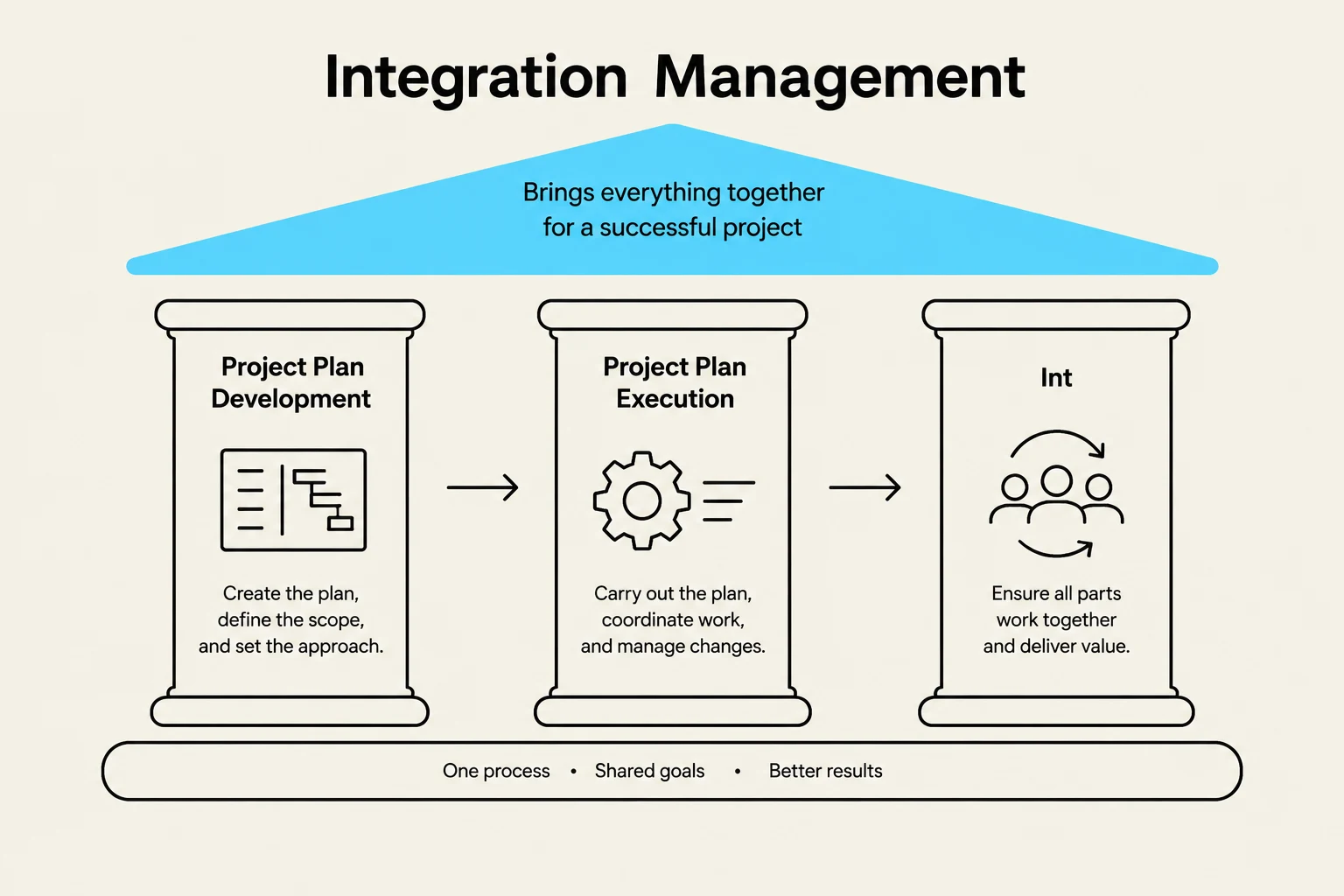
To achieve successful integration, managers must focus on three primary components:
Project Plan Development: Establishing the scope, objectives, priorities, constraints, and strategies.
Project Plan Execution: Managing the actual implementation of the project in accordance with the approved planning documents.
Integrated Change Control: Managing all interrelated changes and variations to the approved plans.
Integration is not just about the "big picture"; it involves managing the relationship between the product scope (what is being built) and the project scope (how it is being built), as well as ensuring that the design accounts for the building's entire life cycle, including future maintenance and decommissioning.
This diagram illustrates the concept of Integration Management in projects, outlining three key phases: Project Plan Development, Project Plan Execution, and Integration, emphasizing their role in bringing elements together for successful project outcomes.
The Project Life Cycle and Design Phases
Every project, regardless of scale, moves through a life cycle. While these phases may overlap—especially in "fast-track" projects where time is critical—they generally follow a logical progression:
Concept and Initiation: Defining the initial idea and feasibility.
Design and Development: Translating the concept into detailed plans and specifications.
Implementation or Construction: The physical realization of the design.
Commissioning and Handover: Testing systems and transferring the facility to the client.
It is important to note that design is a specific phase within this cycle, but it can also be viewed as a sub-project with its own internal life cycle.
Formulating the Client Brief
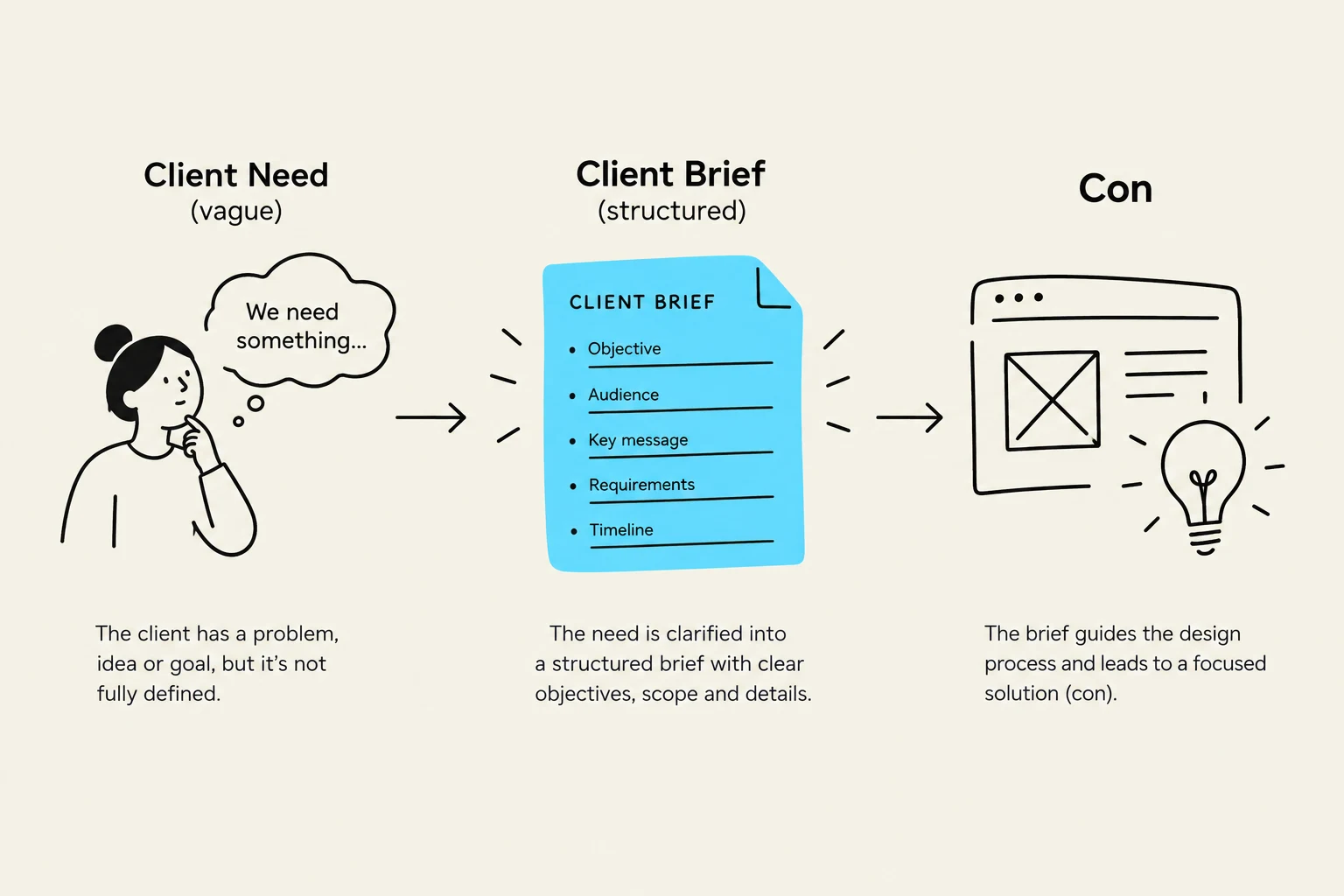
One of the most significant design challenges is that clients often struggle to formulate their needs explicitly and comprehensively. If a client's requirements are vague, the resulting design may diverge from their actual expectations, leading to wasted resources and strained professional relationships.
To mitigate this, design professionals must guide the client through the Client Brief Formulation. The brief is the primary document containing the client's instructions and may evolve from a preliminary investigation into a highly detailed set of requirements. A comprehensive brief ensures a clearer definition of the project scope from the outset.
Building Requirements: Functional vs. Performance
A well-formulated brief must address several layers of requirements. According to Osbourn (1985), these can be categorized into three main sets:
Materials and Technical Ability: The physical components and engineering required.
Functional Requirements: How the building will be used (e.g., sanitation, security, lighting).
Performance Requirements: How well the building performs its functions (e.g., thermal comfort, sound control, durability).
These requirements are often measured through 12 specific characteristics, such as strength, stability, weather exclusion, and fire protection.
This diagram illustrates the process of transforming a vague client need into a structured client brief, which then guides the design process towards a focused solution.
Formal Design Processes
While "informal" design (improvising as you go) exists, modern construction requires formal design processes due to the complexity of legal, environmental, and economic factors. A formal process involves a rigorous sequence of activities:
Identifying and defining user needs.
Developing and evaluating design alternatives against criteria like cost, quality, and safety.
Formulating specifications and preparing detailed drawings.
Planning for the compatibility between structures, systems, and finishes.
Monitoring compliance with standards during the realization process.
Exam Tip: When asked about the difference between informal and formal design, remember that formal design is driven by the need for documentation to manage complexity, liability, and multi-disciplinary expertise, whereas informal design relies on improvisation and immediate problem-solving.
Management Functions in Design
To manage these complex processes, professionals apply core management functions. While different authors may vary slightly, the four primary functions are:
Planning: Forecasting, establishing objectives, and scheduling (using tools like network analysis or bar charts).
Organizing: Developing organizational structures, delegating authority, and establishing relationships.
Leading: Making decisions, communicating effectively, and motivating the team.
Controlling: Establishing performance standards, measuring actual results, and taking corrective action.
In the context of design, "controlling" is particularly difficult. Many design projects suffer from inadequate performance because measurement systems are poorly designed—often focusing on technical activities or labor hours rather than the actual quality of the design output.
Design Challenges and Information Management
Designers face constant pressure from various variables, including advancing technology, changing legal regulations, and the need to accommodate future expansions. Managing these challenges requires an effective system for handling Design Information.
Information management must be continuous across all stages:
Pre-project: Researching standards (ISO, SANS, etc.) and specialized data.
Concept/Preliminary Design: Using models and "sketch plans" to obtain client approval.
Detail Design/Procurement: Preparing tender documents and obtaining regulatory approvals.
Construction: Managing "as-built" drawings, change orders (variations), and ensuring that maintenance manuals are prepared for the client.
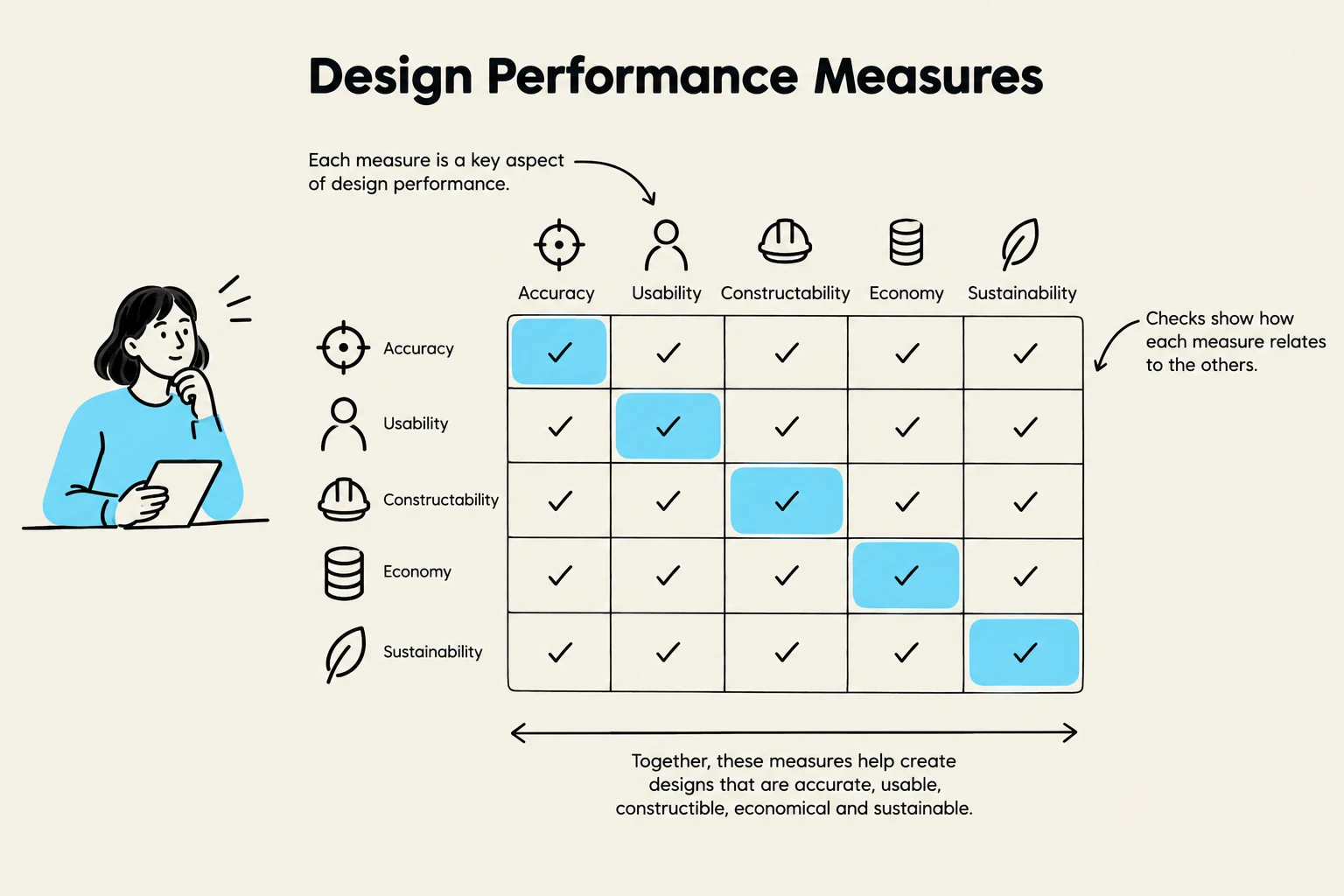
This chart illustrates the relationship between different design performance measures: Accuracy, Usability, Constructability, Economy, and Sustainability. Checks indicate how each measure relates to the others, contributing to the creation of accurate, usable, constructible, economical, and sustainable designs.
Ultimately, the success of a structure is dictated by the quality of its design process. Because the design sets all parameters for the structure, those who carry out the process hold significant responsibility and accountability for the facility's entire functional life.
Keep reading for free.
Create an account to finish this reading and make it part of your study routine.