An overview of the body's first line of defense against pathogens, including physical barriers like skin and mucous membranes, chemical barriers such as enzymes and acidic environments, and the role of the human microbiome.
The human immune system is a complex, multi-layered network designed to protect the body from infection. To understand how we stay healthy, it is helpful to view immunity as three distinct lines of defense. The first line consists of the innate host defenses, which are nonspecific and act as the body's immediate response to any foreign invader. Unlike the adaptive immune system, which requires time to "learn" a specific pathogen, the innate defenses are always ready, utilizing physical, chemical, and biological barriers to impede the entry of microbes and foreign agents.
The First Line of Defense: Physical Barriers
Physical or anatomical barriers serve as the primary gatekeepers of the body. Their main objective is to block, trap, flush, or shed pathogens before they can reach internal tissues.
The Skin and the Stratum Corneum
The skin is perhaps the most vital physical barrier. A key component is the stratum corneum, a thick, keratinized layer of epithelial cells that is both impervious and waterproof. To prevent microbes from establishing a permanent foothold, the skin undergoes a process called desquamation, where follicle cells and the stratum corneum are constantly shed.
Mucous Membranes
While the skin is dry and tough, the internal tracts of the body (digestive, urinary, respiratory, and ocular) are lined with mucous membranes. These surfaces are moist and secrete mucus, a substance that functions to block the attachment of microbes. The body employs several mechanical methods to ensure these trapped agents are removed:
Flushing actions: Blinking and tears in the eyes, saliva flow in the mouth, and urine flow in the genitourinary tract.
Internal movement: Peristalsis in the gastrointestinal tract, vomiting, and defecation.
The Respiratory Tract and the Mucociliary Escalator
In the respiratory system, the body uses a specialized "conveyor belt" system to protect the lungs. Nasal hair and cilia (tiny hair-like projections) trap particles larger than 10 µm. These trapped particles are then moved upward by the mucociliary escalator toward the pharynx, where they can be expelled through coughing or sneezing.
Exam Tip: Physical vs. Chemical
If you are asked to distinguish between a physical and chemical barrier on an exam, ask yourself: "Does it block, trap, flush, or shed?" If yes, it is physical (e.g., skin sloughing, cilia, or urine flow). If the mechanism involves a substance that kills or inhibits growth, it is chemical.
Chemical Barriers: The Body's Antimicrobial Arsenal
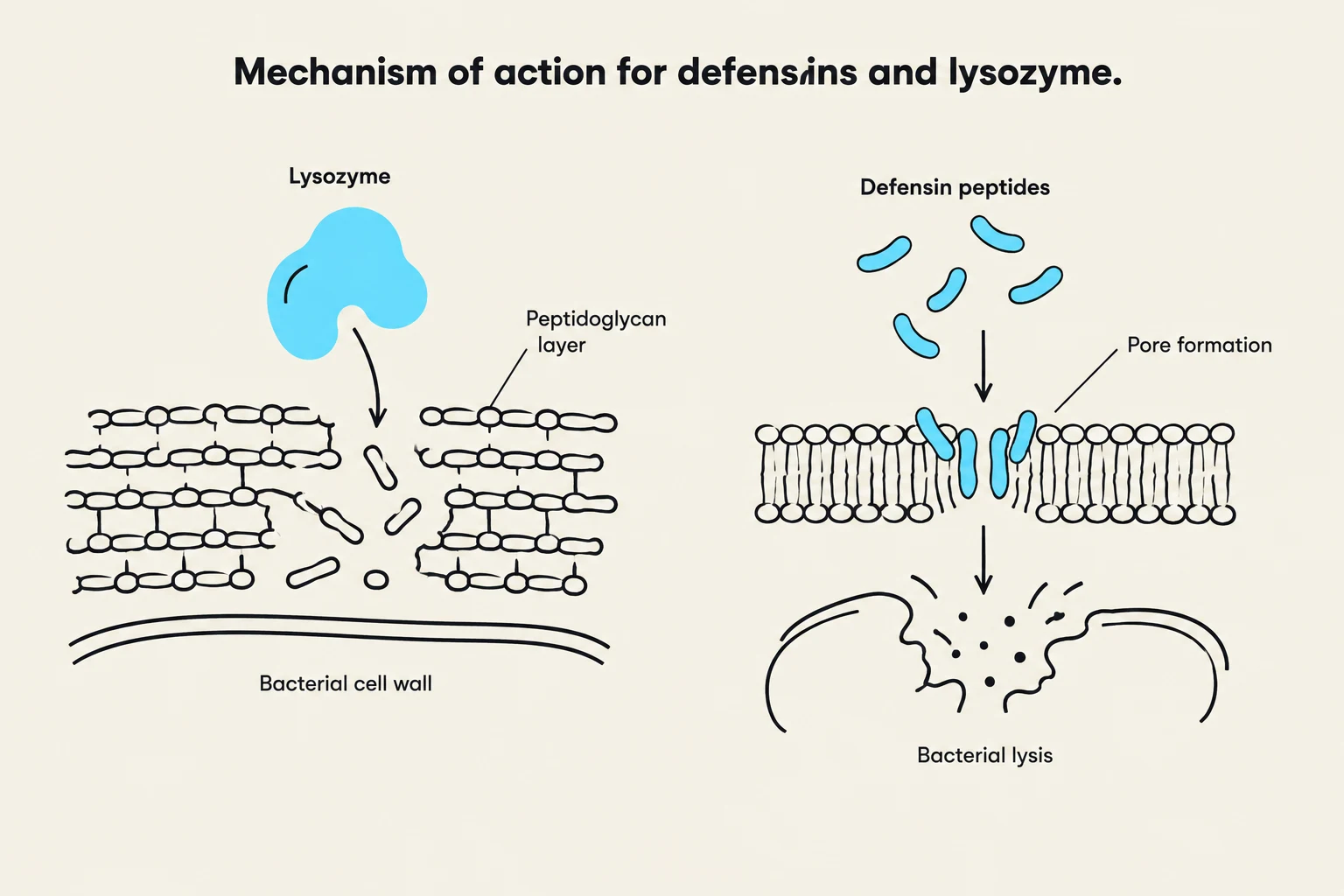
This diagram illustrates the mechanisms by which lysozyme and defensin peptides combat bacteria. Lysozyme degrades the peptidoglycan layer of the bacterial cell wall, while defensins form pores in the bacterial membrane, leading to lysis.
When physical barriers are bypassed or supplemented, chemical barriers provide a secondary layer of defense by actively killing or inhibiting the growth of microbes.
Enzymes and Peptides
The body produces specialized proteins that target the structural integrity of microbes:
Lysozyme: An enzyme found in tears and saliva that works by hydrolyzing peptidoglycan, a critical component of bacterial cell walls.
Defensins: Small antimicrobial peptides (typically 12–50 amino acids long) that insert themselves into bacterial or fungal membranes, creating pores that cause the cell to lyse (burst).
pH and Acidic Environments
Maintaining specific pH levels is a highly effective way to inhibit microbial colonization. The body utilizes several acidic environments:
Skin: Lactic acid and NaCl in sweat, along with sebum, create an antimicrobial environment.
Stomach: Hydrochloric acid (HCl) and proteolytic enzymes create a highly acidic environment to destroy ingested pathogens.
Genitourinary Tract: The urine maintains a low pH, and the vaginal environment is kept acidic by normal microbiota to prevent infection.
The Human Microbiome: A Biological Barrier
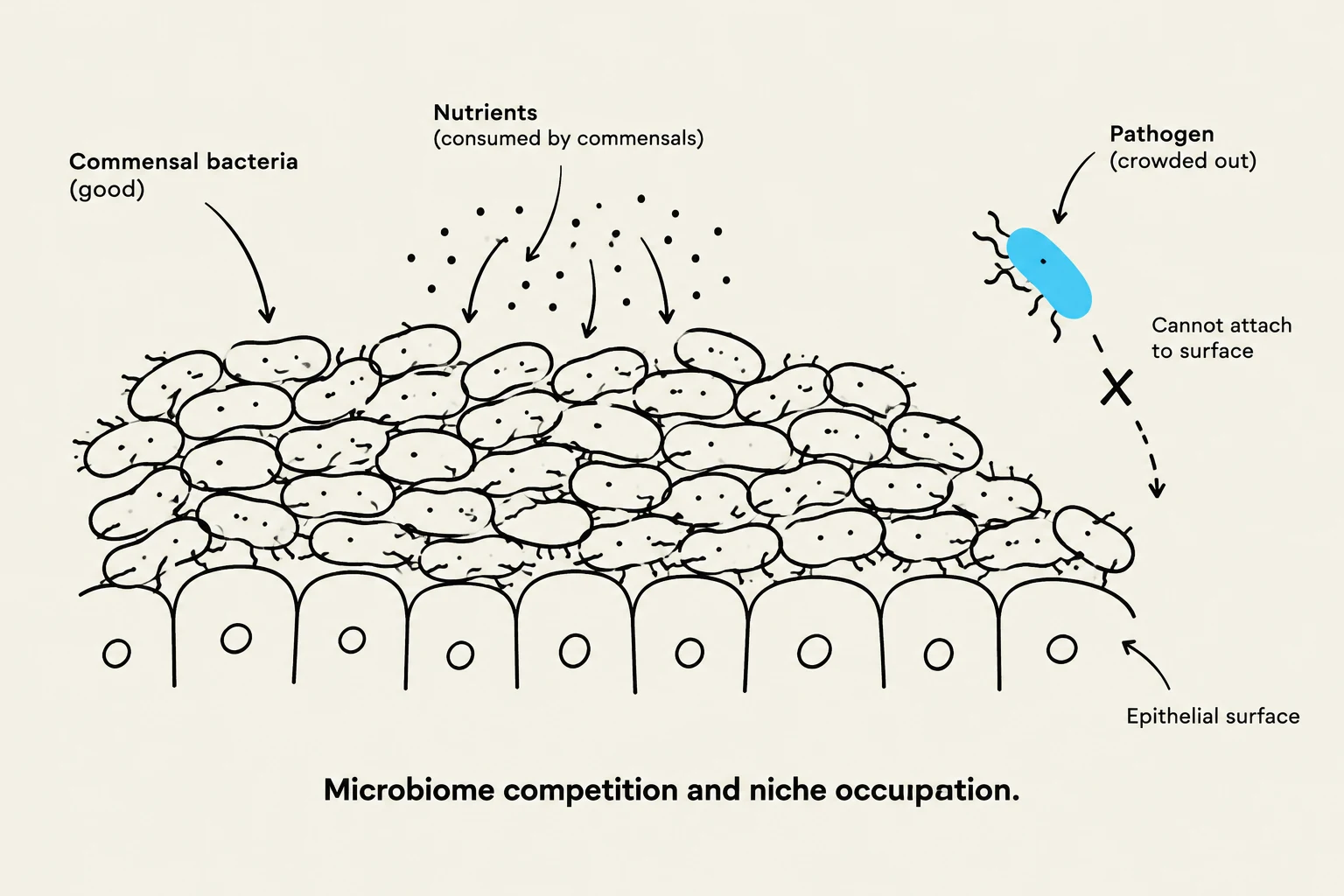
This illustration depicts microbiome competition and niche occupation, showing how commensal bacteria occupy an epithelial surface, consuming nutrients and preventing a pathogen from attaching.
The human microbiome—the collection of trillions of microbes living on and in our bodies—acts as both a structural and chemical barrier. This "good" bacteria provides protection through several mechanisms:
Competition: They compete with potential pathogens for limited nutrients and space.
Chemical Alteration: They can alter the local pH to make it inhospitable for invaders and produce bacteriocins (substances that inhibit other bacteria).
Immune Training: Crucially, the microbiome "trains" the immune system to distinguish between self and non-self.
Clinical Note: The Risk of Over-Sterilization
Because the microbiome is essential for immune development, overusing antibiotics or over-sterilizing environments can lead to an "ill-trained" immune system. This imbalance has been linked to the development of inflammatory bowel diseases (IBD), such as Crohn's disease and ulcerative colitis.
Summary of Innate Host Defenses
The effectiveness of the first line of defense relies on the seamless integration of these components. However, it is important to remember that any breach in these barriers significantly increases the risk of infection.
Nutrient competition, pH alteration, immune training
In clinical settings, healthcare providers must be vigilant about "breaching" these barriers. Common medical interventions such as the insertion of Foley catheters, NG tubes, or IV sites bypass these natural defenses, making the patient highly susceptible to infection.
Keep reading for free.
Create an account to finish this reading and make it part of your study routine.